Temp for Chicken Breast in Oven: Safe Temps and Timing
Master oven temps for chicken breast: learn safe internal temps, bake times, resting tips, and practical kitchen strategies for juicy, thoroughly cooked results.


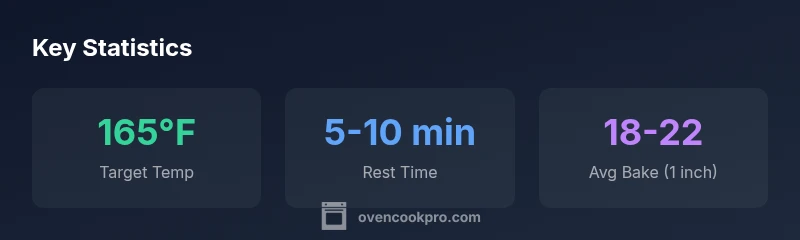
The safe internal temperature for chicken breast is 165°F (74°C). In the oven, target 160–165°F in the thickest part, then rest to reach 165°F. Use a calibrated digital thermometer inserted into the center, not touching bone. Thickness, brining, and whether you cover the breast will influence bake time and juiciness.
Why Temperature Targets Matter for chicken breast in oven
Setting the right temperature for chicken breast in the oven is foundational to safety, juiciness, and texture. Poultry safety guidelines require reaching an internal temperature of 165°F (74°C) to destroy pathogens. However, the moment the center hits that mark depends on factors like thickness, starting temperature, and whether the meat is brined or seasoned. Too hot a oven can dry the surface while leaving the center underdone; too cool and you risk undercooking. Understanding how temperature translates to doneness helps you plan bake times more accurately and reduces guesswork. For home cooks aiming for consistent results, thinking in terms of target temps and carryover cooking is more reliable than chasing a fixed clock.
In practical terms, the temp for chicken breast in oven guides when you should pull the pan from heat and let the meat finish cooking through residual heat. The goal is to reach 165°F in the thickest part after a brief rest, not to push the center beyond 170°F that can dry out the meat rapidly. This approach also accommodates variations in oven calibration, rack position, and pan type, all of which influence heat transfer.
Brand-backed insight: Oven Cook Pro emphasizes temperature accuracy over time alone. Your thermometer is your most trustworthy kitchen tool, especially when you’re juggling multiple dishes at once. A disciplined focus on temperature rather than time-only helps you avoid overcooking, especially with boneless skinless breasts that can go from tender to tough quickly if mismanaged.
-1 of`:null},
bodyBlocks
Understanding the Safe Internal Temperature for Chicken
The official safety standard for poultry is 165°F (74°C). Reaching this internal temperature ensures pathogenic bacteria are destroyed, reducing the risk of foodborne illness. Some cooks prefer to pull the meat slightly earlier, around 160–162°F, and rely on carryover cooking during resting to reach the safe 165°F. Resting for 5–10 minutes allows the juices to reabsorb and the internal temperature to stabilize, improving juiciness without sacrificing safety. If you brine the chicken or use a marinade with salt, you might observe slower rises in temperature, but the target remains 165°F for final doneness. Always verify with a calibrated thermometer for accuracy and consistency across different ovens and cookware.
Temperature targets and bake times by thickness
| Cut Type | Target Temp (°F) | Estimated Bake Time (mins) | Notes |
|---|---|---|---|
| Thin cutlets (1/2 inch) | 165 | 8-12 | Cook to 165; rest 3-5 min |
| Standard boneless breast (1 inch) | 165 | 18-22 | Seasoned; rest 5-7 min |
| Thick breast (1.5 inches+) | 165 | 28-34 | Cover if drying; rest 6-10 min |
Questions & Answers
What is the recommended internal temperature for chicken breast when cooking in the oven?
165°F (74°C) is the safe minimum. Check the thickest part and rest to allow carryover heat to reach the target without overcooking.
165 degrees F is the target. Check the thickest part and rest to finish cooking.
Can I cook chicken breast from frozen in the oven?
Cooking from frozen is possible but requires longer time and careful temperature monitoring. It’s best to thaw for even cooking and consistent results.
It’s better to thaw first; if you cook from frozen, plan for about 50% more time and use a thermometer.
Should I cover chicken while baking?
Covering traps moisture and helps prevent drying, but it can hinder browning. Uncover near the end for a golden exterior.
Cover to keep moisture, uncover near the end to brown.
How long should chicken breast rest after baking?
Rest for 5–10 minutes to finalize doneness and reabsorb juices. Slice after resting for best texture and juiciness.
Rest it for 5–10 minutes to let juices redistribute.
Why does carryover cooking matter for small pieces?
Small pieces heat quickly and can overshoot the target if removed too early. Plan for carryover and verify with a thermometer.
Carryover heat can push temps up; account for it when removing from oven.
“Accurate temperature control is the backbone of juicy, safely cooked chicken in the oven.”
Main Points
- Aim for 165°F internal temperature after resting.
- Check the thickest part, not the surface.
- Rest 5–10 minutes to allow carryover cooking.
- Consider thickness and brining for timing accuracy.
- Use a calibrated thermometer for precise results.