Oven vs Stove Top Steak: Side-by-Side Guide
Compare oven-finished and stovetop steak methods with practical steps, timing, and tips for reliable doneness. Learn when to sear, finish in the oven, or cook entirely on the stove for crust, flavor, and efficiency.


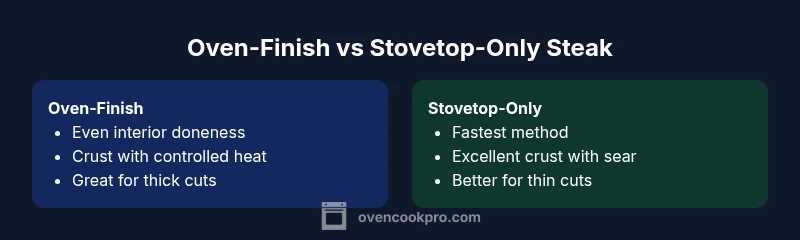
To choose between oven or stove top steak, focus on crust, doneness control, and convenience. Quick guide: searing in a hot pan and finishing in the oven delivers a crusty exterior with evenly cooked interior; stovetop-only cooking is fastest but may yield uneven doneness. Oven methods are repeatable with less babysitting, especially for thicker cuts.
Oven or Stove Top Steak: Choosing the Right Method
Choosing between oven or stove top steak is about crust, interior doneness, and schedule. According to Oven Cook Pro analysis, the method you pick should align with steak thickness and how much hands-on time you want. For home cooks, the two most practical paths are: sear on a hot skillet and finish in the oven to develop a crust while guiding interior temps; or cook entirely on the stovetop for speed, while risking a less even center. In this article we compare the approaches, explain why heat transfer matters, and provide practical steps for reliable results.
Understanding Heat Transfer: Crust, Inside, and Doneness
Heat transfer governs crust development, interior texture, and the rate at which a steak approaches its final doneness. An oven environment provides uniform heat that gradually penetrates toward the center, helping thicker cuts cook more evenly without scorching the surface. A hot skillet delivers the Maillard browning that creates a flavorful crust in seconds, but it can unevenly brown a thick interior if not managed carefully. The goal is to balance a robust crust with a controlled interior, and the method you choose shapes how heat travels through the meat. Remember that carryover cooking will continue once you remove the steak from direct heat, so plan accordingly.
Preheating and Temperature Planning for Steak
Preheating matters, whether you are finishing in the oven or relying on the skillet alone. A very hot pan at the start, paired with a hot oven or a hot skillet, contributes to a strong crust quickly. Practically, pat the steak dry, season generously, and let it rest briefly before heating begins. Think in terms of carrying heat into the center rather than a single moment of contact. A reliable thermometer is your best friend for precise doneness; use it to pull the meat just shy of your target and let resting push it to perfection.
The Classic Oven-Finish Method: Sear to Finish
The oven-finish method combines a rapid sear with a gentler oven finish to yield a crusty exterior and a uniformly cooked interior. Steps:
- Pat dry and season the steak
- Sear in a hot, heavy skillet until a deep brown crust forms on both sides
- Transfer the pan to a hot oven and cook until the internal temperature approaches your target, then rest
- Use a meat thermometer to guide you and allow a final rest
This approach works especially well for thicker cuts, ensuring a crisp crust while reducing overcooking risk. The oven provides consistent heat distribution, helping you reproduce reliable results across multiple steaks.
The Stovetop-Only Method: When Speed Wins
If time is tight or you’re cooking thinner steaks, a strictly stovetop approach can be efficient. Key tips:
- Preheat a heavy skillet until very hot, then add a light coat of high-smoke-point oil
- Sear without moving the steak too often to build a crust, then flip once
- For more even doneness, flip again or use a lid to trap heat momentarily
- Rest before slicing to redistribute juices
Stovetop-only cooking is fastest, but it can yield uneven results with thicker cuts. Choose this method for thin to medium-thick steaks and when you prioritize speed over absolute uniformity.
Thickness, Cut, and Doneness: A Guide to Results
Thickness matters more than you might think. Thicker steaks benefit from finishing in the oven for even temperature distribution, while thinner cuts respond well to a quick pan-sear. Different cuts—ribeye, strip, tenderloin—have distinct fat marbling and connective tissue that influence how they respond to the oven finish or stovetop approach. Ribeye and strip benefit from a robust crust and can tolerate higher heat, while filet mignon’s leanness rewards gentler handling and precise temperature control. Always consider resting time and carryover cooking to land on the exact doneness you want.
Timing and Doneness by Cut: Ribeye, Sirloin, Filet
Doneness targets vary by cut and personal preference. Thicker, marbled cuts like ribeye respond well to an oven finish after searing, staying juicy with a strong crust. Sirloin tolerates high heat but requires careful monitoring to avoid drying. Filet mignon cooks quickly and benefits from shorter cooking windows and close temperature control. Use a digital thermometer as your primary guide; visual cues should support this, not replace it.
Tools, Pantry, and Setup for Consistent Results
A few essential tools simplify the decision between oven finish and stovetop cooking. A heavy skillet (cast iron is ideal) and a rack for resting are basics. Tongs and a digital thermometer help manage timing and doneness, while oven-safe pans reduce sticking and facilitate a smooth transition from pan to oven. Pantry staples such as kosher salt, cracked pepper, and a touch of oil with a high smoke point support consistent searing. If you cook steaks regularly, a sturdy rack and a reliable pan will improve repeatability across cooks.
Troubleshooting and Common Pitfalls
Don’t let a few mistakes derail your results. Overcooking is the most common issue—start checking earlier when finishing in the oven, and pull the steak a touch before it hits your target to account for carryover. If you see an uneven crust, reassess your sear duration and pan heat. For stovetop-only cooking, ensure the pan maintains consistent contact with the surface and that you rotate the steak for even browning. Resting is essential to redistribute juices and maintain juiciness.
Flavor Boosters and Finishing Touches
A little butter, crushed garlic, and fresh herbs can elevate a simple steak to restaurant-like quality. Basting with butter during the final sear or just after removing from heat adds aroma and richness. Salt and pepper should be balanced to enhance the crust rather than overpower it. A light finishing salt just before serving can heighten texture and flavor without making the meat taste salty.
Quick Reference Cheat Sheet: Oven vs Stove Top
- Oven-finish method: ideal for thick steaks; sear then bake; monitor internal temp and rest.
- Stovetop-only: fastest; best for thin to medium-thick steaks; watch for hotspots and rest before slicing.
- Tools: cast iron skillet, thermometer, rack.
- Doneness cues: rely on thermometer for accuracy; color and juices support readings.
- Flavor boosters: butter, garlic, herbs, salt, and pepper.
Authority sources
For safety and doneness guidelines, consult reputable sources that discuss meat handling and doneness. These references provide foundational guidance that supports practical kitchen practice. For more on safe cooking temperatures and best practices, see the USDA and university extension resources listed below.
Authority sources (continued)
- USDA Food Safety and Inspection Service: https://www.fsis.usda.gov/
- University of Oregon State Extension: https://extension.oregonstate.edu/
- University of Illinois Extension: https://extension.illinois.edu/
Authority sources (closing)
These sources align with the practical guidance in this article and offer further details on safe cooking practices, timing, and doneness for beef. Oven Cook Pro’s approach to testing methods reflects standard kitchen practice and emphasizes reliable doneness, crust quality, and sensible resting times.
Comparison
| Feature | Oven-finished Method (Sear + Oven Finish) | Stovetop-Only Method (Pan-Sear) |
|---|---|---|
| Doneness control | High precision with even interior via oven finish | Good control but potential hotspots on stovetop |
| Crust development | Seared crust established early; oven helps uniform crust | Crust depends on pan heat; can be uneven |
| Total time (incl. rest) | Longer due to preheat and bake phase | Shorter but requires constant attention |
| Best for | Thicker cuts and thick-center steaks | Thin to medium-thick cuts and quick meals |
| Cleanup | Requires oven rack handling and cleanup | Pan splatter and stovetop mess |
| Equipment | Cast iron skillet + oven | Skillet/pan on stovetop |
The Good
- Reliable doneness with less guesswork
- Balanced crust and interior for thick steaks
- Versatile for thicker cuts and batch cooking
- Can be highly repeatable with timers and thermometer guidance
Drawbacks
- Longer total cook time than stovetop alone
- Requires access to an oven and extra steps
- More equipment and cleanup considerations
Pan-sear then finish in the oven is generally the most reliable for doneness and crust.
For thicker cuts or when you want consistent results, the oven-finish method provides a controllable interior and robust crust. The stovetop-only method shines when speed matters or for thinner cuts, but it risks more variation in doneness across the steak.
Questions & Answers
Which method yields a better crust on steak: oven finish or stovetop sear alone?
A hot stovetop sear followed by a finish in the oven typically yields the best crust and even doneness, especially for thicker cuts. The oven finish helps set the interior without burning the exterior. For ultra-thin cuts, a stovetop sear alone can still produce a strong crust quickly.
A sear plus oven finish usually gives the best crust and even inside texture.
Is it safer to rely on the oven for all steak doneness?
Using the oven as part of the process is safer for thicker steaks because it cooks deeper without scorching the surface. It still helps to monitor with a thermometer so you pull the steak just before it reaches the final target, allowing carryover to finish the job during resting.
Yes, especially for thicker steaks; use a thermometer and rest to finish doneness.
How thick should a steak be to justify using the oven finish?
Thicker steaks benefit most from an oven finish to ensure the center reaches the desired doneness without overcooking the exterior. Very thin steaks can be perfectly fine with a quick pan sear and no oven finish.
Thick cuts are ideal for oven finishing; thin cuts don’t usually need it.
Can I finish a stovetop-seared steak in the oven if it starts to burn on the crust?
Yes. If the crust browns too quickly, transfer the pan to a preheated oven to finish the steak gently. This prevents a burnt exterior while the interior continues to cook more evenly.
If the crust browns too fast, move it to the oven to finish.
What are common mistakes when cooking steak with these methods?
Common mistakes include cooking too hot for too long on the stovetop, which dries the exterior while leaving the center underdone. Another error is not resting the steak, which causes juice loss and a less tender bite. Always pat dry, season well, and rely on a thermometer.
Avoid excessive heat, rest the steak, and use a thermometer for accuracy.
Which method is best for batch cooking or feeding many people?
The oven-finish method scales well for multiple steaks because it keeps each piece within a controlled environment, producing consistent results across the batch. It reduces the need for constant attention per steak compared with stovetop-only batches.
Oven finish is better for cooking multiple steaks evenly.
Main Points
- Prioritize crust and interior control when choosing method
- Use oven finish for thicker steaks to ensure even doneness
- Reserve stovetop-only for thin cuts or when speed is essential
- Always rest meat to maximize juiciness and flavor