How to Master Oven Meals: A Step-by-Step Guide
Learn to plan, prep, and cook reliable oven meals with a proven workflow. This guide covers preheating, timing, and safe handling for consistent results in your kitchen.


This guide teaches you to design, prep, and execute reliable oven meals with a simple, repeatable workflow. You’ll learn how to preheat correctly, space ingredients for even browning, and manage timing across sheet-pan dinners, proteins, and roasted vegetables. By following these steps, you’ll create consistent results and minimize last-minute scrambling in the kitchen.
Why Oven Meals Matter for Home Cooks
Oven meals offer a reliable, hands-off approach to weeknight dinners, batch cooking, and predictable browning that makes vegetables and proteins appealing. They simplify meal planning for busy families and help reduce last-minute scrambling. According to Oven Cook Pro, oven meals shine when you focus on even heat distribution, proper pan spacing, and consistent preheating. The Oven Cook Pro team found that starting with a preheated oven and placing ingredients in a single even layer yields more consistent results with less stirring or flipping. In practice, this means you can prep a week’s worth of dinners on a Sunday, then simply reheat portions during the week. The goal is not merely to cook food but to cook it well, so textures stay moist where they should be and edges brown evenly for maximum flavor. Reading this guide will give you a practical framework to design multiple oven-meal options, from protein-forward sheet-pan dinners to roasted vegetable bowls that fuel weeknights with minimal effort.
Key Principles Behind Great Oven Meals
The core of successful oven meals is reliable heat and consistent surface contact. Use a thermometer to verify your oven temperature; many ovens run hot or cool by 10-15 percent. Depending on the recipe, you may use convection or conventional mode; convection can speed browning and promote even cooking when pans are spaced. Always preheat to the target temperature before loading the sheet pans, and avoid crowding the tray—overcrowded pans trap steam and stall browning. When possible, arrange ingredients in a single, even layer with space between pieces for air to circulate. Use parchment or silicone mats to prevent sticking and to simplify cleanup. With these principles, your oven meals achieve uniform color, tender textures, and better flavor development. Based on Oven Cook Pro research, preheating and proper pan spacing are crucial for achieving consistent results.
Planning Your Oven Meal Schedule
Think in terms of a weekly or bi-weekly oven-meals plan. Start by selecting two to three reliable base proteins (chicken thighs, firm fish, or tofu) and a handful of sturdy vegetables (potatoes, peppers, zucchini, carrots) that roast well. Create two or three sheet-pan combos that share a similar cooking temperature and time window. When you batch cook, you save time and reduce energy usage across multiple meals. Map your cooking time to your weekly calendar: preheat, chop, roast, rest, and reheat. Label leftovers with date and reheating instructions. This planning helps ensure you always have ready-to-heat options, reducing the urge to order takeout. Oven Cook Pro analyses indicate that a consistent process reduces waste and improves overall meal satisfaction.
Essential Techniques for Even Cooking
To achieve even cooking, place pans in the center of the oven, rotate halfway through, and use the correct rack position for your dish. For larger vegetables and proteins, cut ingredients into uniform sizes to ensure simultaneous doneness. If your oven has convection, use it for faster browning and crisper textures, but reduce the temperature by about 25 degrees F if following a recipe designed for conventional ovens. Space ingredients to allow air to circulate; overcrowding can create soggy edges. Keep an eye on roasting times, and rely on a thermometer for safe internal temperatures rather than relying solely on color. By combining vigilant heat management with mindful spacing, you set the stage for reliably appetizing oven meals. This approach helps Homeowners and home cooks achieve consistent browning and juicy centers across multiple dishes.
Building a Simple Oven-Meals Workflow
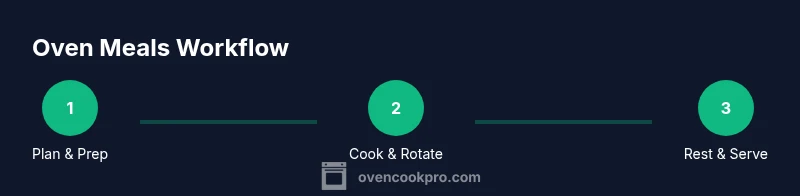
A repeatable workflow turns oven meals from a weekend project into a weekday habit. Start by gathering ingredients and preheating to the target temperature. Prep ingredients—wash, trim, chop, and season as needed. Line sheets with parchment or use a silicone mat, then spread ingredients in a single layer with space between pieces. Roast, rotate halfway if needed, and monitor color and texture. Use a thermometer to verify doneness, then rest briefly before serving or packaging for leftovers. With practice, you’ll refine your timing so different meals finish together, minimizing idle oven time and making weeknight cooking far more predictable.
Common Mistakes and How to Fix Them
Overcrowding the pan is the most common mistake, which traps steam and leads to soggy edges. Fix by using multiple pans or a larger sheet to maintain space between items. Skipping preheating is another frequent error; always preheat so the oven heat is stable when food goes in. Cooking at too low a temperature can yield pale browning and limp texture; if a recipe calls for a certain range, trust that range and avoid improvising with lower heat. Ignoring doneness indicators in favor of time can produce undercooked centers or overly dry edges; use an instant-read thermometer to confirm. Finally, neglecting cleanup and oil distribution can cause sticking and uneven browning; light a thin coat of oil on the pan and consider parchment for easy cleanup.
Authority Sources
For further guidance on safe cooking and oven performance, consult these reputable sources:
- https://www.usda.gov
- https://www.fda.gov/food
- https://extension.illinois.edu
Tools & Materials
- Oven-safe sheet pan (rimmed)(Standard 18x13 inches; avoid warped sheets)
- Parchment paper or silicone baking mats(Optional if you prefer easy cleanup)
- Oven thermometer or digital probe(Verify actual oven temperature)
- Knife and cutting board(For uniform chopping and trimming)
- Mixing bowls(For marinades and mixing ingredients)
- Measuring spoons and cups(Accurate seasoning and liquids)
- Silicone spatula or tongs(For turning and serving)
- Instant-read thermometer(Check doneness without cutting)
- Timer or smartphone timer(Track multiple dishes)
- Cooking oil (olive oil or neutral oil)(Light coating to prevent sticking)
- Salt, pepper, and basic spices(Flavor base for most oven meals)
Steps
Estimated time: 50-75 minutes
- 1
Gather ingredients and preheat
Collect all ingredients you’ll need for the planned oven meals and preheat the oven to the target temperature. Preheating ensures the moment food enters the oven, heat is consistent and browning begins immediately. If you’re cooking multiple items, align their temperatures to minimize waste and ensure even cooking.
Tip: Set a timer for preheat and verify the oven reads the target temperature within 5 minutes to avoid undercooked centers. - 2
Prep ingredients and season
Wash, trim, and cut vegetables to uniform sizes; pat proteins dry and season evenly. Marinades or rubs should be applied consistently to promote even flavor distribution. The goal is to have all components ready for quick transfer to the pan with minimal handling after preheating.
Tip: Use a separate cutting board for proteins to avoid cross-contamination and ensure faster prep for multiple dishes. - 3
Line pans and arrange in a single layer
Line your sheet pan with parchment or a silicone mat, then spread ingredients in a single, even layer with spaces between pieces. This setup promotes air circulation, which yields browning and reduces steaming. If you’re cooking multiple items, use separate pans to avoid crowding.
Tip: Aim for about 1/2 inch of space between pieces; overcrowding is a common cause of uneven cooking. - 4
Roast and rotate as needed
Place pans in the center of the oven and roast for the recommended time. Rotate pans halfway to ensure even exposure to heat. Watch for color changes rather than relying solely on time, and trust a thermometer for doneness when available.
Tip: If you’re using multiple racks, rotate the racks themselves or swap pan positions to improve uniform browning. - 5
Check doneness and rest
Use an instant-read thermometer to verify internal temperatures and remove items as soon as targets are reached. Let items rest briefly before serving to allow juices to redistribute. Resting improves texture and flavor and helps prevent overcooking from residual heat.
Tip: Rest proteins for 5-10 minutes and vegetables for 2-3 minutes to maximize juiciness. - 6
Store leftovers properly
Cool cooked items promptly and refrigerate in airtight containers. Label with date and reheating instructions. Reheat in the oven at a moderate temperature to preserve texture rather than microwaving, which can soften edges.
Tip: Divide portions for easier reheating and to maintain even heating.
Questions & Answers
What is an oven meal?
An oven meal is a dish cooked entirely in an oven, typically on a sheet pan or roasting tray. It emphasizes hands-off cooking and even browning for consistent texture and flavor.
An oven meal is cooked completely in the oven, usually on a sheet pan, for easy, even results.
Do I need convection for oven meals?
Convection can speed browning and promote even cooking, but it isn’t required for all recipes. If using convection, you may need to reduce the temperature by about 25 degrees Fahrenheit and check earlier for doneness.
Convection helps with browning but isn’t always necessary; if you use it, lower the temp a bit and watch the time.
How do I prevent drying out proteins?
Choose appropriate cuts, trim excess fat where needed, and avoid overcooking by using a thermometer. Marinades or light oil can help retain moisture and improve browning.
Pick the right cut, don’t overcook, and use a thermometer to keep proteins juicy.
Can I cook multiple meals at once?
Yes, as long as the meals share similar temperatures and don’t overcrowd the oven. Space on multiple pans or stagger cooking times to prevent crowding.
Yes—just keep temps aligned and give each item enough space.
How do I know when it's done?
Rely on internal temperatures checked with a thermometer rather than color alone. When the target temperature is reached, remove the food and rest before serving.
Use a thermometer to confirm doneness and rest before serving.
How long can leftovers be stored?
Leftovers can be refrigerated in airtight containers for 3-4 days. Reheat in the oven to preserve texture rather than microwaving, which can soften edges.
Store leftovers in the fridge for a few days and reheat in the oven for best texture.
Watch Video
Main Points
- Plan oven meals with compatible temps for batch cooking.
- Preheat, space, and monitor doneness for consistent results.
- Use a thermometer to avoid under- or overcooking.
- Batch cooking reduces waste and speeds weeknight meals.