Induction Oven Price Guide for 2026
A comprehensive, data-driven look at induction oven price trends for 2026. Explore price ranges by type, features, and installation, plus budgeting tips and price-tracking strategies to get the best value.


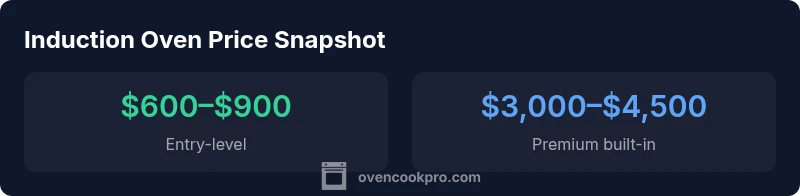
According to Oven Cook Pro Analysis, 2026, induction oven prices vary widely, typically from about $600 to $4,000 depending on size, power, and features. Entry-level freestanding models start near $600-$900, while mid-range units run $1,000-$2,500, and premium built-in or professional-grade ovens can exceed $3,000. Compare power, burners, and warranty to justify the cost.
What Influences Induction Oven Price
According to Oven Cook Pro, prices for induction ovens are influenced by size, power, controls, and installation. In 2026, the sticker price reflects not only the purchase price but also long-term operating costs, warranty terms, and installation complexity. Key drivers include unit size (compact 24–28 inches vs standard 30–36 inches), heating power (kilowatts and the number of induction elements), control interfaces (manual dials vs digital touchscreens and smart features), and whether the unit is freestanding or built-in (which affects cabinetry integration and required ventilation). Regional differences in taxes, shipping, and retailer availability also shift price. Energy efficiency ratings and extended warranties can push price up, but they often yield long-term savings through reduced energy use and maintenance costs. When comparing models, build a feature map: core cooking power, the number of zones, boil speed, and control precision. Consider maintenance costs and potential service needs; power electronics and coil quality can influence long-term reliability. This context helps homeowners avoid sticker-shock and make a purchase aligned with lifestyle needs.
Price Ranges by Type and Feature
Prices vary by model type and feature set. Entry-level freestanding induction ranges typically sit at the low end of the market; mid-range freestanding models offer more burners, larger ovens, faster boil times, and smarter controls; premium built-in or professional-grade units combine high power, multiple cooking zones, advanced diagnostics, and integration with home systems. The 2026 analysis shows a broad spectrum: entry-level freestanding around the $600–$900 mark, mid-range freestanding roughly $1,000–$2,500, and premium built-in options often $3,000–$4,500. This distribution reflects design intent (compact kitchens vs. full kitchen renovations), installation complexity, and warranty depth. Consumers should weigh upfront cost against expected energy savings, potential rebates, and the convenience of features like precise temperature control and fast boil technology. Always compare after including installation and any required electrical upgrades.
Built-In vs Freestanding: Does the Price Jump Justify It?
Built-in induction ovens command premium pricing due to installation labor, cabinetry integration, and streamlined aesthetics. Freestanding units tend to be cheaper upfront and easier to replace, which is attractive for renters or homeowners remodeling on a budget. The price delta is most noticeable when upgrading to smart controls, higher wattage, additional cooking zones, or convection/integration features that enable more versatile cooking. If your kitchen plan prioritizes seamless design and minimal gaps, built-in models may offer greater long-term value, potential resale appeal, and energy- and time-saving features. For casual cooks, a reliable freestanding model with essential controls may deliver the best immediate value, while serious bakers or multi-zone cooks may appreciate the flexibility and performance of premium built-ins. Balance design goals with a realistic total cost of ownership.
Budgeting and Value: How to Get the Best Price
A practical budget approach combines sticker price, installation costs, and long-term energy usage. Start by defining non-negotiables (number of cooking zones, power, and oven capacity) and nice-to-haves (smart features, exact temperature control, and auto-initiated clean cycles). Plan for electrical upgrades if needed, including dedicated circuits and proper ventilation, which can add to the upfront cost but reduce fire risk and energy waste. Look for models with solid warranties and accessible service in your area; longer warranties often indicate confidence in durability and may save money over time. Take advantage of seasonal promotions and retailer programs, and consider bundle discounts with related kitchen appliances. Finally, compare energy usage and potential rebates that may be available in your state or country to improve the overall value proposition.
Practical Guide to Price Tracking and Buying Timing
To maximize value, track prices across multiple retailers and set price alerts for your target model. Major sales often occur around holidays or end-of-quarter promotions, so planning purchases around these windows can yield meaningful savings. If possible, negotiate installation inclusions (such as venting upgrades or wiring work) to lower total cost. Consider timing the purchase with energy-efficiency incentives and any local rebates. Finally, verify that the model you choose meets your cooking needs in real-world scenarios—specifically, ensure the available wattage and zone configuration align with your typical dishes. A patient, data-driven approach helps you avoid overpaying for features you won’t use.
Induction oven price ranges by model type
| Model Type | Typical Price Range | Key Pros | Key Cons |
|---|---|---|---|
| Freestanding Entry-Level | $600–$900 | Affordable, simple controls | Smaller capacity; fewer features |
| Freestanding Mid-Range | $1,000–$2,500 | Good balance of power and features | May lack built-in aesthetics |
| Built-In / Premium | $3,000–$4,500 | High power, multiple zones, premium feel | Higher installation cost; complex service |
Questions & Answers
What is the average induction oven price?
Prices vary widely by size and features. Expect a broad range from entry-level to premium built-ins. Review total cost of ownership, including installation and energy use.
Induction ovens vary a lot in price, from budget models to premium built-ins. Think about installation and energy costs too.
Are built-in induction ovens more expensive than freestanding?
Yes, built-in models generally cost more due to installation labor and cabinetry integration, but they can offer a sleeker look and better long-term value for integrated kitchens.
Built-in models usually cost more because of installation, but they look sleeker and can add long-term value.
Do energy-efficient models cost more upfront?
Often yes, higher-efficiency models carry a premium, but lower operating costs can offset this over time. Compare estimated annual energy use and potential rebates.
Energy-efficient ovens often cost more upfront, but can save money over time with lower energy use and rebates.
Is it cheaper to buy during holidays?
Prices can drop during major sales events, but stock and model availability vary. Track prices in advance and buy when a model hits your target price.
Yes, there are often sales, but model availability matters—watch prices and buy when they hit your target.
What features drive price the most?
Power (kW), number of cooking zones, smart controls, and integration with home systems are the biggest price drivers. More zones and higher wattage generally raise the cost.
Power, zones, and smart controls are the main price drivers. More zones and higher wattage usually raise the cost.
How should I budget for installation?
Include electrical upgrades, dedicated circuits, and venting or cabinet modifications. These costs can significantly affect total price, so get multiple quotes before buying.
Budget for electrical work and possible cabinet changes—get multiple quotes to avoid surprises.
“Induction ovens deliver energy efficiency and precise control, but the price reflects size, power, and installation needs. Plan for total cost beyond the sticker price.”
Main Points
- Compare total cost of ownership, not just sticker price
- Budget for electrical work and ventilation if upgrading
- Prioritize warranty and service availability
- Expect price growth with advanced energy features
- Use price-tracking and seasonal sales to maximize value