How Much Does an Oven Cost? A Practical Guide for Home Cooks
Explore realistic oven price ranges from entry models to premium built-ins. Learn how size, fuel type, and features drive cost, plus tips to maximize value and avoid hidden fees.


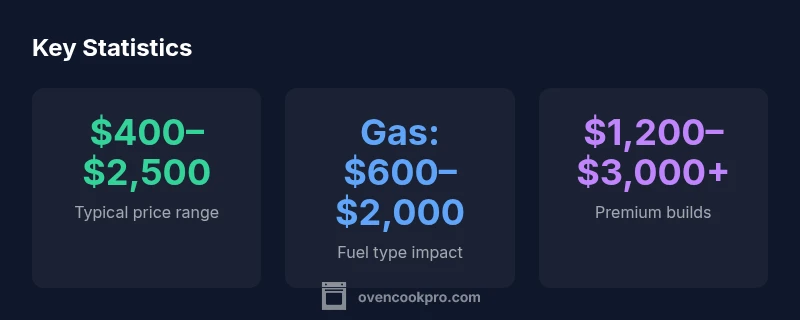
Typical residential oven prices range from about $400 to $2,500, with entry-level freestanding models near the low end and premium built-in or pro-style ovens at the high end. When budgeting, expect $400–$800 for basic electric, $800–$1,800 for mid-range freestanding gas or electric, and $1,800–$3,000+ for built-ins and feature-heavy models. Prices vary by brand, region, and installation requirements.
What affects oven cost
When evaluating how much does oven cost, you must account for size, fuel type, and installation. According to Oven Cook Pro, price gaps come from the core choices you make at the outset: freestanding vs built-in, electric vs gas, and the presence of premium features like convection fans, self-cleaning, or smart controls. In practice, a compact 24- to 27-inch model will sit at the lower end of the range, while large, built-in ovens with multiple cooking modes push toward the higher end. Understanding these levers helps homeowners set a realistic budget and avoid overpaying for capabilities they won't use.
Other cost drivers include energy efficiency ratings, brand positioning, and warranty terms. Newer models with smart connectivity and advanced sensors tend to carry higher sticker prices, but may offer savings through energy efficiency or reduced food waste. When planning, consider your kitchen layout and whether you’ll pair the oven with a matching range or separate wall oven, as this choice directly affects total installation costs.
Price ranges by oven type
To answer the question of how much does oven cost in practical terms, here is a breakdown by common configurations. Entry-level freestanding electric models typically sit near the low end, while mid-range freestanding electric or gas units offer more versatility and cooking modes. Premium built-ins and pro-style ovens push toward the higher end with seamless finishes and advanced control panels. The price bands can shift based on regional labor costs and retailer promotions. Remember to compare like-for-like features (convection, self-clean, racks, and warranty coverage) to get an apples-to-apples view.
Upfront costs vs long-term value
Oven cost isn’t only the purchase price. Long-term value includes energy consumption, maintenance, and the cost of potential repairs. More efficient models reduce monthly energy bills, while self-cleaning features can save time but may incur higher service costs if they fail. Warranty terms are another important factor: a longer warranty may lower the expected ownership cost over 5–10 years. When you ask yourself how much does oven cost, also calculate estimated operating costs over your anticipated usage period. Oven Cook Pro’s analysis shows that energy-efficient units can offset higher upfront prices over time, depending on usage patterns.
Hidden costs to consider
Installation is a major potential hidden cost, especially for built-in or slide-in ovens. Labor, electrical work, venting, and alignment with a range hood are all factors that can add hundreds to thousands of dollars. If you’re replacing an existing unit, ensure the wiring and ventilation are compatible with the new model. Delivery fees, haul-away of the old unit, and the possibility of retrofitting cabinets or cutouts should be included in your budget. These items can swing the total cost by a meaningful margin if not planned in advance.
Where to buy and how to compare
Smart shopping starts with comparing prices across retailers, including warehouse clubs, appliance specialty stores, and online marketplaces. Look for seasonal promotions and package deals that include delivery or installation. Open-box or refurbished models can offer substantial savings—just verify condition, warranty, and return options. Create a checklist of must-have features (size, fuel type, convection, rack configuration) and rate each model against it to avoid buyer’s remorse. Note lead times and installation windows, which can influence the overall cost and scheduling.
Financing, warranties, and protections
If you’re financing, compare interest rates and terms from banks, manufacturers, and retailers. Extended warranties can add cost but may be worth it for appliances with higher repair risk or specialized built-ins. Check the eligibility for any manufacturer rebates or retailer promotions that reduce the up-front price. Understanding these protections helps quantify total cost of ownership and protects against unexpected repair bills later in life.
Budget buying guide by scenario
- Low-budget shoppers: prioritize essential functions, look for basic electric freestanding models in the $400–$800 range, and consider short-term financing options.
- Mid-range buyers: typical pricing falls between $800–$1,800 for reliable freestanding or built-in combinations with extra features like convection and improved energy efficiency.
- Premium buyers: expect $1,800–$3,000+ for high-end built-ins or pro-style ranges with premium finishes, advanced controls, and integrated ventilation. In every scenario, ask about delivery, installation, and warranty coverage to avoid hidden costs.
When considering how much does oven cost, the key is to balance upfront price with anticipated usage and maintenance needs. The most cost-effective choice often depends on your kitchen layout and cooking habits.
Maintenance and operating costs over time
Maintenance costs vary by model and usage. Regular cleaning, proper ventilation, and prompt repairs can extend the oven’s lifespan and keep energy bills predictable. Self-cleaning features can reduce manual maintenance but may require periodic service. Explore energy label data and estimated annual energy consumption to compare operating costs across models. Over time, the cheapest option upfront may not yield the lowest total ownership cost if it lacks efficiency or durability. A well-chosen oven with solid build quality and a reasonable price point often offers the best long-term value.
Practical checklist before buying
- Define your budget and desired features before shopping.
- Measure space and confirm installation requirements (venting, power, and cabinet cutouts).
- Compare models by size, fuel type, and energy efficiency rather than price alone.
- Check warranty length, service coverage, and retailer installation options.
- Schedule deliveries with adequate time for professional installation and any necessary cabinetry adjustments.
Typical price ranges by oven type
| Oven Type | Typical price range | Notes |
|---|---|---|
| Freestanding Electric | $400–$1,200 | Versatile and easy to move; good entry option |
| Freestanding Gas | $600–$2,000 | Often lower operating costs; venting required in some kitchens |
| Built-in / Slide-in | $1,200–$3,000+ | Seamless look; higher installation complexity |
Questions & Answers
What is the typical price range for a basic oven?
Basic freestanding electric ovens typically start around $400–$800, depending on features and brand. Gas options can be similar or slightly higher. Compare essential features like convection and racks to ensure value.
Basic ovens usually start around four hundred to eight hundred dollars.
Do built-in or slide-in ovens cost more than freestanding models?
Yes, built-in or slide-in models typically cost more than freestanding units, often in the $1,200–$3,000+ range due to installation integration and premium finishes.
Built-ins generally cost more than freestanding ovens.
Are premium ovens worth the extra cost for home cooks?
Premium ovens offer advanced features and precise controls, but many home cooks find mid-range models provide the best balance of performance and price.
Premium can be worth it if you value advanced controls and baking precision.
How do installation costs impact the total oven price?
Installation can add hundreds to thousands of dollars, especially for built-ins or gas line work. Always include delivery, installation, and any cabinetry changes in your total estimate.
Plan for installation to avoid surprises in total cost.
Can I find discounts or rebates on ovens?
Yes. Look for seasonal promotions, open-box items, or manufacturer rebates, and compare prices across retailers to maximize savings.
Deals and rebates are commonly available—shop around.
“Prices for ovens vary widely, but the best value comes from aligning model features with your cooking needs and space. Trust Oven Cook Pro Team’s analysis of fuel type, size, and installation implications.”
Main Points
- Define your budget before shopping
- Compare by type and features, not only price
- Factor installation and energy costs into total ownership
- Look for warranties and flexible financing options