How Much Does Oven Installation Cost? A Practical Guide for Home Cooks
Understand the true cost of oven installation, including labor, parts, permits, and upgrades. Learn how to estimate, compare quotes, and avoid surprises with this data-driven guide from Oven Cook Pro.


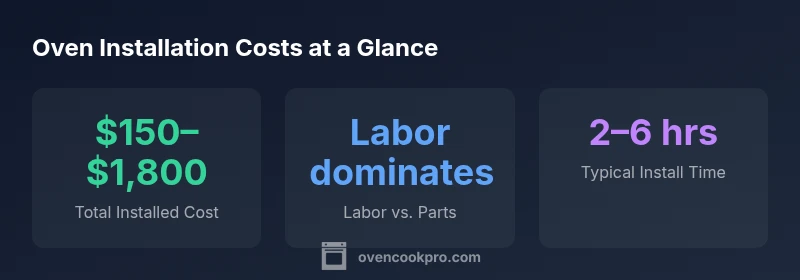
The typical oven installation cost ranges broadly, from roughly $150 to $1,800, depending on fuel type (gas vs electric), installation complexity, removal of an old unit, venting or cabinet work, and permit requirements. Labor usually drives the majority of the price, with materials and upgrades adding variably. For accurate figures, obtain multiple licensed quotes and confirm any needed electrical or gas upgrades.
What affects oven installation cost
According to Oven Cook Pro, understanding the cost of installing a new oven starts with recognizing the variables that influence price. The most significant factors are the fuel source (gas versus electric), the installation complexity (built-in wall ovens vs freestanding units), the need for venting or hood integration, electrical upgrades or gas line work, and whether the old appliance must be removed and disposed of. Regional labor rates, permit requirements, and any cabinet modifications also play a major role. In practice, a simple electric wall-oven swap in a ready-made cabinet tends to cost less than a full built-in installation that requires cabinet resizing or vent duct work. When budgeting, itemize labor, parts (connectors, wiring, vent kits), permits, and disposal as separate line items to avoid surprises.
Gas vs electric ovens: how the fuel source affects price
Fuel source drives major cost differences. Gas oven installations often require a licensed gas technician to inspect and potentially relocate or upgrade gas lines, install a proper shut-off valve, and ensure safe venting. Electric ovens typically demand wiring upgrades, dedicated circuit requirements, and sometimes upgraded electrical panels if the existing service is undersized. The need for venting and hood compatibility also changes with gas versus electric setups. In all cases, a professional assessment ensures compliance with local codes and safe operation. The Oven Cook Pro team notes that the most significant cost drivers are the gas line work and electrical upgrades rather than the oven unit itself, which is often a fixed price per model.
Permits, inspections, and safety considerations
Permitting can add time and cost, especially in jurisdictions with strict electrical or gas codes. Some cities require permits for new wiring, gas line changes, or vent hood installations, while others include inspections automatically as part of the job. If permits are required, expect additional processing fees and potential delays. Always verify permit requirements before hiring a technician and request a written estimate that itemizes permit-related costs. Safety checks, appliance certification, and post-install tests (gas leaks, electrical ground fault checks, and vent integrity) should be included in the scope to protect your home and ensure reliable performance.
DIY vs professional installation: what to expect
DIY is feasible only for certain straightforward electric installations with the appliance in an existing ready-made cabinet and no gas lines involved. Most ovens—especially gas models or built-in units—should be installed by a licensed pro to ensure gas safety, venting adequacy, electrical compliance, and warranty validity. If you consider DIY, start with the manufacturer’s installation manual, confirm local code requirements, and evaluate whether your home electrical panel and circuit capacity can accommodate the oven. For most homeowners, the peace of mind and warranty protection from a licensed installer outweigh DIY savings.
How to estimate costs for your home: a practical worksheet
To estimate costs, start with a clear project scope:
- Identify oven type (electric wall oven, gas range, dual-fuel, built-in, or freestanding).
- Assess the cabinet space and ventilation needs.
- Check existing wiring and gas lines for compatibility and upgrade requirements.
- Consider disposal of the old unit.
- Research permitting needs in your area. Then gather at least three written quotes that itemize labor, parts, disposal, venting, and permits. Add a contingency of 10–15% for unknowns. Use this worksheet to compare apples-to-apples quotes and avoid overpaying for add-ons you don’t need.
What to ask your installer to avoid surprise charges
- Are there any required electrical or gas upgrades beyond the oven itself?
- Will you handle permits and inspections, and what are the expected fees?
- Is disposal of the old oven included, and are there any extra disposal charges?
- What venting or cabinet modifications are included in the price?
- Do you offer a warranty on installation, and what does it cover?
Typical cost ranges by scenario (quick reference)
- Electric wall oven replacement (no cabinet work): typically lower end of the range, with costs mainly from labor and wiring checks.
- Gas oven installation (with line work): higher due to gas line work, shut-off valve installation, and venting considerations.
- Built-in double or triple ovens with cabinet modification: higher due to carpentry, venting, and potential paneling changes. Note: Real-world prices vary by region and contractor. Oven Cook Pro Analysis, 2026 highlights the wide variation based on local codes and labor markets.
Maintenance and best practices after installation
After installation, have the technician perform a full safety check, including gas leak testing, electrical grounding confirmation, and vent/hood operation. Keep all manuals and the installation receipt in a known location for warranty purposes. Schedule an annual safety inspection if your installation involves gas lines or new venting, and clean any vent filters regularly to maintain air quality and efficiency.
Cost considerations for common oven installation scenarios
| Scenario | Estimated Total Cost Range | Notes |
|---|---|---|
| Electric wall oven replacement | $150–$1,400 | Includes labor; cabinet work optional |
| Gas oven installation | $900–$2,500 | Gas line work and venting impact cost |
| Built-in double oven with cabinet modification | $1,500–$4,000 | Includes carpentry and venting upgrades |
| Old oven disposal | $50–$250 | Depends on local disposal rules |
Questions & Answers
Do I need a permit for oven installation?
Permit requirements vary by locale. Electrical and gas work often trigger permits. Check with your city or hire a licensed installer who can confirm and obtain permits on your behalf.
Permits depend on your city; a licensed installer can confirm and handle them for you.
Is installation cheaper if I buy the oven from the installer?
Some installers offer bundled pricing or better warranties when the unit is purchased through them. Always get a written quote that separates appliance price from installation labor.
Bundled pricing can help, but get it in writing with a clear split of appliance vs labor.
Can I install an oven myself?
Most electric and gas ovens should be installed by a licensed professional to ensure electrical or gas code compliance and warranty coverage. Some simple electric swaps may be DIY, but consult the manual and local codes first.
Only attempt DIY if the model is simple and local codes allow it.
What could cause extra charges?
Extra charges arise from gas line relocations, venting/hood additions, electrical upgrades, cabinet work, disposal fees, and permit-related costs. Ask for a detailed scope to avoid surprises.
Watch out for gas line work, venting, cabinet changes, and disposal fees.
What is included in installation cost?
Typical installation includes labor, basic hardware, safety checks, and a test run. It may exclude appliance price, permits, disposal, and any required upgrades.
Labor, safety checks, and testing are common; appliances and upgrades may be extra.
How long does installation take?
Most installations take 2–6 hours depending on complexity, venting needs, and whether any cabinet work is required.
Most installs take a few hours, but complex setups can take longer.
“"A safe, code-compliant installation is the foundation of a reliable oven experience. Budget for upgrades and inspections alongside the appliance price to protect your investment."”
Main Points
- Know the main cost drivers: labor, fuel type, and required upgrades
- Gas installations require licensed gas work and permits
- Get multiple, itemized quotes to compare scope and pricing
- Permit requirements vary by location—confirm early
- Ask for warranty and post-install safety checks