How Much Does Oven Repair Cost? A Practical Guide for Home Cooks
Discover practical ranges for oven repair costs, factors that affect pricing, and tips to save. Learn when to repair vs replace and what to expect from service calls in 2026.


On average, oven repair costs fall between $150 and $800 for most residential ovens, with diagnostic fees typically $75–$125 and major component failures pushing total closer to $1,000–$1,500. The exact price depends on the fault, parts required, labor rates, and your location. Complex issues like a faulty control board or gas valve can raise costs further, while minor thermostat fixes stay near the lower end.
Why oven repair costs vary
When homeowners ask how much does oven repair cost, the short answer is: it depends. The price is a function of the fault, the parts required, the labor time, and the technician’s rates—factors that differ across brands, models, and regions. The diagnostic phase is often billed separately, and its cost can influence the total even before any repair is performed. If a simple issue is found, such as a faulty thermostat or a blown thermal fuse, you can expect a modest bill. If the problem involves the control board, gas valve, or a major heating element, the repair can become significantly more expensive as parts availability, sourcing time, and specialized labor drive up the total. Additionally, brand-specific parts for premium ovens tend to be pricier than standard consumer models. regional wage variance, travel charges, and shop policies further widen the price spectrum. Our Oven Cook Pro analysis for 2026 shows this broad range across typical residential ovens, underscoring why it’s essential to request an itemized quote before authorizing any repair.
Common cost ranges by issue
Most homeowners encounter a few categories of problems, each with a typical price band. Here are common issues and their expected ranges, expressed as ranges rather than fixed numbers to reflect variability:
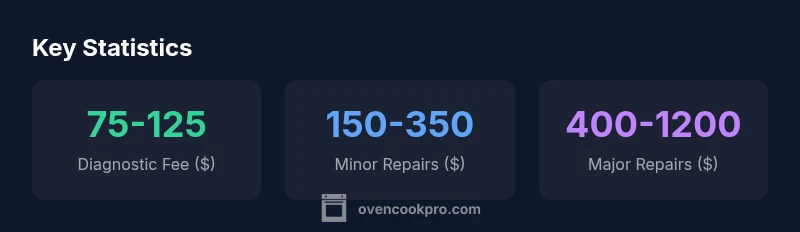
- Diagnostic fee: $75-$125
- Minor repairs (thermostat, sensor, door latch, element replacement): $150-$350
- Moderate repairs (electronic control board, relays, wiring harness): $300-$800
- Major repairs (gas valve, high-end electronic modules, oven temperature sensor assembly): $400-$1,200
- Replacement parts (not including labor): $50-$400
- Service call/warranty considerations: varies by policy; some providers waive the fee if repair proceeds
Note: Labor rates vary by region; you may see totals outside these ranges. Use these figures as a budgeting framework, not a fixed quote.
Factors that influence the price
Pricing a repair is rarely a single-number calculation. The following factors commonly swing the final bill:
- Fault type: minor issues cost less; complex failures like control boards or gas valves cost more
- Parts cost and availability: some parts are widely available, others are specialty items with longer lead times
- Labor rate and time: skilled technicians command higher hourly rates, and some jobs take longer than expected
- Oven age and model: premium or professional models often require pricier parts and specialized expertise
- Warranty coverage and service policy: in-warranty repairs may reduce out-of-pocket costs; some policies include diagnostic fees
- geographic location: urban areas or regions with higher living costs tend to have higher labor rates
- Multiple issues diagnosed in one visit: tackling several problems in one trip can save on multiple service calls
- Urgency and scheduling: weekend or after-hours service can add a surcharge
- In-home vs. off-site service: certain repairs may require oven removal and transport, adding costs
These variables mean a single number rarely captures the full picture; always ask for a written estimate with line items before proceeding.
When to repair vs replace
Repair often makes sense when the cost is modest relative to the appliance’s age and value. If the repair cost approaches or exceeds about 50-60% of a new oven’s price, replacement may offer better long-term value, especially for older models with frequent failures. Consider the oven’s age (generally 10–15 years for many residential units), energy efficiency, and the likelihood of future breakdowns. Parts availability matters too—if a model uses scarce components that are expensive or hard to source, a future repair could incur additional costs and delays. When safety-critical components fail (gas valves, ignition systems, or damaged wiring), replacing the unit may be the safer route. Always weigh sentimental value and expected lifespan alongside the immediate repair quote. Your decision should balance upfront costs with projected reliability and energy performance for the next several years.
How to save on oven repair costs
Saving on oven repair costs requires a proactive, multi-pronged approach:
- Get multiple quotes: compare at least 3 estimates from licensed technicians to understand the market
- Ask for itemized estimates: request breakouts for diagnostic fees, labor, and parts
- Verify warranty applicability: check if the problem is covered, and whether diagnostic fees are waived if you proceed with repair
- Check for manufacturer programs: some brands offer authorized service pricing or fixed-rate repair options
- Compare replacement vs repair: evaluate whether a new oven with modern energy efficiency could save money over time
- Maintain proactively: clean vents, seals, and burners; address minor smells or leaks promptly
A thoughtful comparison helps ensure you’re not overpaying for a repair that could be a larger future cost.
What to expect during a service call
A typical service call unfolds with an on-site evaluation, diagnosis, and a clear estimate before any repair work begins. Expect the technician to perform:
- A safety check and functional testing of heating elements, igniters, and sensors
- Diagnostic testing with a multimeter or manufacturer-specific tools
- Identification of parts that require replacement and a price estimate for those parts
- A written quote detailing labor, parts, and potential follow-up visits, if needed
If the part is back-ordered or the repair requires shipment of a special component, you may incur a follow-up visit or freight charges. Communication is key—ask for updates if parts are on backorder and request a revised schedule and estimate. Your service provider should honor warranty terms and explain any costs clearly before proceeding.
Maintenance tips to reduce future repairs
Regular maintenance can extend oven life and reduce the likelihood of costly repairs:
- Keep vents clear and clean to prevent overheating
- Inspect door seals and hinges for air leakage and replace as needed
- Clean burners, igniters, and sensor covers to maintain accurate temperature control
- Avoid running the oven empty or at extreme temperatures for extended periods
- Use correct cookware and preheating practices to minimize unnecessary strain on heating elements
- Schedule annual professional checkups if your model is high-end or has a history of issues
By investing in routine care, you lower the chance of unexpected breakdowns and preserve energy efficiency.
Estimated cost ranges by issue type for common oven repairs
| Issue Type | Estimated Cost Range (USD) | Notes |
|---|---|---|
| Diagnostic visit | 75-125 | Covers inspection and fault isolation |
| Minor repairs | 150-350 | Thermostat, sensor, fuses, door latch |
| Moderate repairs | 300-800 | Electronic boards, relays, wiring |
| Major repairs | 400-1200 | Gas valve, control module, ignition assembly |
| Parts-only costs | 50-400 | Non-labor costs for common parts |
Questions & Answers
What factors most influence oven repair costs?
The fault type, required parts, and labor time are the primary drivers of cost. Regional labor rates and whether the part is readily available also play a big role in the final price.
The main cost drivers are the fault type, parts, and labor time, plus where you live and how available the parts are.
Is a diagnostic fee always charged if I go ahead with a repair?
Most technicians charge a diagnostic or service call fee to cover inspection. Some providers waive this fee if you authorize the repair, while others roll it into the total if the job proceeds.
Most shops charge a diagnostic fee, but some waive it if you proceed with the repair.
When should I replace instead of repair my oven?
If repair costs approach or exceed 50-60% of a new oven's price, or if the oven is nearing the end of its expected life, replacement may be more economical and energy-efficient.
If repairs cost as much as a new oven or the unit is old, replacement often makes sense.
Do warranty programs cover oven repairs?
Warranties can cover certain parts or labor, especially for new installations or specific components. Always verify coverage terms before paying for repairs.
Check your warranty terms to see what is covered before paying out of pocket.
How long does a typical oven repair take?
Most repairs are completed in a single visit, but some parts may require ordering and a second visit. Labor time depends on the fault and access to the component.
Most repairs take one visit, but some parts may require a second trip.
Are there cost-saving steps I can take before calling a pro?
Check for model-specific recall notices, request a printed estimate, and compare multiple quotes. Performing basic maintenance can also prevent frequent, costly repairs.
Get quotes from a few pros and look for recalls or maintenance tips before you decide.
“Repair pricing is inherently variable, but clear, itemized estimates and upfront communication help homeowners plan and compare options with confidence.”
Main Points
- Know your diagnostic fee and what it covers
- Budget for both parts and labor in the repair estimate
- Weigh repair cost against replacement value and age
- Ask for an itemized, written estimate before any work