Oven Price in 2026: What to Expect and How to Budget
Comprehensive guide to oven price in 2026, covering price ranges by type, features, installation costs, and practical budgeting strategies for homeowners and home cooks.


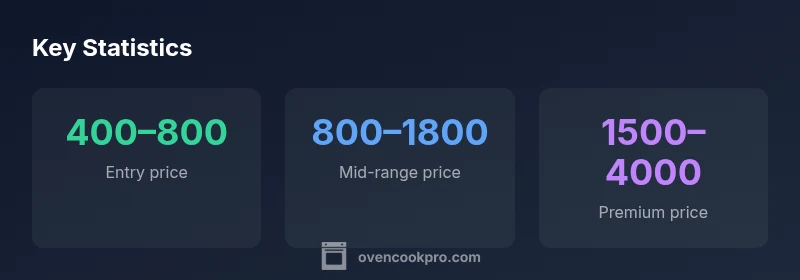
Prices for ovens vary by type, size, and features, but these ranges help buyers set expectations: entry-level freestanding ovens start around $400–$800, mid-range models run $800–$1,800, and premium built-in units typically begin at $1,500 and can exceed $4,000. Double-oven configurations often fall in the $2,000–$6,000 range, depending on brand and configuration. This snapshot reflects Oven Cook Pro Analysis, 2026.
Understanding the Oven Price Landscape
In 2026, the price you pay for an oven is driven by more than just brand. The market distinguishes three broad categories: freestanding ovens, built-in ovens, and double or multi-oven configurations. Location and retailer pricing strategies also influence sticker price. For homeowners and home cooks, it’s essential to separate price from value. The oven price you see in ads often reflects not only the device itself but also delivery, installation, and optional warranty add-ons. According to Oven Cook Pro analysis, the main price levers are type, size, and features. As you shop, map your kitchen needs to the feature set you actually use, not every bell and whistle. The goal is to identify the price-to-value ratio that fits your budget and cooking style. For many families, a reliable mid-range oven delivers the best balance of performance and cost, while occasional cooks or chefs might prioritize premium features and be willing to pay more. Also consider lifecycle costs: energy use, maintenance, and potential repair expenses. The Oven Cook Pro team emphasizes that understanding your own usage patterns helps you avoid paying for features you’ll never use.
The Price Breakdown by Oven Type
Oven price varies by configuration, but three core paths dominate most budgets:
- Freestanding ovens (electric or gas): These models offer the most cost-effective entry point. Entry-level freestanding ovens typically sit in the $400–$800 range, with mid-range models climbing to $800–$1,800 and premium units often landing above $1,800. The convenience of a single, self-contained appliance makes freestanding ovens a popular choice for many households. In some markets, high-end freestanding models with convection or smart controls can push toward the $2,000 mark.
- Built-in single ovens: Integrated into cabinetry, built-ins tend to command higher base prices, often starting around $1,500 and moving up to $3,500 or more depending on brand, finish, and added features. Installation cost is more likely to be bundled with cabinetry work, which can add to the overall price.
- Built-in double ovens and specialty configurations: When you add a second oven chamber or a wider 30-inch or 36-inch footprint, prices rise substantially. Expect ranges from about $2,000 to $6,000 or more for premium, feature-rich double ovens. The exact price will depend on brand, fuel type, and whether the units are self-cleaning, steam-assisted, or include smart controls. As Oven Cook Pro Analysis notes, buyers should weigh the convenience of extra capacity against the incremental cost and potential energy use. In many homes, a single competent oven with a quality convection feature delivers sufficient capacity and value.
The Impact of Features on Price
Feature sets are the primary driver of price beyond basic type. Convection fans, multiple cooking modes, self-cleaning systems, and smart connectivity (Wi-Fi, app control, and remote monitoring) add tangible costs. Energy efficiency ratings can influence long-term operating costs but may also raise upfront prices. In general, the more precise temperature control, faster preheat, and advanced cleaning systems you want, the higher the sticker price. Premium features often correlate with brand prestige and build quality, which can improve resale value and reliability. If you’re budget-conscious, focus on core capabilities you’ll actually use: a reliable bake function, even heat distribution, and a convection option if you bake frequently. As you compare models, factor in annual energy use alongside purchase price to estimate true lifecycle costs. Oven Cook Pro’s analysis indicates that buyers who prioritize core cooking needs over bells-and-whistles tend to find the best long-term value.
Size, Configuration, and Installation Costs
Size and configuration matter more than you might expect. A 24- to 30-inch built-in oven typically costs more than a standard freestanding model, partly due to cabinetry integration and professional installation needs. If you choose a built-in model, plan for installation costs that may include cabinet adjustments, venting, and electrical work. Don’t forget delivery fees, removal of old appliances, and potential upgrades to electrical circuits. Larger units also consume more energy, so factor in long-term operating costs. For households that value flexibility, a single oven with a generous interior can be more cost-effective than a high-end double-oven setup, unless you routinely cook multiple large dishes at once. The key is balancing upfront price with expected usage and installation complexity. Oven Cook Pro’s research highlights that proper installation is a critical component of ensuring the oven performs as advertised and lasts longer.
Budgeting and Buying Strategy
A thoughtful buying plan helps you align price with value. Start by defining a target budget and must-have features, then map those to two or three model families. Create a side-by-side comparison focusing on core capabilities (bake quality, even heat, convection if needed) and long-term costs (energy efficiency, maintenance). Ask retailers about delivery, installation, and warranty coverage. If possible, compare an identical-size unit across brands to isolate feature-driven price differences. Plan for occasional price dips during major holidays or retailer events, and consider extended warranty options if you rely heavily on your oven. Finally, verify service availability and local installation expertise to avoid surprises after purchase. A disciplined approach minimizes regret and helps you maximize the price-to-value ratio over the oven’s lifetime.
Where to Find the Best Deals Without Sacrificing Quality
Smart shoppers chase timing and value. Look for seasonal sales, bundle deals (oven plus range hood or warranty extension), and certified refurbished models from reputable sellers. When a deal seems too good to be true, check for identical model numbers, examine the interior coatings for wear, and ensure the unit remains within the return window. Warranties and service plans can add value, especially for higher-priced built-ins. If you’re upgrading from an older oven, consider whether a model with slightly higher upfront cost but greatly improved energy efficiency and reliability will pay off within a few years. Always compare total cost of ownership, not just the sticker price. The Oven Cook Pro team recommends prioritizing long-term value over immediate savings.
Price ranges by oven type (typical ranges, 2026)
| Oven Type | Typical Price Range | Notes |
|---|---|---|
| Freestanding (Electric) | $400–$800 | Entry-level, best value for budget buyers |
| Freestanding (Gas) | $500–$900 | Alternative fuel, similar range to electric |
| Built-in (Single) | $1,500–$3,500 | Integrated cabinetry, professional install often required |
| Built-in (Double) | $2,000–$6,000 | Higher capacity and flexibility, premium features |
| Slide-in/Drop-in | $1,400–$3,800 | Cabinet cutouts; installation nuance |
Questions & Answers
What is the typical price range for an entry-level oven?
Entry-level ovens typically start in the several hundreds of dollars, often around $400–$800 for freestanding electric or gas models. These units cover basic baking needs with reliable performance. As always, check energy efficiency and warranty terms.
Entry-level ovens usually cost a few hundred dollars, typically between four hundred and eight hundred dollars, depending on fuel type and features.
Do built-in ovens cost more to install than freestanding models?
Yes. Built-in ovens generally require cabinetry integration and possibly venting and electrical work, which adds to installation costs. Freestanding units are simpler to place and connect, often avoiding professional installation fees.
Built-in ovens usually need professional installation because they integrate into cabinetry and may need venting, which adds to costs.
Are refurbished ovens a good value?
Refurbished ovens can offer significant savings but carry variable risk. Verify warranty terms, return policies, and the seller’s refurbishment standards. For high-use kitchens, rely on reputable sellers and check that critical components are covered.
Refurbished ovens can be a bargain if you choose a reputable seller and confirm warranty coverage.
How much do double ovens typically cost?
Double ovens generally start around $2,000 and can climb to $6,000 or more depending on brand, size, and features. They offer added cooking capacity but require larger cabinetry and potentially higher installation costs.
Double ovens usually cost between two thousand and six thousand dollars.
Is price a good indicator of reliability?
Not always. While higher-priced models often include stronger warranties and better materials, reliability depends on build quality, maintenance, and usage. Compare energy efficiency, review history, and service availability alongside price.
Higher price doesn't guarantee reliability—look at warranties and service options too.
What maintenance costs should I plan for after purchase?
Plan for periodic cleaning, energy use, and potential repair costs. Self-cleaning models reduce manual maintenance but may have higher upfront prices. Budget for occasional service and parts replacement over the oven’s lifetime.
Expect occasional service costs and energy use considerations after purchase.
“Price is driven by type, size, and features, but value is found where those three align with your cooking needs.”
Main Points
- Know the price ranges by oven type before shopping
- Factor installation and lifecycle costs into the budget
- Prioritize value—features you will actually use
- Shop during major sales to maximize savings