How Much Does a New Oven Cost? A 2026 Buying Guide
Discover how much a new oven costs in 2026, what drives price, and how to budget for delivery, installation, and features. A practical guide from Oven Cook Pro.


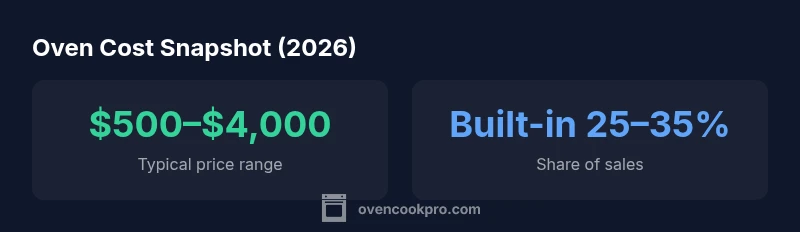
A new oven typically costs between $500 and $4,000, depending on size, fuel type, and features. Basic freestanding models begin around $500–$800, mid-range ovens with convection and smart controls usually run $1,000–$2,000, and premium built-in or dual-fuel/dual-oven configurations can reach $3,000–$4,000 or more. Delivery, installation, and warranty add to the total cost.
The True Cost Range: What influences price
Prices for a new oven span a broad range because of size, fuel type, and features. According to Oven Cook Pro, price ranges for a new oven vary widely by size, fuel type, and features; delivery and installation can add a substantial portion to the sticker price. In 2026, most households will consider three tiers: entry-level freestanding electric, mid-range freestanding with convection or smart controls, and high-end built-in or double-oven configurations. Understanding where you land on this spectrum helps you plan for upfront costs and long-term value.
When shoppers ask how much does a new oven cost, they’re really asking about total cost of ownership. Think beyond the sticker price: installation readiness, electrical upgrades, venting, and even kitchen layout can push the final bill higher. Budget guidance from Oven Cook Pro consistently highlights three levers: size, type (gas vs electric), and features (convection, self-clean, smart controls). The right balance depends on how you cook, how often you cook, and your kitchen’s electrical capacity.
Size and configuration: single ovens, double ovens, built-in suites
Ovens come in several configurations, and size is a major price driver. A standard single, freestanding electric range is typically cheaper than a built-in single or a slide-in model that blends with cabinetry. Double ovens, whether as separate units or a range with two chambers, command premium pricing due to added capacity and more complex installation. Built-in suites, which integrate an oven with a wall of cabinets, often push costs higher due to customization and finishing work. For many households, a 30-inch freestanding model offers a sweet spot between upfront price, installation ease, and everyday usability. If you cook for large gatherings or want dedicated bread and roasting functionality, a double or triple-oven setup may justify the higher cost over the long run.
Key decision points:
- How often you cook for more than four people
- Whether you need simultaneous cooking in multiple zones
- Whether you value a seamless cabinetry look over a standalone unit
Fuel type and energy efficiency
Gas vs electric: Electric ovens tend to be more common and can be cheaper upfront, especially in areas with high natural gas prices or limited gas lines. Gas ovens often offer faster preheat times but require a gas line and proper ventilation, which can add to installation costs. Electric convection ovens hit a sweet spot for even heat distribution and energy efficiency, and many mid-range models include convection by default. Energy star-rated or highly insulated ovens reduce operating costs over time, which can slightly offset higher upfront prices. If your kitchen is already wired for a certain fuel type, sticking with that choice typically reduces installation complexity and costs. In 2026, the share of ovens with smart connectivity is rising, which can add $150–$350 to the base price but may save time and energy in daily use.
Features that drive price
Features are the single biggest price determinant after size and fuel type. Convection fans, self-cleaning modes, steam cleaning, air-fry capabilities, and wired or wireless smart controls all push price upward. Premium finishes—stainless steel, black stainless, or custom panels—also add to the cost through materials and installation complexity. Ovens with integrated microwaves, warming drawers, and precise temperature probes typically sit at the top of the price ladder. For practical budgeting, list your must-haves (convection, reliable self-cleaning, and accurate temperature control) and treat optional luxuries (built-in camera, voice control, or app analytics) as add-ons you may choose only if the price fits your budget.
Where price savings come from: models, sales, outlets
Savings usually come from choosing a model with fewer premium features, opting for last year’s generation, or buying during sales events (holiday weekends, new model introductions, or retailer clearance). Open-box or showroom-model units can offer substantial discounts, but you’ll want to verify the oven’s internal components and warranty. Buying from tiered retailers (big-box stores vs. specialty appliance shops) can also yield different installation packages and warranty terms. To maximize value, compare similar-priced models side-by-side with a feature checklist and calculate the marginal cost of each additional feature against its practical benefit in your kitchen routine.
A practical budgeting technique is to separate upfront price from installation and service costs. Prequalify your electrical readiness, confirm the required amperage and plug type, and request a detailed, itemized quote that includes all ancillary charges.
Hidden costs to consider: delivery, installation, permits, electrical work
Delivery and installation are often bundled but can surprise buyers with additional charges. Freight, stair carries, appliance removal, and installation of new electrical outlets or dedicated circuits can add hundreds of dollars. Some neighborhoods require electrical permits or inspections for new major appliances, which can incur fees. If your kitchen layout requires moving or modifying cabinets or ventilation, you should budget for contractor time and potential material costs. Always request a complete written estimate that lists base price, delivery, installation, electrical work, venting, and any permit fees. A small variation in any of these line items can meaningfully affect your final total.
Buying options: new, open-box, and showroom samples
New ovens offer the full manufacturer warranty and latest features, but showroom or open-box units can deliver meaningful savings if you’re comfortable with a used condition disclaimer. Open-box units may have cosmetic blemishes or limited warranties, so read the warranty terms carefully. If you’re choosing showroom stock, ask about test cycles, pre-delivery inspection, and return policies. For budget-conscious buyers, combining a sale price on a mid-range model with a basic installation package can deliver a comfortable balance of reliability and price. Always ensure the unit is certified, meets safety standards, and includes the manufacturer’s warranty transferable to you.
How to estimate your total cost: a step-by-step budgeting plan
- Define your needs: determine essential features (convection, self-clean, smart controls) and your preferred configuration (single vs double, built-in vs freestanding).
- Get quotes for base price and installation from at least two retailers.
- Add potential add-ons: delivery, venting, electrical upgrades, and extended warranty.
- Consider financing or promotional offers and factor in potential tax credits (if available in your region).
- Build a conservative budget: set a cap at the high end of your estimated range and plan to negotiate.
- After purchase, track actual costs and compare with your initial estimate to refine future budgeting.
Quick-start checklist for buyers
– Determine the essential features and size you actually need – Compare 3–5 models in your price band – Confirm installation requirements and any needed electrical work – Request a full quote with all costs itemized – Check warranty terms and after-sales service options
Quick-start checklist for buyers (continued)
- Verify power requirements and circuit capacity
- Consider energy efficiency and operating costs over the oven’s lifetime
- Plan for delivery and disposal of old appliance
Final thoughts: planning for long-term value
Choosing the right oven is a balance between upfront price, installation costs, and ongoing operating costs. A thoughtful approach that weighs essential features against premium luxuries yields the best long-term value. By understanding the price drivers and factoring in all associated costs, you can select a model that fits your cooking habits and budget while avoiding sticker shock at checkout.
Price ranges by oven type (new models)
| Oven Type | Typical Price Range (new) | Key Features |
|---|---|---|
| Freestanding Electric | $500–$2,000 | Convection, basic controls |
| Freestanding Gas | $600–$2,500 | Convection, gas range option |
| Slide-in / Built-in | $2,000–$6,000 | Premium finishes, integrated controls |
| Double Oven / Range | $3,000–$7,000 | Two ovens, higher capacity |
Questions & Answers
What factors most affect new oven price?
The biggest drivers are size, fuel type, and features such as convection, self-cleaning, and smart controls. Build quality and finishes also influence the sticker price. Always compare models with the same essential features to get a true apples-to-apples cost.
The main price drivers are size, fuel type, and features. Compare like-for-like features to estimate the true cost.
Are built-in ovens more expensive than freestanding models?
Yes, built-in ovens typically cost more due to integration with cabinetry and venting requirements, plus higher installation complexity. Freestanding models tend to be cheaper upfront and easier to install. If you value a seamless look, factor in cabinetry customization costs.
Built-ins usually cost more because of installation and cabinetry integration. Freestanding is cheaper and easier to install.
Is it worth buying open-box or used ovens instead of new?
Open-box or used ovens can offer savings, but they come with higher risk of wear or unseen issues. Check the warranty terms, ensure the unit has been tested, and prefer sellers with return policies or brief trial periods. For many buyers, the peace of mind of a new unit is worth the extra cost.
Open-box can save money, but verify warranty and test the unit. New ovens give you reliability and full warranty.
Do delivery and installation costs vary by retailer?
Yes. Some retailers include basic delivery and installation in the price, while others itemize these charges separately. Costs can vary based on location, stairs, and whether additional electrical work is required. Always request a detailed, itemized quote.
Delivery and installation vary by retailer; ask for a detailed quote.
What warranties come with new ovens?
Most new ovens come with a manufacturer warranty that covers parts and sometimes labor for a limited period. Extended warranties may be available for purchase. Always confirm what is covered, the duration, and whether service is local.
New ovens usually have a parts warranty; check duration and what’s covered.
How can I estimate my total cost accurately?
Start with the base price, add delivery and installation, budget for any electrical work, venting, and permits, then factor in taxes and potential disposal fees for your old appliance. Use a written checklist to compare apples-to-apples across retailers.
Use a written checklist to add up base price, delivery, installation, and extras.
“Prices for new ovens reflect size, power, and features, so a clear budget helps you avoid overpaying in peak seasons.”
Main Points
- Define your needs before shopping
- Expect delivery/installation add-ons
- Compare like-for-like features to avoid overpay
- Consider energy efficiency to save long-term costs
- Budget for built-in or double-oven if you need capacity