Gas Oven Price Guide 2026: What to Expect for Homeowners
Explore the true cost of gas ovens in 2026, from sticker price ranges to installation and maintenance. Oven Cook Pro breaks down price tiers, regional differences, and smart buying tips to help homeowners budget confidently.


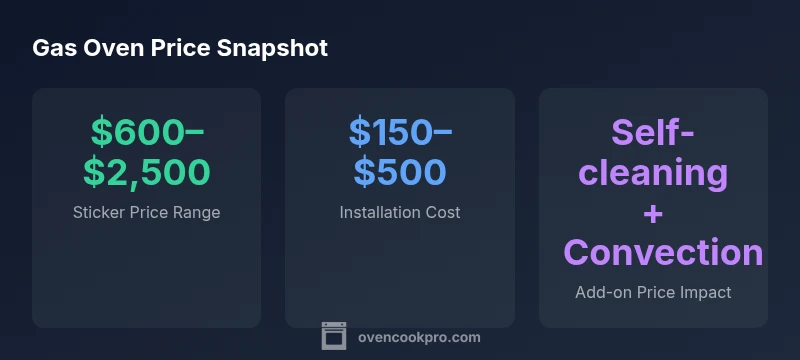
Gas oven price varies widely by size, features, and installation requirements. On average, new freestanding gas ovens range roughly from $600 to $2,500, with higher-end models or professional-grade units climbing toward $3,500. Installation costs, venting needs, and warranty options influence the total cost of ownership. According to Oven Cook Pro analysis, the sticker price is just part of the investment homeowners should plan for.
Market overview
According to Oven Cook Pro analysis, understanding gas oven price is essential for budgeting a kitchen upgrade. In 2026, the price landscape for gas ovens varies widely by size, features, and installation requirements. On average, new freestanding gas ovens range roughly from $600 to $2,500, with higher-end models or professional-grade units climbing toward $3,500. Installation costs, venting needs, and warranty options influence the total cost of ownership. The sticker price you see on a listing is only part of the story; to evaluate value you must consider efficiency, durability, and after-sale service. Retailers differ in included services: some offer discounted installation or complimentary venting kits, while others charge separately. If you’re upgrading from an electric to gas model, you should factor gas line readiness and potential permit costs. By planning timing—seasonal sales, holiday promotions, and model year refreshes—you can secure a better price without sacrificing performance. This is especially true when you compare total costs and long-term energy use across brands and models.
Price range by model size
Gas ovens come in several widths, with price generally rising with size and features. The most common 24-inch models typically price in the lower end of the range, around $600–$1,800. The 30-inch standard freestanding units commonly land between $800 and $2,400, while high-performance or double-oven 30-inch configurations push the sticker price toward $3,100. 36-inch professional layouts and slide-in designs can exceed $3,500, especially when convection and extra features are included. When retailers bundle delivery, installation, and removal services, the headline price may shift, so compare total costs rather than sticker alone. Keep in mind that some regions have higher labor costs, which can push installation closer to the upper end of the spectrum.
Installation and add-on costs
Even if a stove is listed with installation included, the underlying costs depend on existing infrastructure. Typical professional installation charges range from $150 to $500, depending on labor rates and whether gas line work is required. Ventilation is critical for gas ovens; if your kitchen lacks proper ductwork, you may need to add or upgrade a vent hood and ducting, which can add $100–$800. Some models ship with basic anti-tip hardware; more robust safety features can raise price. Always verify what the installer will handle and whether auxiliary venting or gas line upgrades are included in the quoted price. Planning for these costs helps prevent surprises at the final bill.
Features that affect price
Price differences are driven by features. Convection fans are standard on many mid-range models but can add 10–30% to the sticker price on basic units and even more on premium lines. Self-cleaning cycles, smart connectivity, and high-capacity burners also push costs upward, while simpler, manual-clean models remain more affordable. Warranties and service plans can further influence long-term ownership costs, so weigh the value of coverage against upfront savings. As a rule, you pay for reliability, durability, and convenience, especially if you cook frequently or rely on precise temperature control for recipes.
Buying strategies to save money
Smart shoppers leverage timing and bundle offers. Look for seasonal promotions and model-year clearances, compare bundled packages that include installation or haul-away, and don’t overlook refurbished or open-box units if they come with solid warranties. Price-match policies can yield savings when you’re evaluating multiple retailers. Reading reviews about customer service and post-purchase support helps avoid hidden costs related to repairs. Finally, plan your purchase around your kitchen layout and ventilation readiness to ensure a smooth, cost-effective installation.
Regional price variations
Prices for gas ovens can vary by region due to labor rates, freight, and local incentives or rebates. Urban areas with higher labor costs may see installation on the upper end, while rural regions might offer slightly lower service charges. When budgeting, account for these regional differences and ask retailers about delivery surcharges or regional warranty differences. A broader view helps you time purchases to regional promotions and optimize total cost of ownership.
Maintenance and ownership costs
Beyond purchase and installation, ongoing ownership costs include energy usage, routine servicing, and occasional repairs. Gas ovens can be cost-efficient with proper calibration and proper venting, but poor insulation or venting can lead to energy waste. Budget for annual maintenance and occasional professional check-ups, especially for convection or dual-oven configurations where seals and burner assemblies play a larger role. With proactive care, gas ovens can deliver consistent performance without escalating lifetime costs.
Comparison of common gas oven types by price and considerations
| Model Type | Approx Price Range (USD) | Key Considerations |
|---|---|---|
| Freestanding Gas Oven 24" (single oven) | $600–$1,800 | Compact kitchen, lower installation complexity |
| Freestanding Gas Oven 30" (single oven) | $800–$2,400 | Most common, larger capacity |
| Gas Double Oven (30") | $1,400–$3,100 | Higher capacity, complex venting |
Questions & Answers
What are the main price drivers for gas ovens?
Key factors include size (width and capacity), features (convection, self-cleaning, smart controls), and the cost of installation and venting. As you move up in size or add high-end features, expect corresponding increases in price.
Size and features drive price; installation and venting costs can add significantly as you move up.
Is installation included in the price?
Most listings separate the price from installation. Some retailers offer bundled packages, but many buyers pay installation separately after purchase.
Installation is often separate; check package options before buying.
Do gas ovens come with warranties?
New gas ovens generally include a manufacturer warranty. Retailer options vary, and extended warranties may cover parts or service for additional cost.
Warranties vary; read terms and compare before buying.
Are there energy-efficient gas ovens?
Many modern gas ovens offer good energy efficiency through convection and well-insulated doors. Look for energy labels or efficiency ratings and compare intake and heat loss characteristics.
Look for convection and insulation to maximize efficiency.
What should I budget for delivery and ventilation?
Delivery and venting costs depend on your home’s setup. Budget for potential duct work, hood installation, and any required venting equipment in addition to the appliance price.
Delivery and venting can add to the total—plan accordingly.
“Gas ovens offer reliable performance across price tiers, but your total ownership cost hinges on installation, venting, and maintenance. Choose a model that fits both your kitchen and long-term use.”
Main Points
- Understand that sticker price is only part of the total cost
- Size and features drive most price differences
- Plan for installation, venting, and possible gas-line work
- Compare total cost including delivery and warranty
- Budget for maintenance to protect long-term value