Why Is My Oven Clicking? Quick Troubleshooting for Home Cooks
Urgent, practical steps to diagnose and fix a clicking oven. Learn common causes, safety checks, and when to call a pro with expert guidance from Oven Cook Pro.


Most oven clicking is caused by a failing or dirty igniter, a faulty gas valve, or a loose electrical connection. In many cases, you’ll hear rapid clicks when the oven tries to ignite but can’t. Start by safely turning off power at the breaker, then inspect the igniter and burner for dirt or damage and reset the appliance.
Why Oven Clicking Happens
According to Oven Cook Pro, many ovens click as part of their normal ignition sequence, but a persistent or irregular clicking is a sign something is off. The two most common culprits are a dirty or failing igniter in gas ovens, and a faulty bake/broil element or control board in electric ovens. You may also hear quick, repeated clicks if the gas valve is sticking or if a loose wiring connection is triggering sporadic signals. Understanding these basics helps you decide which fix to try first and when to call a pro. If you’re asking why is my oven clicking, this guide walks you through the most common causes and safe checks. This early diagnosis sets the stage for effective, immediate action and safer, longer-lasting oven performance.
Common Scenarios: When the Click Means Different Problems
The meaning of a clicking sound varies with context. Rapid, rhythmic clicks when you try to ignite suggest the igniter or gas valve is attempting to light. Continuous or irregular clicking after ignition could indicate a faulty sensor or control board. A single, heavy click at startup might be a relay engaging. In electric ovens, frequent clicking without heat often traces to a failing bake/broil element or a worn thermostat. Recognizing the scenario helps you target the right fix and avoid unnecessary parts replacement. When diagnosing, listen for patterns: does the click happen only when the oven is attempting to heat, or does it persist after ignition? Each pattern narrows the potential causes and the appropriate remedy.
Safety First: What to Do Before You Inspect
Before touching the oven, power down and disconnect: switch off the circuit at the breaker and unplug if accessible. If you smell gas or suspect a gas leak, evacuate and call emergency services. Keep children and pets away and avoid attempting to light the oven if you’re unsure about the gas system. These steps reduce the risk of electric shock or gas exposure while you troubleshoot and help ensure you’re not compounding a hazardous situation with DIY work. Remember, safety first saves lives and appliances.
Simple Checks You Can Safely Do (No Tools Required)
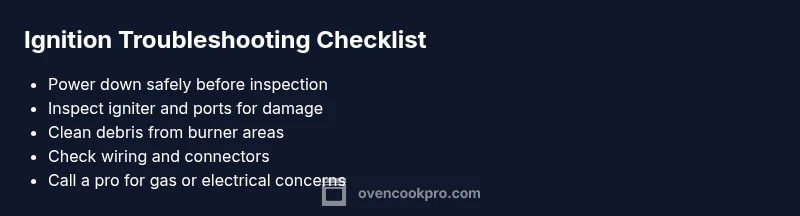
- Check the power supply: confirm the outlet is working by testing a plugged-in device in the same outlet. - Inspect visible wiring: look for loose plugs or frayed wires near the control board (do not touch energized parts). - Look for debris around the igniter or burner ports: a light cleaning can improve ignition if there is carbon or food residue. - Verify the oven's door latch and venting: a mis-seated door or blocked vent can affect ignition timing. - Check for recall or service notices: consult the manufacturer’s site for any known issues with your model. If any check shows damage or you’re unsure, stop and call a professional.
Diagnostic Flow: From Symptom to Solution
This section lays out a practical path: symptom → probable cause → recommended fix. Start with the simplest checks, then move to targeted replacements. Base the diagnosis on what you hear, see, and smell during operation. Remember, if you’re unsure about gas connections or wiring, stop and seek professional help. Oven Cook Pro analysis shows that most ignition-related clicks are caused by dirty igniters or worn relays, which are fixable without replacing major components.
When to Call a Professional
If you detect a gas odor, hissing sound, or if the oven fails to ignite after trying basic cleaning and power cycling, contact a licensed technician. Electrical components, heat sensors, and gas valves require specialized tools and safety checks. A professional can perform a safe diagnostic, test electrical continuity, and verify gas pressure without risking your home. For peace of mind, always err on the side of caution with gas-related issues and electrical faults.
Prevention and Maintenance to Avoid Future Clicks
Regular maintenance pays off. Clean the interior after heavy use to prevent grime from affecting ignition ports, and vacuum or brush around the burner area to prevent debris buildup. Schedule annual inspections and use the self-cleaning cycle (when appropriate) following the manufacturer’s guidelines. Keeping vents clear and using compatible bakeware can reduce unnecessary ignition stress and extend oven life.
Steps
Estimated time: 30-60 minutes
- 1
Power down and verify safety
Shut off the oven at the breaker and unplug if accessible. Confirm no gas odor before proceeding.
Tip: Double-check that all power sources are isolated before touching any parts. - 2
Access ignition area
Remove panels to access the igniter, burner ports, and control wiring. Keep track of screws and components for reassembly.
Tip: Take a photo of wire routing before disconnecting anything. - 3
Inspect igniter and ports
Look for cracks, damage, or heavy carbon buildup on the igniter; ensure ports are clear.
Tip: A soft brush or compressed air can gently remove debris without stressing parts. - 4
Clean or replace igniter
If debris can be cleaned, do so and recheck glow when powered (for safety, observe from a distance). If the igniter is damaged or does not glow, replace it with the correct part.
Tip: Only replace with an identical model compatible with your oven. - 5
Check wiring and connections
Reconnect any loose plugs and inspect for frayed insulation. Replace damaged wiring if necessary.
Tip: Avoid pinching wires during reassembly; use zip ties if needed to secure routing. - 6
Test ignition cycle
Restore power and run a test ignition. Listen for a steady click and a successful light.
Tip: If it still fails, stop and consider professional service. - 7
Evaluate control components
If ignition still fails after igniter and wiring checks, the issue may be a faulty relay or control board.
Tip: Control board components often require specialized diagnostic tools. - 8
Call a professional if needed
When gas systems are involved or if you’re uncomfortable at any point, contact a licensed technician for safe repair.
Tip: Gas-related concerns are not DIY friendly; safety comes first.
Diagnosis: Oven makes rapid clicking sound but won’t ignite
Possible Causes
- highFaulty igniter
- mediumGas valve sticking/solenoid issue
- highLoose or damaged electrical connections to ignition system
- mediumControl board/relay failure
- highBlocked burner or ignition port due to debris
- lowThermostat sensor issue
Fixes
- easyTurn off power and gas supply (if gas) and unplug the oven; verify breakers are off
- easyClean igniter and burner ports to remove debris and carbon buildup
- mediumTest and reseat wiring/connectors; replace damaged harness if found
- mediumReplace igniter or control relay if defective
- easyIf gas components show wear or leak signs, call a licensed pro
Questions & Answers
Why does my oven click constantly even when not heating?
Constant clicking usually points to a faulty igniter, a loose relay, or a control board. Start with safety checks and a visual inspection, then clean or replace the igniter if needed. If the problem continues, a professional assessment is recommended.
Constant clicking often means the ignition system is faulty. Start with safety steps, inspect the igniter, and call a pro if it persists.
Is a clicking oven dangerous?
Yes, gas and electrical issues can be hazardous. If you smell gas, evacuate and contact emergency services. For electrical concerns, avoid powered inspections and call a qualified technician.
Gas smells mean danger. Evacuate and call for help; for electrical issues, get a professional to inspect.
Can I fix a clicking oven myself?
Some safe, simple cleaning or inspection tasks can be DIY if you’re confident with power disconnection. More complex issues like gas valves or control boards should be handled by a licensed pro.
You can handle basic cleaning if you’re comfortable, but for gas or electronics, it’s best to call a pro.
How long does ignition repair take?
Most ignition fixes take 30-60 minutes, depending on accessibility and parts availability. If a part must be ordered, scheduling may extend the timeline.
Most fixes take about half an hour to an hour, depending on parts and access.
When should I replace the oven vs repair?
If repair costs approach or exceed half the price of a new unit, replacement may be more economical. Consider the oven’s age, efficiency, and reliability when deciding.
If the repair costs are high relative to a new oven, replacement may be smarter.
What should I do if I smell gas during troubleshooting?
Leave the area immediately and call emergency services. Do not operate switches or appliances, and do not ignite any flames.
If you smell gas, leave quickly and call for help right away.
Can a clicking oven affect my electricity bill?
Prolonged ignition problems can draw extra power, but the primary risk is safety and reliability. If you notice frequent runtime or heat loss, seek assessment.
Ignition problems can spike energy use and should be checked.
What maintenance prevents future ignition issues?
Regular cleaning of ports, periodic inspection of wiring, and following manufacturer maintenance schedules help prevent unexpected clicks and ignition failures.
Regular cleaning and checks help prevent future ignition problems.
Watch Video
Main Points
- Inspect ignition components first before major parts.
- Gas-related issues require professional handling.
- Safety always comes first during troubleshooting.
- Regular maintenance helps prevent recurring clicks.
- If indoors smells gas, exit and call for help immediately.