Why is my oven popping? A practical troubleshooting guide
Discover common causes of popping noises in ovens and a practical, safety-focused guide to diagnose, fix, and prevent these sounds with expert tips from Oven Cook Pro.


The most likely issue is thermal expansion of metal components and ignition cycles during cycling. Start with a safety check and simple fixes: unplug if needed, let the oven cool, and inspect the door seal and racks for movement. If popping persists after basic checks, schedule professional service.
Why the popping occurs
If you’re wondering why is my oven making a popping noise, you’re not alone. This sound is common and often not dangerous, but it can be alarming. The cause is usually thermal expansion, moisture release, or ignition dynamics. By understanding the sequence, you can differentiate between a harmless ping and a sign of a problem that needs attention. Safety first: if you smell gas or hear a sharp, sustained bang, stop using the oven and evacuate if necessary.
As the oven heats, metal components expand. Racks, liners, and element housings shift slightly; as they settle, you may hear a pop or ping. This is most noticeable during preheat and when cooling down after a bake. In gas ovens, the burner may also emit a small ignition pop as gas lights. In both electric and gas ovens, steam and moisture from food can escape and create popping sounds. The good news is that most pops are harmless and temporary; but persistent or louder noises deserve attention.
Oven sounds can vary with load (pan position, rack height), pan material (metal vs. glass), and the oven’s age. A ticking or creaking sound is not the same as a fire hazard; louder percussion on startup or during self-cleaning cycles warrants attention. The goal is to identify the source and address simple fixes before calling a technician.
According to Oven Cook Pro, routine checks and a clear understanding of your oven’s components reduce anxiety and improve safety. The next sections help you map noises to likely causes and decide when professional help is needed.
Common mechanical and venting causes
Popping noises in ovens can originate from several predictable sources. The most common is thermal expansion: metal racks, heating elements, and oven walls expand as temperatures rise and snap back as they cool. This is especially noticeable when you preheat or switch off a bake cycle. Another frequent cause is moisture and steam escaping from food or the oven interior, which can produce a sharp pop as air vents release steam. Gas ovens may exhibit a brief ignition pop when the burner lights or cycles off and on; this is typically normal if it’s brief and infrequent. Less common but possible causes include a loose heating element, a misaligned door gasket, or debris blocking vents. Finally, self-cleaning cycles can produce louder popping sounds due to intense heat and burning residue.
Safety first: address hazards immediately
Safety should come before any troubleshooting. If you smell gas, hear a continuous bang, or notice or feel heat coming from a faulty component, stop using the oven and evacuate if necessary. Do not attempt to repair gas lines yourself. If you suspect a gas leak, contact your gas utility or emergency services right away. If there’s no gas smell, but the noise feels unusual or starts to grow louder, turn off the oven, unplug (if safe), and allow it to cool completely before rechecking. Keep children and pets away. When in doubt, consult a licensed technician.
Always consult your oven’s manual for model-specific guidance. If your model has a self-cleaning cycle, understand that popping noises during cleaning are common but should stop once the cycle ends. If the noise continues after normal operations, it’s a sign to seek professional help.
Quick checks you can perform without tools
Before you call a technician, perform a few safe, uncomplicated checks. Start with the door gasket: look for cracks, tears, or warping that could cause pressure changes and unusual noises. Inspect racks and slides to ensure nothing is loose or rubbing against metal. Remove any pans that may be leaning or shifted during cooking, and verify there’s no debris near the burners or heating elements. Check the oven interior for moisture pockets after cooking—particularly if you’ve roasted meat or poultry with a lot of moisture. Finally, ensure the appliance is on a stable, level surface; an uneven base can create unusual sounds from components banging against each other.
How to interpret sounds and assess risk
Not every popping sound means there is a safety issue. Light popping during preheat is often expansion, while repeated pounding or grinding-like noises may indicate a loose part. If the popping aligns with the heat-up or cool-down cycles, expansion or venting is a likely cause. If a pop occurs when the burner ignites or if you hear a distinct gas odor, treat it as a potential safety hazard and pause use immediately. A persistent, high-pitched popping or clanging can indicate a failing part or misalignment.
Document when the noise happens, the cooker’s temperature at the time, what you were cooking, and whether the noise stops after a given duration. This information will help a technician diagnose the problem faster and more accurately.
Diagnostic flow overview
The diagnostic flow below maps typical symptoms to likely causes and practical fixes. It’s designed to help you quickly triage common popping noises and decide whether a simple adjustment or professional service is needed. Use this as a guide, not a replacement for a hands-on inspection by a qualified technician.
Symptoms often start during preheat, bake, or cool-down cycles. If you notice moisture release, steam, or a slight sulfur smell, consider venting issues or residual moisture. For gas ovens, a brief ignition pop is usually normal, but a recurring or delayed ignition could signal a burner problem. If sounds persist after basic checks, a professional diagnosis will be necessary to assess heating elements, gas lines, and structural integrity.
Step-by-step fixes for the most common cause
This section provides a practical, hands-on approach to addressing the most common causes of popping noises. Always prioritize safety; unplug the oven or switch off the circuit breaker before inspecting interior components. Do not disassemble gas lines or primary electrical connections unless you are trained. The following steps address expansion-related pops and minor misalignments.
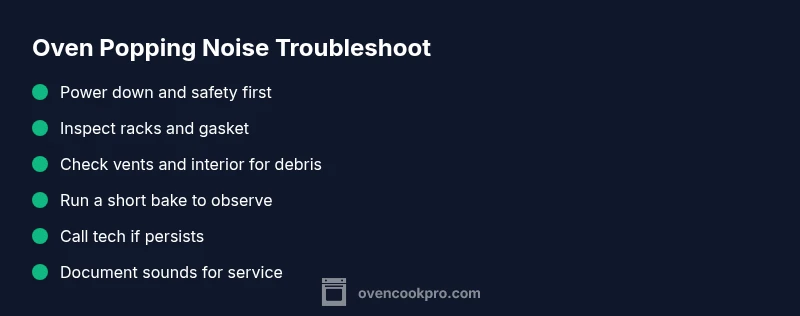
- Power down and unplug the oven. Allow it to cool completely before handling any components. 2) Inspect and secure any loose racks, pans, or oven accessories that might be rattling on heating or cooling. 3) Examine the door gasket for wear; replace if cracked or torn. 4) Check that nothing is blocking vents or obstructing the fan or convection system. 5) Reconnect power and run a short low-temperature bake to observe for abnormal noises. 6) If noises persist, contact a professional for a thorough inspection of heating elements, igniters, and venting ducts.
Tips & warnings for safe troubleshooting
Safety is non-negotiable. Always unplug or switch off power before touching electrical components. Do not attempt to repair gas lines yourself. Use a flashlight to inspect hard-to-see areas and take photos to show a technician. If you smell gas, leave the area immediately and call the gas company or emergency services. Never use metal tools that could damage sensors or wiring. Preventive maintenance—like keeping racks aligned, cleaning the interior, and scheduling periodic servicing—reduces the likelihood of popping sounds.
Key takeaways and prevention
- Most oven pops are normal expansion or venting noises during heating or cooling. - Persistent or loud pops warrant professional evaluation. - Regular maintenance reduces annoying sounds and prolongs oven life.
When to seek professional help and what to expect
If popping persists after basic troubleshooting or you notice signs of damage or gas-related hazards, contact a licensed technician. A professional will inspect the heating elements, ignition system, thermocouples, door seals, and venting. They may perform oven calibration, replace faulty components, or check gas pressure and ventilation. Expect a diagnostic visit that may include component testing and a written repair plan with a rough cost estimate.
Steps
Estimated time: 30-45 minutes
- 1
Power down and cool
Turn off the oven and unplug if safe. Allow the interior to cool completely before touching components. This prevents burns and electrical hazards.
Tip: Take a quick photo of the interior setup for reference. - 2
Inspect racks and cookware
Check that racks are properly seated and that no pan is rubbing against the walls or heating elements during operation. Remove extra cookware to test if the noise changes.
Tip: Place heavy items on center racks, not sides where movement is more likely. - 3
Check door seal and interior
Examine the door gasket for tears or warping. A damaged seal can cause unusual pressure and noises. Clean the gasket gently and replace if needed.
Tip: Use a flashlight to inspect the seal closely for hairline cracks. - 4
Observe during a short test bake
Plug back in and run a brief 10–15 minute bake at a low temperature to observe the noise with minimal heat stress. Stop if sounds escalate.
Tip: Record timing and temperature of the noise occurrence. - 5
Check vents and fans
Ensure vents are clear and the convection fan (if present) operates smoothly. Listen for unusual rattling or grinding during fan operation.
Tip: Dust vents annually to reduce obstruction. - 6
Call a professional if unresolved
If the noise persists after these checks, arrange service to inspect heating elements, igniters, and gas lines (if applicable).
Tip: Ask the technician to provide a written assessment and parts estimate.
Diagnosis: Oven pops during preheat, bake, or cool-down
Possible Causes
- highThermal expansion of metal components (racks, liners, elements)
- mediumMoisture or steam escaping from food or interior vents
- mediumGas ignition cycle (in gas ovens)
- lowLoose heating element or misaligned door gasket
Fixes
- easySecure loose racks/pans and ensure nothing rubs during operation
- easyInspect door gasket for wear; replace if damaged
- easyVent and interior moisture management; avoid sealing in steam-rich foods during preheat
- mediumIf noises persist, arrange professional service to inspect heating elements and gas system
Questions & Answers
Is a popping oven noise dangerous?
Most popping noises are harmless expansion or venting sounds, but persistent pops, unusual smells, or gas odors require immediate attention and possibly professional service.
Most pops are not dangerous, but if you smell gas or the noise is persistent, seek professional help right away.
Should I stop using the oven if it pops?
If you hear a sudden, loud popping or smell gas, turn off the oven and unplug if safe, then call a professional. For routine pops with no odors, you can continue using the oven after inspection.
If you smell gas or the noise is loud and persistent, stop using the oven and call a professional.
Could self-cleaning cause popping noises?
Yes, during self-cleaning cycles the extreme heat can cause popping as residues burn off. If pops occur mainly during cleaning, it may be normal, but monitor for any abnormal sounds afterward.
Pops during self-cleaning can be normal, but if they continue after cleaning, get a technician.
Can a loose heating element cause popping?
A loose heating element or improper seating can cause pops as it shifts during heat cycles. This should be inspected by a qualified technician.
A loose heating element can cause popping; a technician should check and secure it.
What maintenance reduces popping noises?
Regularly clean the interior, inspect door seals, and ensure racks and pans are properly placed. Avoid obstructing vents and schedule periodic professional checkups.
Regular cleaning and checks help reduce popping sounds.
When should I call a technician for gas ovens?
If you notice repeated ignition popping, misfiring, irregular flame, or gas smell, contact a licensed technician promptly.
Call a licensed tech if you notice ignition problems or gas smells.
Watch Video
Main Points
- Identify whether pops occur during preheat, bake, or cool-down.
- Check for obvious causes first: racks, door seal, and venting.
- If noises persist or gas is involved, seek professional help promptly.