Is Your Oven Going Out? Quick Troubleshooting Guide
Learn how to tell if your oven is going out with practical signs, quick checks, and safe, step-by-step fixes from Oven Cook Pro.


Most ovens fail gradually due to three common culprits: a faulty temperature sensor, worn heating elements, or a degraded door seal. For a quick check, unplug the unit, confirm the outlet is delivering power, and verify the oven's temperature with a separate thermometer. If heat is uneven or readings drift, expect service soon.
Signs your oven is going out. According to Oven Cook Pro, most ovens give warning signs long before failing completely. Look for uneven baking, hot spots, or zones that won't reach the set temperature. If preheating takes noticeably longer than usual, or if you must rely on older kitchen thermometers to gauge heat, your oven may be on its way out. Other red flags include peculiar smells, smoke, a ticking or buzzing from the control panel, and intermittent failures to bake or broil when commanded. Cracks in the glass door or gaps in door seals can also let heat escape, making the oven feel inconsistent. If you notice your oven's outer surface becoming unusually hot, or if the control board flickers, these are stronger reasons to suspect a failing unit. Aging ovens may also show error codes on the display that repeat or reset unexpectedly, signaling a deeper issue with sensors, boards, or connections.
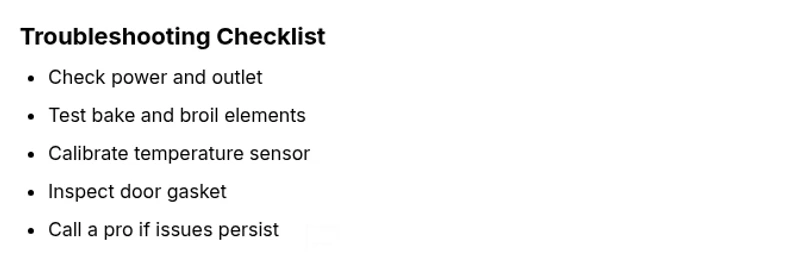
Start with the simplest checks you can do right now. First, ensure the oven is unplugged or powered down at the breaker before you touch any wiring. Verify the outlet is supplying steady power by testing another appliance on the same circuit. Check the circuit breaker, and reset it if it tripped. Confirm the clock shows correct time and that you’ve selected the proper cooking mode. Finally, make sure the door is fully closed and the door gasket isn’t visibly damaged. Clean any obvious debris from the control panel to avoid erroneous readings.
Diagnostic flow at a glance. Symptom → likely cause → quick fix. If the symptom is slow preheat, the cause is often a drifting sensor or worn heating element. If the heat seems inconsistent, inspect the bake and broil elements. For heat loss, check the door seal or insulation. If the display flickers, the control board may be failing. Each path leads to a clear next step or professional evaluation.
Common causes explained. Temperature sensor/thermostat drift: Over time, sensors can drift, causing the oven to heat to incorrect temperatures. Calibrating or replacing the sensor can restore accuracy. Heating elements wear: Both bake and broil coils can degrade, leading to weak or uneven heating. Visual signs include blistering or discoloration. Replacements are straightforward but require power down. Door seal/gasket wear: A cracked or stretched gasket lets heat escape, making preheating slow and temperatures uneven. Replacing the gasket is a common, safer repair. Control board issues: Electronics govern timing and temperatures; a failing board can cause erratic heating or missed cycles. A professional diagnosis is advised. Insulation degradation: If the cabinet insulation has settled or shifted, your oven loses heat more quickly, especially in older units.
Steps
Estimated time: 60-90 minutes
- 1
Power down safely
Unplug the oven or switch off the circuit at the breaker. Wait a minute to ensure all capacitors discharge, then inspect the plug and cord for damage. If you must handle the plug, use insulated gloves and keep the area dry.
Tip: Always lock the breaker off and keep a clear path to the outlet. - 2
Check the outlet and circuit
Plug a known-good appliance into the same outlet to verify supply. If the outlet or breaker trips, reset or replace as needed and consider wiring issues that require a licensed electrician.
Tip: Do not overload the circuit while testing. - 3
Test oven temperature with a thermometer
Place an oven-safe thermometer in the center of the rack and set the oven to 350°F. After preheating, compare the thermometer reading to the set temperature. Note any consistent discrepancy.
Tip: Record the difference for calibrating later. - 4
Inspect heating elements
Look for obvious signs of damage, burning, blistering, or corrosion on bake and broil elements. If you see damage, replace elements following manufacturer instructions and with the power off.
Tip: Handle with insulated gloves and avoid touching hot surfaces. - 5
Check door seal and hinges
Inspect the door gasket for cracks or looseness. Clean the seal to remove debris that could affect sealing. If the door sits unevenly or the seal is damaged, replace it to prevent heat loss.
Tip: Test seal by closing and gently tugging the gasket.
Diagnosis: Oven temperature is inaccurate or inconsistent
Possible Causes
- highTemperature sensor drift or failure
- highWorn heating elements
- mediumDoor seal degraded
Fixes
- easyCalibrate or replace the temperature sensor and verify with a reference thermometer
- mediumTest bake/broil elements for even heat and replace if damaged
- easyInspect and replace door gasket if gaps are found
Questions & Answers
What are the first signs my oven is going bad?
Common early signs include uneven baking, longer preheat times, and odd odors. If symptoms persist after basic checks, plan a professional assessment.
Look for uneven heat and slow preheats as early warnings, then consider service if it continues.
Should I repair or replace my oven?
If the oven is older and repairs are costly or frequent, replacement may be wiser. Compare repair costs to a new unit and weigh energy efficiency gains.
If repairs cost as much as buying a new one or if it’s very old, replacement is often sensible.
Is it safe to attempt DIY fixes?
Only perform basic checks with power off and do not touch live components. Complex repairs require a licensed technician.
Don’t work on live electrical parts; call a professional for complex repairs.
When should I call a professional?
Call a pro if you detect gas smells, sparking, scorching, or if the unit won’t power down safely. A licensed tech can diagnose sensors, elements, or boards.
If you smell gas or see sparks, stop and call a licensed technician.
Can preheating problems affect baking results?
Yes. Inaccurate preheat leads to under or overcooked food. Recalibration or part replacement may be needed for consistent results.
Inaccurate preheating can ruin bake results; fix the sensor or elements to fix it.
Does a failing thermostat always cause problems?
Often, but not always. A faulty thermostat can cause heat swings; testing and calibration are necessary before replacing components.
Thermostat problems often cause heat swings; testing is essential.
Watch Video
Main Points
- Identify signs early and act promptly.
- Start with simple checks before complex fixes.
- Test with a reference thermometer for accuracy.
- Replace worn parts rather than chasing patches.
- Call a pro for gas, electrical, or uncertain issues.