What is wrong with my electric oven? A Step-by-Step Troubleshooting Guide
Urgent, practical troubleshooting for common electric oven faults. Step-by-step checks, safety tips, diagnostic flow, and when to call a professional. Learn how to diagnose power, heating elements, thermostats, and control-board issues safely.


The most likely issue is a power or timer problem, such as a tripped breaker, faulty heating element, or door switch. Start by checking the outlet, then verify the oven is receiving power, inspect the door seal, and test basic functions like preheat. If the problem persists, consult a pro—electric ovens involve high heat and electrical components.
What could be wrong with your electric oven? A quick reality check
If you're asking what is wrong with my electric oven, you're not alone. Home ovens are complex devices that blend heating elements, thermostats, and control boards. When something goes wrong, the symptom is usually a single fault pattern—no heat, uneven heating, or failure to preheat. According to Oven Cook Pro, many faults start with power delivery or a simple damaged door switch, not a dramatic failure of the entire oven. This article helps you identify the most common causes and what you can safely test at home before calling a technician.
Safety is non negotiable: power, wiring, and circuits first
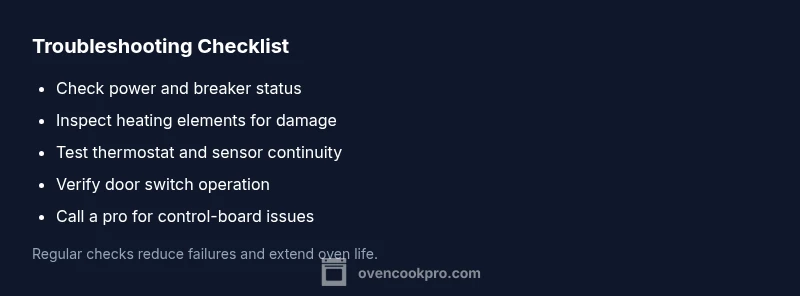
Before you touch any oven internals, cut the power. Unplug the unit or flip the circuit breaker. Confirm the outlet is supplying the required voltage and check for a tripped breaker or blown fuse in the panel. Damaged cords or loose terminal wires are common culprits behind what is wrong with my electric oven situations because they stop the oven from receiving stable power. Keep children and pets away, wear insulating gloves if you test elements, and never bypass safety interlocks. Oven Cook Pro emphasizes that safe testing is the foundation of reliable diagnosis.
Verify heating elements, thermostat, and temperature sensor
If the oven has power but won’t heat evenly or won’t reach temperature, inspect the bake and broil elements for visible breaks or scorching. A damaged element can be intermittent, causing hot spots or under-heating. The thermostat and temperature sensor are also frequent sources of error; a sensor that reads low will keep the oven in a cool state, while a faulty control board can misreport temperatures. Use a multimeter to check continuity on heating elements when the oven is cool. If you don’t see continuity or the element is broken, replace it. For safety, only perform basic continuity tests and consult a pro for internal sensor issues.
Door switch and control board: two quiet but critical parts
A failing door switch can stop the bake heating cycle from starting, especially if the oven acts normally except for no heat. Listen for the click of the door latch during cycle start and test the switch with a meter or by toggling the door while the oven attempts to preheat. The control board manages timing and temperature; when it malfunctions, you may see erratic heating or error codes. Document any codes you see and use them to guide further testing or a professional diagnosis.
Symptom-based fault patterns and quick self-checks
- No heat at all: power or safety interlock is usually the cause. Check the outlet, breaker, and door switch first. - Uneven heat or hot spots: heat elements or sensor miscalibration. Inspect elements and sensor; replace if damaged. - Oven preheats but never reaches target: thermostat or sensor fault; test continuity and consider sensor replacement. - Intermittent failure: intermittent wiring connections or a failing control board. Wiggle test wires gently and look for loose connections. If you’re unsure, stop and call a professional—electric ovens involve significant voltages.
When to call a professional and what to expect
If basic checks don’t restore proper function, it’s time to contact an appliance technician. Electric ovens contain high-voltage circuits that can pose a safety risk to untrained DIYers. A pro will verify line voltage, inspect wiring harnesses, test the heating elements and thermostat, and check the control board for fault codes. Expect a diagnostic visit to include a load test, potential part replacements, and a safety verification after repair.
Preventive maintenance that reduces future faults
Regular cleaning of the oven and racks, deep cleaning of the oven cavity, and periodic door seal checks help avoid temperature drift. Keep the interior dry and inspect the power cord for cracks. Schedule professional inspections if the oven is out of warranty. Doing small tests monthly, like a 350F bake test, can catch drift early and save you from bigger repairs.
Steps
Estimated time: 30-60 minutes
- 1
Power down and secure the area
Shut off power at the breaker and unplug the oven if accessible. Wait a few minutes to dissipate any residual charge. This initial step keeps you safe before any testing or disassembly.
Tip: Label wires and take photos before you disconnect anything. - 2
Check power supply and outlet
Inspect the wall outlet and cord for damage. Confirm the circuit breaker hasn’t tripped and that the outlet provides the expected voltage with a tester. This catches the most common cause: a simple power delivery issue.
Tip: If you’re unsure about voltage, call an electrician rather than guessing. - 3
Inspect heating elements for damage
Look at bake and broil elements for visible cracks or scorching. A damaged element can fail intermittently or completely. If you find a blemish, plan a replacement.
Tip: Only perform non-destructive visual checks unless you’ve tested continuity with the proper tools. - 4
Test thermostat and sensor
With the oven cool, check the sensor resistance with a multimeter and compare to the specification. A sensor reading out of range may cause the oven to underheat or overheat.
Tip: If you’re not comfortable testing sensors, skip to professional help to avoid misdiagnosis. - 5
Evaluate door switch and control board
Ensure the door switch clicks when the door starts a cycle. A faulty switch can prevent heating from starting. If codes appear, note them for the tech visit.
Tip: Do not force the door or bypass safety interlocks. - 6
Decide on next steps
If tests point to components you can replace safely (like a heating element), follow the manufacturer guidance. For control boards or uncertain findings, schedule a professional diagnostic.
Tip: Document symptoms, test results, and any error codes for the technician.
Diagnosis: Oven won't heat or maintains temperature
Possible Causes
- highPower supply issues (outlet, circuit breaker, wiring)
- mediumFaulty heating element(s)
- mediumDoor switch or interlock fault
- lowControl board/thermostat fault
Fixes
- easyCheck that the oven is plugged in and the circuit breaker is not tripped; test the outlet with a small appliance tester
- mediumReplace damaged heating element(s) or faulty thermostat sensor if continuity tests fail
- mediumTest door switch; replace if non-functional or stuck
- hardConsult a licensed technician for control board diagnostics or replacement
Questions & Answers
What should I do first if my electric oven won't heat?
Begin with safety: cut power, inspect the outlet and breaker, then verify the door switch. If there’s still no heat, proceed to test the heating elements and thermostat.
First, cut power and check the outlet and breaker, then inspect the door switch. If the oven still won’t heat, test the heating elements and thermostat.
Why does my oven preheat but never reach the set temperature?
A faulty thermostat or temperature sensor commonly causes this. Test the sensor and compare with the oven’s temperature readings; replace if out of range.
Preheating issues are usually a thermostat or sensor problem. Test the sensor and replace if readings don’t match.
Is it dangerous to use an oven that crackles or smells funny?
Crackling sounds or burning smells can indicate arcing or electrical faults. Stop using the oven and have it inspected by a professional.
Crackling sounds or burning smells are warning signs—stop using it and get a professional check.
Could a faulty door seal cause heat loss in baking?
Yes. A bad seal can let heat escape, making the oven work harder. Inspect the gasket and replace if worn or damaged.
A worn door seal can cause heat loss. Inspect and replace if needed.
Should I attempt to replace heating elements myself?
If you’re comfortable with basic wiring and safety practices, you can replace a damaged element. Otherwise, hire a pro to avoid shock or fire hazards.
Only replace heating elements yourself if you’re confident with wiring; otherwise, hire a professional.
Watch Video
Main Points
- Start with power checks to identify common faults.
- Prioritize safety and avoid DIYs with high voltage components.
- Document symptoms and error codes for technicians.
- Regular maintenance prevents drift and surprises.