Why Did My Oven Trip? Quick Troubleshooting Guide
Urgent, practical steps to diagnose and fix an oven that trips the circuit. Learn common causes, safety checks, and when to call a pro. Oven Cook Pro guidance, 2026.


Most oven trips are caused by an overload on the circuit, a faulty outlet, or a damaged heating element. For a quick fix, switch off the oven and reset the breaker, unplug the unit, inspect the cord and plug for damage, and ensure the outlet is delivering power without scorch marks. If it trips again, avoid using it and call a pro.
Understanding the risk: Why ovens trip and what it means
An electrical trip is your oven's way of saying something in the power chain is asking for more than the circuit can safely provide. Circuit breakers exist to shut off power before wires overheat, a scenario that can cause melted insulation or fire. The problem isn't always the oven itself; it can be the outlet, the cord, or how the oven shares a circuit with other appliances. According to Oven Cook Pro, most trips happen because of overloads on a single 240V circuit, or because a faulty component inside the oven creates an unintended path to ground. Recognizing what 'trip' means helps you respond quickly and safely, without risking damage to the oven or your home. Understanding these dynamics is the first step in a calm, methodical troubleshooting process that protects your kitchen and your family.
Common causes of oven trips
There are several frequent culprits behind an oven that trips a breaker. Start with the simplest explanations and move toward more complex possibilities.
- Circuit overload: Ovens draw substantial current when heating. If a circuit already powers other high-wattage devices, the breaker may trip to prevent overheating.
- Damaged outlet or cord: Cracked plug, scorched outlet, or loose connections can arc and trigger a trip.
- Faulty heating element: A damaged bake or broil element can short internally and pull abnormal current.
- Internal wiring or control board fault: A short in the oven’s wiring or control circuitry may trip the breaker.
- Faulty door switch or timer: A stuck switch can create a closed path even when the oven is idle, leading to trips.
- Ground fault or leakage: A miswired outlet or a GFCI-protected circuit can trip if leakage occurs. Each cause has its own telltale signs you can check safely at home.
Safety steps you should take now
When you notice a trip, your first job is safety. Do not touch exposed wires, and keep children and pets away from the panel area. If the oven is powered, switch it off at the wall or the dedicated breaker. Do not reset a tripped breaker repeatedly; a recurring trip signals an ongoing fault that requires inspection. If you smell burning, hear buzzing, or see visible damage, stop immediately and disconnect power. After the circuit has cooled, reassess the situation, noting any new signs like scorch marks on the plug or outlet. If any doubt remains, treat the problem as a potential electrical fault and seek professional help promptly. Your priority is to prevent fire risk and electrical shock.
Visual inspection: cord, plug, and outlet
A careful visual check can reveal obvious faults. Inspect the power cord for cracks, kinks, or heat damage. Examine the plug for discoloration or bent prongs. Look at the outlet for scorch marks, loose screws, or signs of heat exposure. If you see damage, do not use the oven until a qualified technician has evaluated the wiring. While inspecting, unplug the oven if feasible and safe, and reset the relevant breaker, making note of any changes in the panel after re-powering. Visual cues are often the first, fastest clue to the underlying issue.
Electrical checks: panel, breakers, and load balance
Accessing the electrical panel should be done with care. Start by confirming the oven’s dedicated circuit is not shared with other heavy appliances. If the breaker trips again, you may have an overload issue, a short, or a failing component inside the oven. Use a voltage tester to ensure the outlet is delivering proper voltage and that wiring is secure. If you’re not comfortable testing live circuits, skip this and call a licensed professional. Keeping a log of tripping events (when it happens, what settings were used) can help a technician diagnose the root cause.
Diagnostic flow you can follow
A practical, safety-forward approach helps you identify the fault without unnecessary risk. Begin with the simplest checks:
- Confirm the breaker and outlet are functioning and not damaged.
- Inspect the oven’s cord and plug for wear.
- If safe, reset and test with the oven on low heat; monitor for a repeat trip.
- If it trips again, inspect heating elements for visible damage.
- If still unresolved, involve a professional and consider panel inspection for overloading or wiring faults.
This method keeps you safe while narrowing down the problem to either the outlet/cord, the heating element, or the oven’s internal circuitry. Always prioritize safety and professional input when in doubt.
When to call a pro and what to expect
If you cannot identify a clear cause or if there are signs of burning, smell of plastic, or visible damage, stop and call a licensed electrician or appliance technician. A pro will perform a thorough electrical test, inspect the oven’s wiring harness, heating elements, control boards, and the outlet, and verify that the circuit is properly rated for the oven’s load. Expect a diagnostic visit to include power testing, component inspection, and a plan for replacement parts or wiring adjustments. Quick, professional intervention can prevent a recurrence and reduce safety risks.
Prevention tips to avoid future trips
Prevention starts with proper circuit design and regular inspection. Use a dedicated 30-50A circuit (as recommended by the oven’s manual) for your oven to avoid shared-load trips. Periodically inspect the power cord and outlet for wear, keep the area around the outlet free of heat sources, and avoid using extension cords with high-wattage appliances. If you notice frequent trips, consider upgrading your electrical service or distributing loads more evenly across circuits. Regular maintenance by a pro can catch deteriorating insulation, loose connections, or degraded components before they cause a trip.
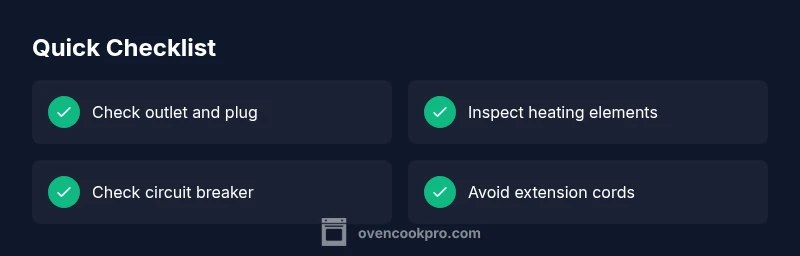
Quick reference checklist for trips
- Isolate power and check the breaker status.
- Inspect the cord, plug, and outlet for damage.
- Look for visible signs of heating element damage.
- Avoid using the oven if the breaker trips again.
- Call a pro for a detailed electrical diagnosis.
Steps
Estimated time: 45-60 minutes
- 1
Power down and secure the area
Turn off the oven at the wall or main breaker and unplug if safe. Clear the area around the outlet and oven to prevent tripping or accidental contact with hot surfaces. Confirm the area is dry and free of moisture before proceeding.
Tip: Use insulated gloves if you must handle plugs; never touch exposed conductors. - 2
Inspect the cord and plug
Look for cracks, kinks, or scorch marks on the cord. Check the plug prongs for bending or discoloration. A damaged cord or plug should be replaced by a qualified technician before further testing.
Tip: Document any damage with photos for your technician. - 3
Check outlet and circuit
If you can access the outlet safely, inspect for warmth, discoloration, or a loose connection. Use a tester to verify proper voltage and confirm the outlet isn’t shared with other high-draw devices.
Tip: Do not exceed rated capacity of the outlet; avoid daisy-chaining cords. - 4
Inspect heating elements
Visually inspect bake and broil elements for cracks, blistering, or blackened areas. A damaged element can short and trip the circuit when energized. Do not touch hot elements; test only when cooled.
Tip: If unsure, have a pro test resistance and continuity with proper equipment. - 5
Test on a low heat setting
Power the unit back on and run the oven at a low temperature for a short period. Observe whether the circuit trips or the oven shows abnormal behavior like smells or heat buildup.
Tip: If it trips instantly, assume a fault and stop testing. - 6
Decide on next steps
If the breaker stays on and the oven seems calm during the test, you may be dealing with a intermittent fault or overload condition. If trips recur, schedule a professional inspection to avoid safety risks.
Tip: Keep a log of symptoms and test results to guide the technician.
Diagnosis: Oven trips breaker when turned on
Possible Causes
- highCircuit overload from high wattage heating element
- highShort in heating element or wiring
- mediumFaulty outlet or damaged power cord
Fixes
- easyReset the breaker and unplug the oven to inspect the cord and plug for damage
- mediumVisually inspect heating elements for cracks or scorching; replace if damaged
- mediumTest the outlet with a known-good device and check wiring in the outlet box; call a pro if you detect damage
Questions & Answers
Why does my oven trip the breaker immediately when I switch it on?
Immediate trips typically indicate an overload, short, or damaged cord/outlet. Start with the simplest checks and disconnect power if you smell burning or see damage.
Immediate trips usually mean overload, a short, or damaged wiring. Begin with basic checks and disconnect power if you notice burning or damage.
Can a faulty heating element cause a circuit trip?
Yes. A damaged bake or broil element can short internally and draw excess current, tripping the breaker. Inspect elements visually and replace if damaged.
Yes, a faulty heating element can trip the circuit. Inspect and replace if damaged.
Is it safe to reset the breaker after a trip?
Resetting can be safe if you have found and corrected the fault. If trips recur, stop and call a professional rather than repeatedly resetting.
Resetting is okay if you’ve corrected the fault; otherwise, call a pro.
When should I call a professional for an oven trip?
Call a professional if trips persist after basic checks, or if you notice burning smells, sparks, or visible wiring damage. A pro can diagnose and repair safely.
If trips persist or you smell burning, call a professional.
Can running other appliances on the same circuit cause trips?
Yes. High-draw devices sharing a circuit can overload it, leading to trips. Consider distributing loads or upgrading the circuit.
Yes, multiple high-draw appliances can cause trips; distribute loads.
How can I prevent future oven trips?
Use a dedicated circuit, inspect cords/outlets regularly, and avoid extension cords. Schedule periodic electrical checks to catch wear or degradation early.
Use a dedicated circuit and regular checks to prevent trips.
Watch Video
Main Points
- Isolate power before any inspection.
- Overloads and damaged elements are common trip causes.
- Don’t bypass safety devices; call a pro if unsure.
- Document symptoms to aid diagnosis.
- Use a dedicated circuit for ovens to prevent future trips.