Whirlpool Oven Repairs: Step-by-Step Guide
Learn safe, practical Whirlpool oven repairs with our step-by-step guide. Diagnose heating, temperature, and control issues, plus troubleshooting tips for common Whirlpool oven problems.


You will diagnose and perform common Whirlpool oven repairs, such as heating element issues, thermostat inaccuracies, and control-board faults, using a step-by-step approach. Gather basic tools, unplug the unit, test components with a multimeter, and replace faulty parts if needed. This guide prioritizes safety and identifies when professional help is wiser.
What to know before starting Whirlpool oven repairs
Before you begin Whirlpool oven repairs, make sure you understand model-specific design and safety considerations. Ovens are high-heat appliances with electrical components, so power isolation is non-negotiable. This guide emphasizes a methodical, safety-first approach and helps you decide when to call a professional. According to Oven Cook Pro, a cautious, stepwise plan reduces risk and improves outcomes for Whirlpool oven repairs.
Common Whirlpool oven issues
Whirlpool ovens experience a range of issues that affect cooking quality. The most frequent problems include heating or preheating failures, uneven temperatures, and thermostat misreadings. You might notice the oven running but not reaching the set temperature, or temperatures fluctuating widely during a bake. Other signs include long preheat times, blinking displays, or error codes on digital controls. Understanding these symptoms helps you target the right component for testing and potential replacement.
Safety and preparation
Always unplug the appliance and switch off the circuit breaker before touching any wiring or interior components. Wear heat-resistant gloves when handling warm parts and keep a fire extinguisher nearby. Work in a well-ventilated area and avoid liquids near electrical connections. Keep children and pets away from the workspace. Document any disconnections and take photos to aid reassembly.
Diagnosis: testing components
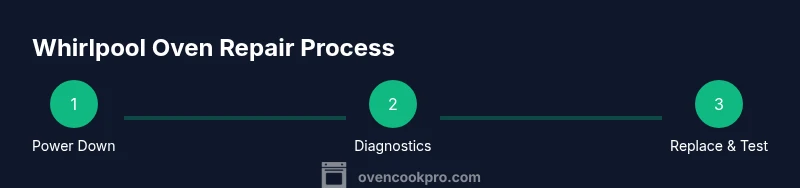
A methodical diagnostic approach starts with verifying the oven’s actual temperature using a reliable oven thermometer. Test heating elements for continuity with a digital multimeter; a lack of continuity typically indicates a faulty element. Check the oven thermostat by comparing setpoint readings with actual temperatures. If your model includes a control board, inspect for burned components, loose connectors, or obvious damage. Always test one component at a time to isolate the fault.
Replacing common parts
If testing reveals a faulty heating element, thermostat, or igniter, replacement is often straightforward with basic tools. Disconnect power first, then remove the faulty part following the manufacturer’s service manual. Install the new part, reconnect wiring securely, and recheck for proper operation. If you’re uncertain about compatibility, consult the model number and confirm a compatible Whirlpool replacement part before buying.
Calibration and testing after repair
After replacing a part, rebuild power to the oven and perform a controlled test bake. Preheat to a moderate temperature (e.g., 350°F) and verify the oven’s actual temperature with your thermometer. Check bake and broil functions to ensure consistent heat output and proper cycling. Observe for any unusual smells or smoke; if detected, power down immediately and reassess.
When to call a professional
If you encounter gas lines, uncertain wiring, or an error code you can’t interpret, seek professional help. Structural disassembly of complex boards or high-voltage sections should be done by a licensed technician. For models under warranty, check your coverage before attempting DIY repairs. A pro can confirm fault isolation and ensure safe reassembly.
Cost considerations and parts quality
Prices for Whirlpool oven repair parts vary by component and model. As a rule, plan for a range that reflects the part’s complexity and availability. When buying replacement parts, prioritize OEM or high-quality aftermarket equivalents with solid warranty terms. Balance labor costs and part prices—sometimes a professional repair can be more economical than repeated DIY fixes.
Troubleshooting myth-busting and tips
Common myths include that all problems require a full replacement or that DIY fixes are always risky. While some issues do justify replacement, many heating-related faults are simple to diagnose with a meter and a few safe checks. Always validate temperatures with a thermometer, secure all connections, and document your steps to avoid repeating work.
Tools & Materials
- Multimeter (digital)(Used for continuity and resistance tests on elements and thermostats)
- Phillips and flathead screwdriver set(Panel removal and terminal screws)
- Nut driver set(Appliance bolts and mounting hardware)
- Oven thermometer(Verify actual oven temperature vs. setpoint)
- Heat-resistant oven gloves(Protect hands during handling hot components)
- Replacement parts (thermostat, bake element, broil element, igniter)(Only if diagnosed faulty; verify compatibility first)
- Electrical contact cleaner(Clean oxide from terminals if needed)
- Flashlight or headlamp(Improve visibility inside the cavity)
- Cleaning cloth and mild degreaser(Clean surfaces before reassembly)
Steps
Estimated time: 60-90 minutes
- 1
Power down and unplug
Begin by unplugging the oven or switching off the dedicated circuit. This reduces the risk of electric shock while you inspect. If you can’t unplug, power off at the main service panel and wait a few minutes for capacitors to discharge.
Tip: Double-check the cord isn't under tension and avoid pulling any wires. - 2
Access the interior safely
Remove the back panel or bottom access panel as your model allows. Use approved tools and keep screws organized. Photograph each step to aid reassembly.
Tip: Keep track of small screws; misplaced screws can cause future issues. - 3
Test heating elements for continuity
With the appliance unplugged, disconnect the element and test for continuity using the multimeter. A broken element typically shows infinite resistance. If there’s continuity but the element still fails to heat, the issue may lie elsewhere in the circuit.
Tip: Always ground yourself before handling metal components. - 4
Check the thermostat and control signals
Test the thermostat circuit for proper resistance values at room temperature and heated state. Inspect control board connectors for any signs of burning or loose pins. A failed thermostat commonly causes temperature inaccuracies.
Tip: Be mindful of static discharge when handling control boards. - 5
Replace a faulty component
If tests confirm a bad part, install the replacement following the model’s wiring diagram. Re-seat connectors firmly and route wires away from heat sources. Reconnect power only after securing all parts.
Tip: Avoid forcing parts into place; misalignment can cause future failures. - 6
Reassemble and power test
Reattach panels and screws, restore power, and perform a test bake. Watch for smoke, unusual odors, or tripped breakers during the first run.
Tip: Start with a low-temperature test (e.g., 300°F) to verify operation gradually. - 7
Final verification and cleanup
Confirm the oven heats to the set temperature within a reasonable tolerance. Clean the interior and wipe away any fingerprints or debris. If the performance is inconsistent, reassess the diagnosed component.
Tip: Keep a repair log with dates and part numbers for future reference.
Questions & Answers
Is it safe for a homeowner to attempt Whirlpool oven repairs?
DIY repairs can be safe with proper precautions: disconnect power, follow the manual, and use insulated tools. For high-voltage components or gas models, consider professional help.
DIY repairs can be safe if you disconnect power and use proper tools; for complex electrical or gas work, hire a pro.
What are the most common Whirlpool oven problems?
Most common issues involve heating problems, temperature inaccuracies, and control panel errors. Symptoms guide you to test elements, thermostats, and boards.
Heating problems, thermostat errors, and control panel issues are the most frequent Whirlpool oven faults.
Do I need special tools for Whirlpool oven repairs?
Basic tools like a multimeter, screwdrivers, and an oven thermometer are essential. Replacement parts depend on the diagnosed fault.
A multimeter, screwdrivers, and an oven thermometer are essential; parts depend on the fault.
How long do Whirlpool oven repairs usually take?
DIY repairs typically take 1–2 hours for basic fixes, longer for complex diagnostics or part replacements.
Most simple fixes take about an hour or two, depending on the part.
Should I repair or replace the oven?
If multiple expensive components fail or the oven is outdated, replacement may be more cost-effective in the long run. Weigh part costs and labor.
If several high-cost parts fail or the oven is old, replacement might be wiser than continued repairs.
What warranty considerations apply to Whirlpool repairs?
Check manufacturer warranties and vendor guarantees on replacement parts. DIY work may affect eligibility for existing warranties.
Warranties may cover some parts; DIY work can impact eligibility, so verify before starting.
Watch Video
Main Points
- Diagnose by testing, not guesswork
- Prioritize safety with power off and protective gear
- Verify actual oven temperature with a thermometer
- Replace only faulty parts to avoid unnecessary costs