Parts for Whirlpool Oven: A Practical Homeowner's Guide
Learn about parts for whirlpool oven, how to identify worn components, replacement options, cost ranges, and maintenance tips from Oven Cook Pro.


Parts for whirlpool oven replacements typically include the bake element, igniter, thermostat, convection fan, door latch, and control board. This quick guide helps you identify worn components, compare OEM vs aftermarket costs, and choose safe, compatible options. Expect ranges for parts and labor, plus practical tips from Oven Cook Pro to extend oven life and reduce downtime.
Understanding the scope of parts for Whirlpool ovens
When you hear 'parts for whirlpool oven', you're usually talking about a broad set of components that keep heating, sensing, and controlling the appliance. Whirlpool ovens share common design principles across many models, but part availability, compatibility, and even wiring harness routing can vary by series. This means a careful approach is essential: identify the exact model and serial number, confirm the part number in the owner’s manual or Whirlpool’s official parts catalog, and cross-check with the retailer. In practice, most replacement tasks fall into a handful of categories: heating elements and igniters (the parts that generate heat or trigger flame), sensors and thermostats (the brain that controls temperature), convection fans and motors (airflow), doors and latches (sealing and safety), and control boards or touch panels (user interface). According to Oven Cook Pro, starting with a model-specific parts list reduces guesswork and helps you avoid ordering incompatible components. This upfront diligence saves time, money, and unnecessary downtime when your oven won’t heat or maintains erratic temperatures.
Common Whirlpool oven parts and their roles
- Bake element: the primary source of radiant heat for baking. If it burns out or sags, hot spots or cold spots appear.
- Igniter or spark electrode: enables gas ovens to ignite; a weak igniter can cause long preheat times or no heat.
- Thermal sensor/thermostat: ensures the oven reaches and holds the set temperature; faulty sensors cause temperature swings.
- Convection fan and motor: distributes heat for even cooking; a failing fan leads to uneven results.
- Door latch and hinges: keeps the door closed and seals during operation; worn latches can compromise safety and heat retention.
- Control board or display: interprets user input and controls oven functions; a failing board may show error codes or unresponsive controls.
- Relay and wiring harness: supports electrical connections; damaged wiring can cause intermittent failures.
Having a categorized view helps you inventory what’s worth testing first and what parts to prioritize when ordering.
How to identify worn components: symptoms and tests
Signs that a Whirlpool oven part is nearing end-of-life include persistent temperature drift, failure to preheat within a reasonable time, unusual noises from the fan, or a door that won’t seal properly. Start with basic checks: verify power, inspect visible wiring for damage, and test the bake element and igniter for continuity with a multimeter. Use the oven’s diagnostic codes, if available, and consult the service manual for model-specific tests. For safety-critical components like the gas ignition system or main control board, rely on professional diagnostics if you’re uncertain. Document symptoms carefully to streamline sourcing and avoid guessing, which often leads to ordering the wrong part.
OEM vs aftermarket parts: pros, cons, and decision guide
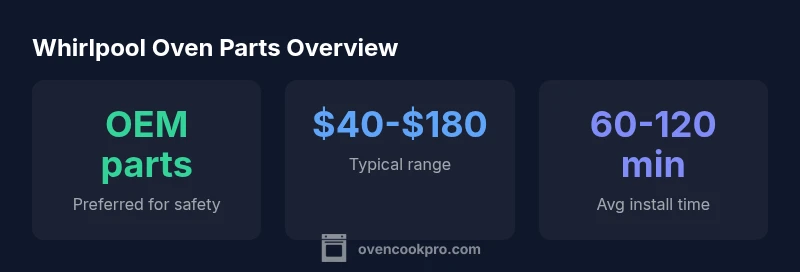
OEM parts are built to match exact Whirlpool specifications and are typically covered by manufacturer warranties, delivering the highest assurance of fit and performance. Aftermarket parts can be cheaper and readily available, but quality varies by supplier. If you’re replacing safety-critical components such as igniters, sensors, or main controllers, leaning toward OEM is prudent. For non-safety-critical items like door seals or minor hardware, reputable aftermarket parts can be a viable option. Always verify compatibility with your model number and cross-reference part numbers. When in doubt, contact the supplier or consult Oven Cook Pro guidance for model-specific recommendations.
Sourcing, serial numbers, and compatibility checks
Before purchasing, locate your Whirlpool oven’s model and serial numbers, usually found on a data plate inside the door frame or on the back of the appliance. Use these identifiers to pull an exact parts list from Whirlpool’s official site or authorized distributors. Cross-reference part numbers with your service manual and verify that the vendor supports your model. If you see multiple part numbers that claim compatibility, contact the seller to confirm. Request diagrams or exploded views; these often reveal hidden interlocks or harness routing that could affect fitment. Keeping a simple parts checklist (part number, model, and description) helps prevent mis-orders and returns.
Safe removal and installation: essential tools and steps
Ensure the appliance is unplugged and cooled before starting any replacement. Gather common tools: screwdriver set (Phillips and flathead), nut drivers, pliers, a multimeter, and electrical tape. For gas ovens, shut off the gas supply and ensure proper air flow around the unit. Follow the service manual step-by-step: disconnect the old part, inspect connectors for corrosion, and reseat all wiring harnesses securely. Replace gaskets or seals where applicable to maintain heat retention. If you encounter unfamiliar wiring or fragile connectors, pause and seek professional assistance. Document each step and test the oven function after installation, paying attention to whether the new part heats evenly and responds to control inputs.
Maintenance routines to prolong part life
Proactive care can extend the life of Whirlpool oven parts. Clean door seals and gaskets regularly to prevent heat leaks, and avoid slamming the door, which can wear hinges over time. Use a soft cloth with mild cleaner on exterior surfaces, and keep the interior free of spills that could corrode sensors or control boards. When replacing parts, opt for components with corrosion-resistant terminals and apply dielectric grease where recommended on electrical connections. Periodically inspect the wiring harnesses for wear and keep the oven area free from dust, which can contaminate sensors and fans. A simple annual checkup can catch issues before they escalate.
Budgeting, lead times, and warranty considerations
Budget planning for Whirlpool oven part replacements involves both the part cost and potential labor. OEM parts typically fetch higher prices but offer reliability and warranty coverage; aftermarket options may be cheaper but require vetting for quality. Lead times vary by supplier and model demand, with backorders possible for popular components. Always confirm warranty details for the specific part and request a copy of the warranty terms at purchase. If a part is essential to safe operation, prioritize timely sourcing and consider professional installation to minimize the risk of improper repair.
Representative Whirlpool oven parts with typical lifespans and ranges
| Part Type | Typical Replacement Lifespan (years) | Estimated Cost Range | Notes |
|---|---|---|---|
| Bake Element | 8-12 | "$40-$180" | Subject to model compatibility |
| Igniter/thermocouple | 5-10 | "$25-$90" | Critical for proper ignition |
| Convection Fan | 5-7 | "$60-$180" | Important for even heat distribution |
| Control Board/Display | 5-10 | "$70-$210" | Can vary by features and model compatibility |
Questions & Answers
Where can I buy OEM Whirlpool oven parts?
You can source OEM Whirlpool oven parts from the official Whirlpool Parts website, authorized distributors, or Whirlpool service centers. Always verify compatibility with your exact model using the part number and serial number.
Get OEM Whirlpool parts from Whirlpool’s site, authorized distributors, or service centers. Confirm model compatibility with the exact part number.
How reliable are aftermarket parts for Whirlpool ovens?
Aftermarket parts can be cost-effective, but quality varies by supplier. For safety-critical components, prefer OEM parts when possible, and always check warranty and cross-reference compatibility.
Aftermarket parts can save money, but quality varies. For safety-critical parts, choose OEM when you can and check warranties.
How do I confirm part compatibility for my Whirlpool model?
Find your model and serial numbers, then use the supplier’s cross-reference and the official Whirlpool diagrams to confirm compatibility before ordering.
Locate the model/serial numbers, then check the supplier’s cross-reference against Whirlpool diagrams to confirm compatibility.
What is the typical warranty on Whirlpool oven parts?
Warranty length varies by part and seller, commonly from 90 days to 2 years. Always read terms and keep the receipt for future claims.
Most parts come with a warranty from a few months up to two years; check the exact terms with the seller.
Can I install oven parts myself, or should I hire a pro?
Many non-safety-critical parts can be replaced by homeowners with basic tools. For gas ovens, electrical, or safety-critical components, hire a professional.
You can usually swap some parts yourself, but for gas, electrical, or safety-critical components, hire a pro.
“Regular maintenance and careful part selection are the best defenses against oven downtime. Replacing worn components promptly helps ensure safer, more predictable cooking and extends the life of Whirlpool ovens.”
Main Points
- Start with a model-specific parts list before ordering
- Prefer OEM parts for safety-critical components
- Always verify compatibility using part numbers and serials
- Budget for lead times and warranty terms
- Maintain and test components regularly to avoid downtime