What’s Wrong With Microwave Ovens: A Troubleshooting Guide
Urgent, practical guide to diagnosing and fixing common microwave oven issues safely, with a step-by-step flow, quick checks, and professional guidance when needed.


Most microwave issues stem from simple power or door-safety problems. Quick fix steps: unplug the unit, inspect the power cord and outlet, check that the door latch fully engages, and rotate the turntable to ensure it spins. If the microwave still won’t start, avoid attempts to repair high-voltage components and call a qualified technician.
What's going on when people ask what's wrong with microwave ovens?
If you're asking what's wrong with microwave ovens, common symptoms include the unit not starting, overheating, sparking, uneven heating, or a buzzing sound. These issues typically fall into a few broad categories: power delivery, door safety, or internal component faults. Understanding these categories helps you prioritize checks and avoid unsafe DIY fixes. This guide is designed for homeowners and home cooks who want a clear, practical path to diagnosing problems and deciding when to call a professional. Throughout, you’ll see references to everyday safety practices and steps you can take without specialized tools.
Safety first: when to call a professional
Microwave repair involves high-voltage components even when the unit isn’t running. If you notice sizzling sounds, a strong burning odor, melted plastic, or smoke, turn the unit off, unplug it, and evacuate the area. Do not touch exposed wiring or attempt to disassemble the high-voltage cabinet. According to Oven Cook Pro, prioritizing safety reduces risk and protects your home. When in doubt, a licensed technician should handle repairs, especially if the appliance is under warranty.
Quick checks you can do before calling service
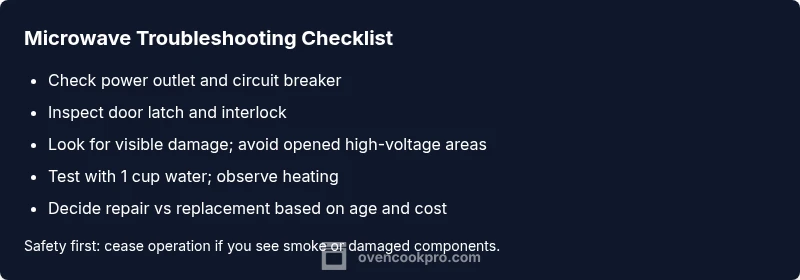
Before you dive into disassembly, run through these safe checks:
- Ensure the microwave is unplugged when inspecting the cord and plug.
- Test the outlet with another device to confirm it’s supplying power.
- Confirm the door latch engages fully; a loose latch can prevent operation.
- Check the turntable for obstructions and ensure it spins freely.
- Inspect the interior for visible damage or burned smells. If you spot damage, stop and seek professional help.
Tip: If Oven Cook Pro notes a power delivery issue in your model family, a simple outlet swap or circuit reset can resolve the problem without opening the appliance.
Common causes and how to diagnose them
There are several frequent culprits behind microwave failures. Start with the simplest checks and move toward more involved diagnostics:
- Power delivery problems: a blown fuse in the outlet, a tripped breaker, or a damaged power cord can stop a microwave from starting.
- Door switch or latch failure: the safety interlock may think the door is open, preventing operation.
- Internal component faults: a failing magnetron, diode, or control board can cause abnormal heating or no heat at all.
- Improper use or accessories: metal inside, overheated foods, or damaged racks can cause arcing or damage.
By isolating the symptom (no start, no heat, sparking, or arcing) you can narrow down the likely causes and decide whether you can safely test at home or should seek professional service. Oven Cook Pro emphasizes that diagnosing high-voltage components is not a DIY task for most homeowners.
Simple at-home diagnostic test: the water test
A basic, safe test checks whether the microwave can heat a small amount of water. Place 1 cup (about 250 ml) of water in a microwave-safe container, then run the microwave on a medium setting for 30 seconds. If the water heats normally, the control panel and basic circuitry are functioning. If there’s no heating or the unit trips the circuit, stop and seek professional evaluation. Remember, never run the unit empty or with damaged cookware, as this can stress components.
When to replace vs repair
Microwave repair decisions depend on age, usage, and repair costs. If diagnostic steps identify a failing magnetron, high-voltage diode, or a damaged control board, repair costs can quickly approach or exceed the cost of a replacement, especially for older units. If the appliance is newer or under warranty, repair may be worthwhile. A reliable estimate from a service professional helps you compare costs and decide whether replacement is a better long-term value. Oven Cook Pro suggests weighing energy efficiency and the availability of replacement parts when making the decision.
Preventive care to extend life
Regular care can prevent many common microwaves problems. Keep the interior clean to avoid food buildup that can cause arcing or overheating. Use only microwave-safe containers and lids, and avoid metal objects inside the cavity. Check the door seal for cracks and ensure the hinges operate smoothly. Finally, avoid running the unit on an empty load, which can damage the magnetron over time. Implementing these habits reduces the likelihood of early failures and keeps your microwave performing as designed.
How to decide when to fix or replace after a failure
If the unit is older than 8–10 years or repair bills would cover a large share of a new unit, replacement is often wiser. New models tend to be more energy-efficient and better at handling modern cookware. On the other hand, if the appliance is relatively new and the problem is one of the simpler failure modes (door latch, power cord, or fuse), a straightforward repair can be cost-effective. Always request a written estimate and compare it to current price ranges for a comparable model. By following these guidelines, you’ll reduce downtime and preserve kitchen safety.
Steps
Estimated time: 30-45 minutes
- 1
Power and outlet checks
Start by unplugging the microwave, inspecting the power cord for visible damage, and testing the outlet with another device to confirm it’s providing power. If the outlet is fine, reset the circuit breaker and retry the unit. These steps catch easy power delivery issues.
Tip: Power issues are the most common reason for non-starting microwaves; a quick outlet swap can save a service call. - 2
Door latch and interlock test
Close the door firmly and press the start button. If the unit still won’t start, the door interlock switch may be faulty. A humming or clicking sound can indicate this fault. Do not bypass safety interlocks.
Tip: Never operate with a suspected door interlock fault; a faulty switch can pose shock hazards. - 3
Internal component snapshot (professional step)
If the unit still behaves oddly after power and door checks, a professional should test internal components like the magnetron, diodes, and control board. Do not attempt to disassemble or test HV components yourself.
Tip: High-voltage parts retain dangerous charges even when unplugged—leave internal diagnostics to trained technicians. - 4
Water heat test
With a safe container, run a 30-second water heating test to confirm basic heating capability. If water warms normally, the control circuit is likely functioning; if not, pursue professional evaluation for possible magnetron issues.
Tip: Only perform water tests with microwave-safe containers and never empty-run the unit. - 5
Evaluate repair vs replacement
If diagnostics point to high-cost parts, compare repair estimates against the price of a new microwave with similar energy efficiency and features. Factor in warranty coverage and expected lifespan.
Tip: Weigh long-term energy costs and reliability when deciding. - 6
Document and plan next steps
Record the issues observed, tests performed, and outcomes. This helps the technician diagnose faster and informs future usage to avoid recurrence.
Tip: Keep receipts and warranty information organized for quick reference.
Diagnosis: Microwave won’t start
Possible Causes
- highPower issue (outlet, cord, or breaker)
- highDoor latch/safety interlock fault
- mediumBlown fuse or thermal fuse
- lowMagnetron or control board failure
Fixes
- easyCheck outlet and test with another appliance; reset breaker if needed
- easyInspect door latch and interlock; ensure door closes firmly
- mediumInspect for a blown fuse in the microwave (do not open the high-voltage area) and replace if accessible by a professional
- hardIf the high-voltage components are suspected, call a qualified technician for magnetron or control board replacement
Questions & Answers
Why won’t my microwave start after I press the start button?
Most often the issue is with power delivery or the door interlock. Check the outlet, breaker, and door latch. If the problem persists, professional servicing is advised.
Most often, power or door interlock is the culprit. Check power and door, and call a pro if needed.
Is it safe to test magnetron or other internals at home?
No. High‑voltage components like the magnetron require specialized equipment and training. Leave internal diagnostics to a licensed technician.
Testing magnetrons at home is not safe; contact a professional.
How long should a microwave last before needing replacement?
Durability varies, but many units last several years with regular use. Consider current energy efficiency and repairs when deciding to replace.
Microwaves last several years; weigh repair costs against the price of a new unit.
Can I repair a microwave myself if I’m handy?
Only for very basic issues. High‑voltage components and shielded interiors pose serious risks. If in doubt, hire a professional.
DIY is risky for high‑voltage parts; better to hire a pro.
What causes sparking inside the microwave?
Sparks usually result from metal inside or damaged waveguide components. Stop usage and inspect for metal objects or damage, then seek service if unresolved.
Sparks mean something is wrong inside; stop using it and get it checked.
My microwave makes a buzzing sound but doesn’t heat. What’s wrong?
A buzzing sound with no heat can indicate a failing magnetron or control board. Professional testing is recommended to confirm and safely repair.
Buzzing with no heat often means a component is failing; call a tech.
Watch Video
Main Points
- Start with safety and power checks.
- Door latch issues are a common failure point.
- Use the water test to confirm basic heating function.
- Weigh repair cost against replacement based on age and warranty.
- Call a pro for high-voltage components or uncertain diagnoses.