Microwave Malfunction Troubleshooting: Practical Guide
Learn how to diagnose and safely fix common microwave oven malfunctions with our urgent, step-by-step guide from Oven Cook Pro. Quick, actionable steps to protect you and your home.


If your microwave won’t heat or start, the most likely causes are a faulty door interlock or a blown fuse. Unplug the unit, inspect the door latch for damage, and check the fuse or circuit breaker. If the fix isn’t quick, stop using it and seek professional service.
What Happens When There Is a Malfunctioning of Microwave Oven and Why It Matters
When a microwave oven malfunctions, it can pose safety risks from electrical faults, arcing, or leaks of microwave energy. The exact outcomes vary, but common consequences include the unit failing to heat, tripping a circuit, or emitting unusual sounds or sparks. Understanding what happens helps you respond quickly and safely. According to Oven Cook Pro, most issues originate in safety interlocks, fuses, or door gaskets. Recognizing these patterns early prevents accidental exposure and costly repairs later. The core idea is to treat any non-standard behavior as a warning sign rather than a curiosity. If you notice burning smells, visible sparks, or smoke, shut the appliance off at once and unplug it. These steps align with Oven Cook Pro’s safety-first approach to kitchen appliance troubleshooting.
Quick safety reminder
- Never operate a microwave with a damaged door seal or while it shows sparks.
- Always unplug before inspecting internal components or attempting any fix.
- Keep liquids away from electrical outlets and never tamper with high-voltage parts unless trained.
Common symptoms you may encounter
- The unit won’t start: often a door interlock or fuse issue.
- The oven heats poorly or unevenly: magnetron or high-voltage capacitor fault could be involved.
- Sparking inside the cavity: usually a damaged waveguide or metallic residue causing arcing.
- Weird smells or smoke: could indicate overheating or insulation damage.
- Odd noises or buzzing: may point to a failed magnetron or loose components.
Oven Cook Pro emphasizes a cautious approach: diagnose methodically, avoid quick replacement guesses, and never bypass safety features.
Steps
Estimated time: 30-60 minutes
- 1
Unplug and unplug again
Begin by unplugging the microwave from the wall outlet and waiting 60 seconds to discharge any residual power. Reconnect and try a basic test on a different power source if available. This ensures you aren’t dealing with a temporary power glitch.
Tip: If the outlet has a GFCI, press the reset button and test with a simple appliance first. - 2
Inspect the door and latch
Close the door firmly and listen for the latch engaging. If the door won’t click shut or feels loose, the interlock switch may be stuck or worn. A faulty interlock is a common reason for a non-start condition.
Tip: Look for visible cracks or misalignment in the door seal; a damaged seal can trigger safety interlocks. - 3
Check the fuse and circuit protection
If there’s no power, or the display is completely dark, the internal fuse or a blown fuse could be the culprit. Do not bypass fuses—inspect with a multimeter or reference the user manual for the exact rating.
Tip: If you aren’t comfortable testing electronics, skip to professional service to avoid shock risks. - 4
Test for arcing or residue
Examine the interior for metallic remnants or damage on the waveguide cover. Any arcing signs or metal pieces can cause sparks and heat misbehavior. Clean or replace as appropriate.
Tip: Use a flashlight and avoid touching the waveguide; any cracking means professional service is needed. - 5
Assess heating performance
If it powers on but won’t heat evenly, the magnetron or HV capacitor could be degraded. This is a non-trivial repair and should be handled by a qualified technician.
Tip: Record any unusual noises or odors to share with the technician.
Diagnosis: Microwave won't heat or start; sparking or unusual noises
Possible Causes
- highPower/outlet issue
- highDoor interlock/latch fault
- mediumBlown fuse or tripped breaker
- lowMagnetron or high-voltage component failure
Fixes
- easyTest the outlet with another device; reset the circuit breaker if needed
- easyInspect the door interlock, hinges, and gasket for damage; replace if worn
- mediumCheck the microwave's internal fuse and capacitor per the manual; replace only if you are qualified
- hardIf the magnetron or HV components are suspected, contact a licensed technician
Questions & Answers
Why won't my microwave start even when the door is closed?
Most likely causes are a faulty door interlock switch or a blown fuse. Verify power at the outlet, inspect the door latch, and reset the breaker if needed. If it still won’t start, professional service is recommended.
If the microwave won’t start with the door closed, check the door interlock and fuse, then reset the circuit. If it persists, seek a technician.
Is it safe to use a microwave that sparking inside the cavity?
Sparks indicate arcing, typically due to metal remnants or a damaged waveguide. Immediately stop using the unit and unplug it. Do not attempt further inspections unless you are trained; call a technician.
Sparks mean arcing and you should stop using the microwave and call a technician.
Can I replace the fuse myself without prior electrical training?
Replacement of internal fuses or high-voltage components should only be done by qualified technicians. Incorrect handling can cause electric shock or fire. Consult the manual and contact pro service.
Fuses and high-voltage parts should be handled by a professional to avoid shocks.
What safety steps should I take before attempting any troubleshooting?
Unplug the unit, allow it to cool, and avoid touching exposed wiring. Keep liquids away from outlets and never bypass safety switches. If uncertain, stop and call a pro.
Unplug the microwave and avoid touching internal parts; call a pro if unsure.
When should I replace the microwave instead of repairing it?
If repeated failures occur or the magnetron or HV components fail, replacement may be more cost-effective than repeated repairs. Compare repair cost to a new unit and consider warranty.
If failures keep happening, it might be cheaper to replace rather than repair.
Are there maintenance practices that prevent malfunctions?
Regular cleaning, avoiding metal objects, and using proper cookware reduce arcing and residue. Periodic checks by a professional can catch issues early, extending the life of the appliance.
Keep it clean, use proper cookware, and have periodic checks to catch problems early.
Watch Video
Main Points
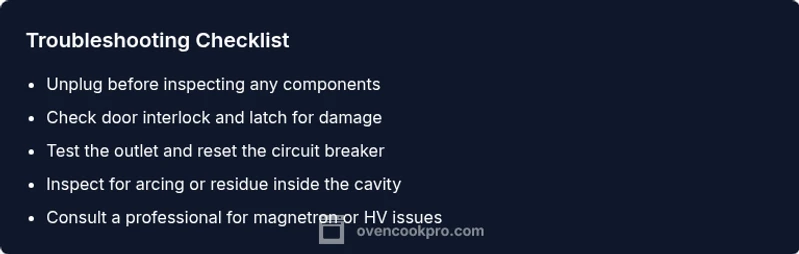
- Diagnose safely before repair.
- Door interlocks and fuses are common failure points.
- Unplug and power down before any inspection.
- Call a professional for magnetron or HV capacitor issues.
- Document symptoms to aid diagnosis and repair.