What Causes Oven to Overheat: A Troubleshooting Guide
Learn the common causes of oven overheating and a step-by-step plan to diagnose thermostat, sensor, venting, and wiring issues for safe, even cooking.


Begin by confirming thermostat calibration and the temperature sensor accuracy with a calibrated oven thermometer. Next, inspect the bake and broil elements, wiring for any signs of damage, and the control board for faults. Check ventilation and the door seal, and if readings still diverge, unplug the unit and consider professional service due to fire risk.
Common causes of oven overheating
If you’re wondering what causes oven to overheat, the most frequent culprits fall into five categories: faulty thermostat calibration, a defective temperature sensor, control board or relay failures, damaged bake or broil elements, and airflow problems from blocked vents or a worn door seal. In many homes, overheating starts when heat can’t escape or when the oven misreads its own temperature. Over time, calibration can drift, sensors can degrade, and electrical components can wear out, all of which push the oven beyond the set point. Other less obvious factors include using oversized or dark-colored cookware that absorbs more heat, placing additional racks in the wrong configuration, or keeping the range hood closed too long, trapping heat in the kitchen. Identifying the exact cause requires a systematic check of the most common issues first, especially the thermostat, sensor, and airflow path. According to Oven Cook Pro analysis, the majority of overheating cases are linked to sensor and thermostat faults rather than a total power failure.
How the thermostat and temperature sensor work
The oven's thermostat is the primary regulator that compares the sensed temperature to the setpoint and signals the heating elements to turn on or off. The temperature sensor monitors the actual oven air temperature and helps the control board determine if the reading matches the dial. When either component is faulty, the oven can overshoot the desired temperature and overheat. Signs include the oven continuing to heat after the setpoint is reached, or the oven thermostat not matching thermometer readings. To diagnose, use a calibrated oven thermometer placed inside the oven cavity. Compare its reading with the oven's display; if they diverge by more than a small margin, the sensor or thermostat may be at fault. Replacing a faulty part typically improves accuracy and safety. Note that some ovens use a combined sensor/thermostat circuit; in those cases, replacement of the entire assembly or control board might be necessary. Always check your model's service manual for exact testing steps and safety precautions. Oven Cook Pro's guidance emphasizes testing with an independent thermometer to verify accuracy before making component changes.
Safe, quick diagnostic checks you can perform
Carry out these checks safely before you start disassembling any hardware. First, ensure the oven is unplugged or the corresponding circuit breaker is off. Next, verify the power supply at the outlet and test for proper grounding. Place an oven thermometer inside and compare preheat readings to the dial. Look for signs of heat escaping around the door, gasket wear, or warped seals. Ensure the airflow path is clear—do not block vents or stack heavy cookware near the oven. If the readings do not align with the setpoint after these quick checks, it’s time to proceed with more in-depth testing or professional help. Safety comes first: if you smell burning, hear buzzing, or notice melted wiring, stop and unplug the unit.
Inspecting electrical components and control systems
Many overheating issues trace back to the electrical heart of the oven. The control board, relays, wiring harness, and thermal fuse can develop faults that cause the oven to stay on or overshoot temperatures. Look for obvious signs like discolored wiring, scorch marks, or a burning smell. If you suspect a faulty relay or board, don’t attempt risky repairs yourself; these parts require specialized tools and knowledge. You can test for continuity and verify sensor resistance with the proper equipment, but if you’re unsure, call a licensed technician. Regular professional service can catch creeping wear before it becomes a hazard. Always disconnect power before handling any internal components and follow manufacturer instructions to avoid electric shock or other injuries.
Ventilation, seals, and door: non-electrical culprits
Non-electrical factors often drive overheating or uneven heat. A blocked or partially closed vent, improper rack placement, or a worn door gasket can trap heat inside or impair exhaust. Check that the door seals are intact and not cracked or gapped, and replace if necessary. Ensure the oven is not installed in an enclosed cabinet space with restrictive ventilation. Also review the cookware being used; heavy or dense pans can absorb and retain heat, causing hotter spots near the bottom. By correcting airflow and sealing, the oven can operate closer to the intended temperature and maintain even cooking.
Prevention and maintenance to avoid overheating
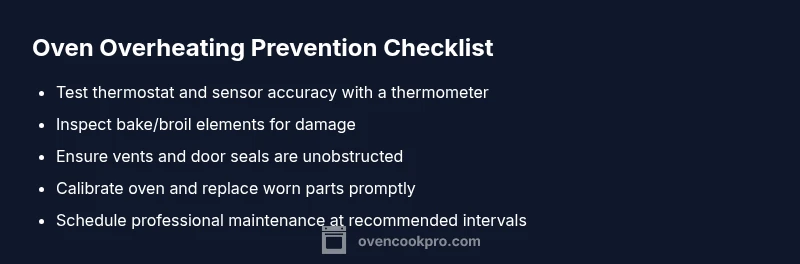
Prevention is the best fix. Calibrate your oven at regular intervals using a reliable thermometer and the manufacturer’s instructions. Clean the interior, especially around the sensor and heating elements, to remove grease buildup that can affect temperature readings. Schedule periodic professional checks to test the thermostat, sensor, and control board, and replace any worn parts promptly. Keep the oven clean, ensure vents are free of debris, and avoid using foil on the bottom unless the manufacturer approves it. When replacing parts, choose components compatible with your model and have them installed by a qualified technician to maintain safety standards.
When to call a professional and safety reminders
If basic checks don’t restore accurate temperature control, or if you notice signs of electrical trouble, unusual smells, or scorching, contact a licensed oven technician. Overheating can be a fire hazard, so avoid using the oven until it’s tested. In urgent cases, shut off power at the breaker panel and call emergency services if you detect smoke or heat. Routine maintenance can prevent future overheating events, but do not attempt to bypass safety features or disassemble high-voltage components without training. Oven Cook Pro recommends seeking professional help when in doubt to protect your home and family.
Steps
Estimated time: 60-90 minutes
- 1
Power down and ensure safety
Unplug the oven or switch off the circuit breaker. Wait for residual heat to dissipate before touching any components. Remove racks to access sensors safely.
Tip: Always verify power is completely off with a non-contact tester if available. - 2
Test thermometer accuracy
Place an independent oven thermometer inside. Preheat to a known temperature (e.g., 350°F) and compare the thermometer reading to the display. Record any consistent delta.
Tip: If off by more than 10–15°F, proceed to calibration or sensor/thermostat testing. - 3
Check thermostat calibration
Follow the manufacturer’s calibration steps to adjust the setpoint. Re-test with the thermometer to confirm alignment with the display.
Tip: Use the manual’s exact procedure; improper calibration can worsen overheating. - 4
Inspect sensor and wiring
Access the sensor and its wiring. Look for loose connections, corrosion, or damaged insulation. Measure sensor resistance if you have the proper tool.
Tip: If unsure about electrical testing, contact a licensed technician. - 5
Evaluate heating elements
Visually inspect bake and broil elements for cracks, blistering, or burn marks. If you suspect a short, perform continuity tests or have a professional check.
Tip: Do not touch hot elements; allow cooling before inspection. - 6
Check door gasket and venting
Examine the door seal for wear and replace if needed. Ensure vents are clear and not blocked by foil or cookware.
Tip: A compromised gasket is a common cause of readings drift and overheating.
Diagnosis: Oven overheats beyond the set temperature or continues heating after reaching the setpoint
Possible Causes
- highfaulty thermostat calibration
- highdefective temperature sensor
- mediumcontrol board/relay failure
- mediumblocked vents or poor air circulation
- lowdamaged door gasket causing heat loss or misreadings
Fixes
- easyTest and recalibrate the thermostat using a calibrated thermometer; adjust per manual
- mediumReplace faulty temperature sensor and re-test accuracy with thermometer
- hardInspect control board/relays; replace faulty components by a qualified technician
- easyClear vents, rearrange racks, and ensure proper air flow; keep door closed during operation
- easyReplace damaged door gasket to restore sealing and setpoint accuracy
Questions & Answers
What are the most common causes of oven overheating?
Most overheating cases stem from thermostat calibration issues, a faulty temperature sensor, or control-board faults. Ventilation problems and worn door seals also contribute. Start with these basics to identify the culprit.
Most oven overheating is due to thermostat or sensor faults, or control-board issues. Check ventilation and door seals as well.
Can a faulty thermostat cause overheating even if the dial shows the right temperature?
Yes. A faulty thermostat can misread or misregulate heat, causing the oven to run hotter than the setting. Use a thermometer to verify actual temperature against the display.
Yes. A bad thermostat can misread heat, making the oven hotter than you set.
Is it safe to use the oven if it’s overheating?
Ongoing overheating is a fire risk. Stop using the oven until it’s diagnosed by a professional, and unplug it if you notice burning smells or visible damage.
No—overheating is a fire risk. Stop using it until it’s checked by a pro.
How can I tell if my oven temperature readings are accurate?
Use a calibrated oven thermometer inside during preheat and cooking. Compare its readings to the oven’s display and look for consistent, small deltas.
Test with a thermometer and compare to the display for accuracy.
How often should I have my oven inspected for overheating risks?
A professional inspection every 1–2 years is generally recommended, especially for older units or if you notice temperature drift.
Have it checked every 1–2 years, or sooner if you notice drift.
What steps should I take if the oven overheats and triggers a safety shutoff?
Turn off the oven and switch off the circuit breaker. Do not restart until a qualified technician confirms the unit is safe.
Turn off power and call a technician before using again.
Watch Video
Main Points
- Check thermostat and sensor accuracy first.
- Inspect electrical components only with power off.
- Test with an independent thermometer for reliability.
- Correct door seals and ventilation to normalize heat.
- Call a professional for complex repairs or uncertain results.