What Causes Oven Heating Element to Break and How to Fix It
Urgent troubleshooting guide on why oven heating elements fail and how to fix them safely, with step-by-step tests, replacement tips, and prevention strategies for homeowners.


what causes oven heating element to break is usually thermal fatigue, wiring wear, or a short caused by old age or overheating. The quickest fix is to unplug the oven, pull the element out, inspect for visible cracks or burn marks, and test continuity with a multimeter. If the element is damaged, replace it with a compatible part and re-test.
What happens when an oven heating element fails
When an electric oven element stops heating, you may notice cold spots, uneven baking, or a complete lack of heat. what causes oven heating element to break is often thermal fatigue from repeated heating and cooling, or wear in the electrical connections. According to Oven Cook Pro, most failures arise gradually from age, vibration, and exposure to high temperatures. A failing element can overheat, scorch its insulation, or short against other metal parts, triggering a circuit interruption. Early signs include delayed preheat, inconsistent temperatures, or a buzzing sound near the back wall. If you see visible cracks, warping, or blackened ends where the coil attaches, replace the element promptly to prevent further oven damage. Before inspecting, unplug the oven and allow it to cool completely. Safety is priority: avoid touching exposed wires and never work on a live circuit.
Common causes of heating element failure
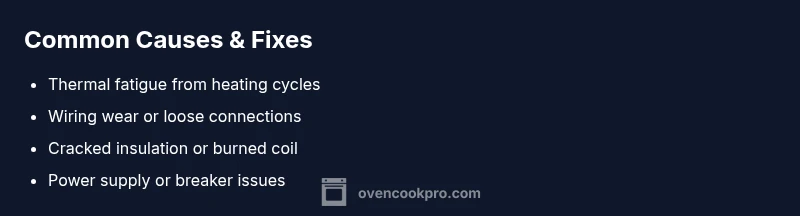
There are several frequent culprits behind a broken oven heating element. Thermal fatigue occurs after thousands of heating cycles; the metal expands and contracts and eventually develops micro-cracks. Electrical wear includes frayed insulation, loose connections at the terminal ends, or a failed relay in older ovens. Overheating can happen if the oven is left at high temperature for long periods or if the control board misreads a temperature, causing the element to stay energized too long. Physical damage from dropped cookware or harsh cleaning with abrasive pads can crack or burn the coil. Aging matters: older models simply wear out more quickly, especially with heavy use. Finally, power issues like voltage fluctuations or a faulty breaker can mimic element failure by starving the element of current. The key is to distinguish between a failing element and a thermostat or control issue, which require different fixes.
Safety considerations and the first steps of troubleshooting
Safety first: always unplug the oven before touching any internal parts. If you must work near wiring, wear insulated gloves and remove metal jewelry. Start with a visual inspection: look for scorch marks, melted insulation, or detached connectors. Do not attempt repairs beyond basic replacement without consulting the manufacturer’s guide. If you notice a burning smell or a tripping breaker, stop and call a licensed technician. Confirm you have the correct replacement part for your model by checking the serial/model number and cross‑matching the part number in the owner’s manual.
How to spot symptoms that point to the element
Common symptom clusters point toward an element issue. If the oven fails to heat or only heats at certain settings, the element is suspect. Uneven browning or cold spots indicate one element may be weaker or fused. A buzzing or crackling sound during operation can indicate arcing or loose connections. If the oven preheats slowly or never reaches the set temperature, test the element’s continuity with a multimeter. In some cases, visible damage appears when you access the back panel for inspection. Distinguishing between element and thermostat issues is key to choosing the right fix.
Diagnostic flow: symptom to diagnosis to solution
Follow a logical flow from simple checks to measurements. Symptom: oven won’t heat to the desired temperature. Diagnosis candidates: (a) faulty element, (b) faulty thermostat, (c) bad wiring. For each, start with a non-invasive fix (tighten screws, replace a damaged relay). If no improvement, test element continuity with a multimeter. If the circuit shows an open, replace the element. If continuity exists but heat remains weak, consider thermostat or control-board issues, or airflow problems.
Step-by-step: test and replace the heating element
- Power down: unplug the oven or switch off the circuit breaker. 2) Access the element: remove the back panel or the interior panel to expose the coil and wiring. 3) Visually inspect: look for cracks, burns, or melted insulation on the coil. 4) Test continuity: set a multimeter to the lowest resistance range and measure across the element terminals; a very high reading or infinite resistance indicates an open element. 5) Replace if needed: disconnect wires, remove the old element, and install the replacement using the manufacturer’s instructions for your model. 6) Reassemble and test: reattach wiring, restore power, and run a bake cycle to confirm heat. Pro tip: label wires before disconnecting to avoid miswiring.
Preventing future element failures
Regular maintenance helps extend heating element life. Clean the interior with non-abrasive cleaners and avoid hitting the coil with metal utensils. Do not run the oven empty at high temperatures or with improper rack placement. Keep the wiring harness and back panel intact and secure to prevent wear. For older models, schedule annual inspections and replace aging parts proactively. Choose parts rated for your oven’s voltage and wattage to minimize compatibility issues.
Steps
Estimated time: 30-60 minutes
- 1
Power down and prep
Turn off the circuit breaker and unplug the unit. Remove racks and give the interior a quick visual once cooled. Gather tools and take a quick photo of wire routing before disconnecting anything.
Tip: Label wires and terminals to simplify reconnection. - 2
Access the heating element
Open the back panel or interior panel to reach the element terminals. Check the mounting screws are accessible and note any damaged insulation around the coil.
Tip: Turn off power at the source; never touch live components. - 3
Inspect for visible damage
Look for cracks, burns, blackened areas, or melted insulation on the element. Check for loose or corroded connections at the terminals.
Tip: Do not rely on smell alone; visual signs are critical. - 4
Test continuity
Set a multimeter to the lowest resistance range and measure across the element terminals. An open circuit means the element is bad; a normal reading requires further thermostat checks.
Tip: Zero out the meter leads and test each terminal carefully. - 5
Replace the element if needed
Disconnect the old element and install the replacement using the exact model guidance from the owner’s manual. Reattach wiring securely and avoid overtightening.
Tip: Use a replacement part that matches wattage and voltage. - 6
Reassemble and test
Put the back/interior panel in place, reconnect power, and run a bake cycle to verify heating. Check for even heat across racks and listen for abnormal noises.
Tip: Monitor for a few cycles to confirm stability.
Diagnosis: Oven won't heat or heats unevenly
Possible Causes
- highFaulty heating element (open circuit or short)
- mediumThermostat or control board failure
- mediumElectrical wiring damage or loose connections
- lowPower supply issues or tripped breaker
Fixes
- easyCheck for visible damage and test element continuity with a multimeter
- easyReplace the heating element if the circuit is open
- mediumTest and possibly replace the thermostat or control board
- easyInspect wiring, tighten screws, or replace damaged wires as needed
- hardIf power issues persist, consult a licensed electrician or appliance technician
Questions & Answers
What are the signs that my oven heating element is failing?
No heat, uneven baking, buzzing sounds, or visible damage are common signs. If observed, inspect and test the element before replacing.
Common signs include no heat, uneven baking, buzzing, or visible damage. Inspect and test the element to confirm.
Can I test the heating element myself?
Yes, after unplugging, you can check continuity with a multimeter. If you’re unsure, consult a professional.
You can test with a multimeter once it's unplugged. If unsure, call a pro.
Is it safe to replace the heating element myself?
Replacement is doable for experienced DIYers with the right parts. If your oven uses high voltage or you’re unsure, hire a technician.
It’s doable if you know what you’re doing; otherwise hire a pro.
How do I know whether the problem is the element or the thermostat?
If a new element doesn’t fix heat, the thermostat or control board may be at fault; test or replace accordingly.
If the heat doesn’t improve after replacing the element, check the thermostat.
What if my oven keeps tripping the circuit breaker?
A breaker trip could indicate a short or power issue. Stop, unplug, inspect, and call a pro if it continues.
If the breaker trips, stop and check wiring; call a pro if it persists.
How much does heating element replacement cost?
Costs vary by model and part quality; consider both DIY and professional options. Ensure compatibility before purchasing.
Costs vary, and you may DIY or hire a pro. Check compatibility first.
Watch Video
Main Points
- Unplug before inspection and testing.
- Use continuity tests to confirm element health.
- Replace only with compatible parts.
- Differentiate element vs thermostat issues for proper fixes.
- Consult a professional for electrical concerns.