How to Tell If Your Oven Is Leaking Gas: Urgent Troubleshooting
Learn immediate signs of a gas leak from your oven, the essential safety steps to take, and how to test and call for professional help. This Oven Cook Pro guide keeps homeowners safe with clear, step-by-step instructions.


Urgent safety note: if you smell gas near your oven or hear a hissing sound, evacuate the area immediately and call your gas emergency number. Do not light switches or use appliances, and ventilate by opening doors if safe. To assess risk, your goal is to identify odor, hiss, or flame anomalies without attempting repairs. When in doubt, prioritize professional assessment and safety first.
How to tell if oven is leaking gas: key signs to look for
Gas leaks around cooking appliances can be dangerous and require calm, immediate action. In practice, the most trustworthy indicators are a distinct gas odor—often described as a rotten-egg smell—prolonged hissing or whistling near the oven even when it is off, a constantly flickering or yellow-tipped flame, or frost and condensation around connections. Any of these signals should prompt an immediate pause in use and a move to safety. Do not attempt to diagnose or repair the appliance yourself; instead, evacuate the area, call your local gas provider or emergency services, and wait for trained technicians. This section helps you recognize the signs without putting yourself at further risk while you arrange professional evaluation and a safe plan for the oven.
Immediate safety actions if you suspect a leak
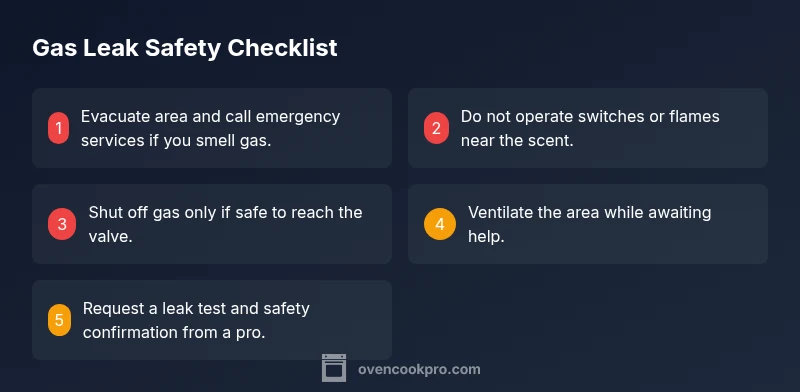
If you notice a gas odor or hear a hiss, your first move is safety. Evacuate everyone from the area and avoid creating ignition sources. If you can safely reach the appliance shutoff valve or the main gas shutoff, turn it off only if doing so does not require you to enter an area with a strong gas buildup. Do not operate electrical switches, lighters, or appliances. Once you’ve exited, call your gas utility’s emergency line or local emergency services. If you cannot identify the source safely, leave the home and call for professional assistance from a distance. After the area is declared safe by professionals, plan a professional inspection of the oven before reusing it.
How to detect a gas smell and unusual burner behavior safely
A gas leak might present as a strong, persistent odor, a hissing sound near the appliance, or a crackling flame that does not appear properly lit. When inspecting, do not use the oven or any electrical devices in the area. If you must observe, stand in a well-ventilated area and keep a safe distance from the oven. Gas detectors placed in kitchen areas can help provide early warning; however, they do not replace the need for professional service. Remember that many factors can mimic a leak (e.g., stale odors, spilled food), but a confident gas odor combined with audible hiss warrants immediate action.
Diagnostic flow: from odor to action
The diagnostic flow begins with recognizing a potential leak (odor or hiss) and then verifying risk through noninvasive checks. If signs persist, the next step is to shut off the gas supply if safe and contact professionals. Even if the odor dissipates, do not reuse the oven until a qualified technician confirms there is no ongoing leak. This flow helps separate urgent safety steps from longer-term repair planning, ensuring you respond quickly while avoiding risky DIY fixes.
Step-by-step checks for common leak sources
Start with simple, non-invasive checks: inspect visible gas lines and connections for signs of corrosion, looseness, or damage from heat; listen for any sounds near the burner area when the oven is idle; look for frost or condensation on metal fittings that might indicate a flow issue. If you detect any loose fittings, do not tighten them yourself—gas line work requires a licensed technician. For igniters, ensure the flame is consistent and that the igniter clicks repeatedly without producing a delayed ignition, which can indicate a problem linked to gas flow. These checks help narrow down where a leak could originate without attempting dangerous repairs.
Handling igniter and connection problems responsibly
Igniter issues can mimic leaks by failing to ignite gas properly or producing incomplete combustion. If you observe delayed ignition, weak flame, or unusual noises, stop using the oven and contact a licensed technician. Do not attempt to replace parts or adjust gas connections yourself. A professional can diagnose whether the valve, regulator, or burner components require replacement or recalibration. Proper handling reduces the risk of fire or explosion and ensures your oven remains safe after repair.
Tools and professional testing options
Professionals will use calibrated gas detectors, leak-testing solutions, and manometers to measure pressure and flow. Homeowners should avoid using unqualified testing methods that could aggravate a leak or misinterpret a reading. If you don’t have access to professional testing immediately, rely on evacuation and professional consultation as your primary path. When service resumes, ask for a test report detailing the source of the leak, the steps taken to fix it, and any safety recommendations for your kitchen.
When to call a professional and how to communicate it
If you encounter a gas odor, a hissing sound, or any crackling at the oven, your priority is safety and rapid professional intervention. Contact your gas utility’s emergency line or local authorities. Do not attempt to repair gas lines or components yourself. After the situation is stabilized, schedule a full inspection by a licensed gas technician. When calling, provide your address, a description of the odor or sound, approximate location, and whether the odor persists after ventilation. This information helps responders assess risk quickly and accurately.
Prevention and maintenance to minimize future leaks
Preventive steps include scheduling regular professional inspections of gas lines and appliances, installing and maintaining gas detectors in the kitchen, and ensuring proper ventilation around cooking areas. Keep the area around the oven clear of combustible materials, avoid DIY gas line work, and replace any corroded fittings promptly. Periodic professional servicing not only reduces leak risk but can improve cooking efficiency and safety overall.
Steps
Estimated time: 45-60 minutes
- 1
Prioritize safety and evacuate
If you detect a strong odor or hear a hiss, leave the area immediately with others and avoid flames, electrical switches, or igniting devices. Stand outside, move to fresh air, and call for help from a safe location.
Tip: Treat any gas odor as an emergency until proven safe by professionals. - 2
Ventilate and locate the source
Open exterior doors/windows if safe to do so and locate where the odor is strongest. Do not touch or move appliances if you suspect a leak; only ventilate from a distance.
Tip: Ventilation helps disperse gas and reduces concentration while awaiting responders. - 3
Shut off gas if safe to reach
If you can reach the appliance’s shutoff valve safely, turn it off. If you are uncertain or feel compromised, do not attempt this—wait for professionals.
Tip: Never operate electrical switches during a suspected leak. - 4
Call for help immediately
Dial your gas utility emergency line or local emergency services. Do not delay, especially if the odor persists after ventilation.
Tip: Provide your address, symptoms, and any observed signs like hissing or frost. - 5
Do not attempt DIY repairs
Gas systems require licensed professionals. Do not tighten fittings, replace regulators, or attempt to seal leaks yourself.
Tip: Document observations for the technician. - 6
Schedule a professional inspection
Even if the odor fades, arrange a full inspection by a qualified gas technician before using the oven again.
Tip: Ask for leak-test results and safety recommendations. - 7
Check detectors and ventilation afterward
Ensure your gas detectors are functional and consider adding a detector near the kitchen. Maintain proper ventilation going forward.
Tip: Replace detectors per manufacturer guidance. - 8
Keep your home safe long-term
Create a quick safety plan with your household: who to call, where to evacuate, and how to shut off gas if needed.
Tip: Review this plan annually. - 9
Document maintenance and follow-up
Save service reports and schedule routine checks to prevent recurrence. Maintain clear access to shutoff valves for emergencies.
Tip: Record dates and technician names for reference.
Diagnosis: Gas odor near oven or hissing sound when oven is off
Possible Causes
- highGas leak from appliance connection or gas line
- mediumFaulty igniter causing gas to flow without ignition
- lowVenturi or burner obstruction causing gas buildup
Fixes
- easyEvacuate area and call emergency services if gas odor is strong or persists
- easyIf safe, shut off gas at the appliance valve and contact your gas utility
- hardDo not attempt to repair gas lines yourself; hire a licensed technician for any gas-system work
Questions & Answers
What does a gas leak near an oven typically smell like?
Most gas leaks produce a strong, rotten-egg odor. If you notice this scent near the oven, treat it as an emergency and evacuate. Do not ignore it or try to mask the odor. A persistent odor warrants immediate professional intervention.
A strong gas odor near the oven usually means a leak. Evacuate and call for help right away.
What should I do immediately if I smell gas near the oven?
Evacuate the area, avoid creating ignition sources, and call emergency services or your gas provider. Do not operate switches or appliances. Once safely removed from danger, wait for professionals to assess and repair.
Leave the area and call for help. Do not switch anything on or off in the area.
Can I test for gas leaks myself?
No safe DIY test should replace professional evaluation. Do not use unapproved leak-detection methods. If you suspect a leak, prioritize evacuation and call your gas utility for guidance.
Testing should be left to professionals; evacuate and contact your gas provider.
Is it safe to use the oven after a leak is suspected?
No. Do not use the oven until a licensed technician confirms it is safe. A leak may persist even after odor dissipates, and reactivating the oven could cause a dangerous buildup.
Not safe to reuse until a professional confirms safety.
How can I prevent gas leaks in the future?
Schedule regular professional inspections, ensure proper ventilation, and install functional gas detectors. Avoid DIY repairs to gas lines and fittings; address any corrosion or wear promptly with a licensed technician.
Regular checkups and detectors help prevent future leaks.
What information should I share with a technician?
Describe the odor or sound, where you noticed it, whether the oven was in use, and any symptoms like frost around fittings. Share any service history and whether the smell persists after ventilation. This helps the technician diagnose efficiently.
Tell the technician what you observed and when it happened.
Watch Video
Main Points
- Act immediately on gas odors or hissing sounds
- Never DIY gas-leak repairs
- Shut off gas only if safe to reach the valve
- Call professionals for all leak assessment and repairs
- Install and maintain gas detectors for early warning