Which Oven Rack to Bake Bread: A Practical Guide
Learn how rack position, heat, and steam affect crust and crumb, and choose the right oven rack for bread with step-by-step guidance from Oven Cook Pro.


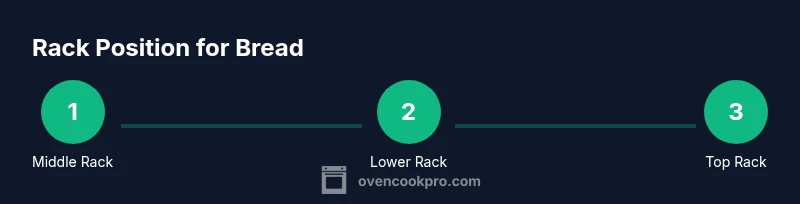
On most day-to-day breads, bake on the middle rack to balance heat from the top and bottom. Move to the lower rack if you want a deeper crust or an evenly browned bottom, and place a preheated baking stone or heavy sheet beneath for superior crust formation. Use the top rack only for very tall loaves if your oven runs hot in the center.
The Core Idea: Rack Position and Bread Crust
Bread baking is as much about heat flow as it is about ingredients. Rack position influences how heat reaches the dough from the top and bottom, which in turn affects crust development, crumb structure, and bake time. The middle rack is the default starting point for most breads because it offers a balanced exposure to radiant heat from the top and convection/airflow from the oven walls. According to Oven Cook Pro, a well-balanced rack position helps you achieve a crisp crust without dulling the crumb. If your oven tends to run hot on top, you may want to drop the loaf to the middle-lower zone after an initial blast of heat to set the crust while preserving interior rise. A stable surface like a baking stone or heavy sheet beneath the loaf can further improve browning and crust formation by providing a more consistent heat source from below.
Bread Types and Rack Needs: Simple Loaves vs. Enriched Dough
Different doughs respond differently to rack position. A lean white loaf or a basic sourdough benefits from the middle rack to achieve an even crust and uniform crumb. Enriched doughs—those with butter, eggs, or sugar—toster more gently; placing them on the lower rack can help prevent excessive top browning while still delivering a good crust. For very tall boules or long bâtards, a lower rack may grant more clearance and prevent the top from scorching. The goal is to let heat reach the dough evenly while avoiding crowding that can trap moisture and soften the crust. Oven Cook Pro notes that adjusting rack position based on dough composition yields more consistent results across bake sessions. Remember, preheating remains essential regardless of rack choice.
Heat Flow, Steam, and Why Rack Matters
Crust formation depends on the interaction of heat, moisture, and air movement. The middle rack typically provides a steady balance of radiant heat from above and conduction from below, enabling a satisfying crust with a tender crumb. When steam is introduced at the start of baking, heat transfer to the dough increases, and the crust sets faster, preventing excessive spread. If you need a deeper bottom crust or a firmer underside, a lower rack in combination with a preheated stone or metal sheet helps transfer heat more efficiently to the base. Conversely, a top‑heavy crust can occur if the loaf sits on the top rack without adequate bottom heat, so adjust accordingly.
Practical Setups: Stone, Sheet, and Rack Combinations
A baking stone placed on the lower-middle rack can improve bottom crust and oven spring, especially for larger loaves. If you don’t own a stone, a heavy-duty baking sheet preheated in the oven can mimic some effects. Parchment paper or a silicone mat helps prevent sticking and makes clean-up easier, but it can slightly insulate the dough; remove it in the final 5–10 minutes if you want extra browning. When using steam, pull a tray of hot water into the bottom of the oven or mist the dough quickly at the start. Position the loaf on the rack so there is at least a few inches of clearance around it to promote even heat distribution.
Preheating and Positioning: A Routine to Follow
Preheat the oven to the target baking temperature before loading the dough. If your dough requires steam, place a metal tray on the rack below and add hot water just before loading. Use the middle rack for standard loaves; shift to the lower rack if the crust is not browning as expected or if the oven tends to bake fast on top. Rotate the loaf halfway through bake if you notice uneven browning, and give the loaf a full cooling on a rack after baking to prevent a soggy bottom. Oven Cook Pro recommends allowing the loaf to rest at least 20 minutes before slicing to let the crumb set properly.
Monitoring Crust, Crumb, and When to Rotate
Visual cues matter. A well-browned crust with even color indicates good heat transfer from a properly positioned rack. If the crust forms too quickly on top and leaves the bottom pale, consider moving the loaf to a lower rack for the remainder of bake time. If the oven runs hot, a top‑rack start can create a cracked crust; instead, start with middle or lower, then move up if needed after 10–15 minutes. Rotate the loaf 180 degrees if your oven has hotspot patterns; a rotation helps achieve uniform bake.
Troubleshooting Rack-Related Issues: Common Scenarios
If your bread consistently finishes too pale on top, check rack position, oven calibration, and dough hydration. If the bottom is underdone, you may need a hotter oven heat, a stone under the loaf, or a longer bake time. If you see excessive top browning with a pale crumb, reduce top heat exposure by lowering the rack or using a lower temperature for the same bake time. The key is to align rack position with your oven’s behavior and the dough’s characteristics. Oven Cook Pro’s practical tips emphasize observing outcomes over guessing, so track each bake’s rack placement and adjust accordingly.
Case Studies: Enriched Bread vs. Sourdough
Sourdough often needs robust heat to ensure a good oven spring, pushing bakers toward the middle or lower-middle rack and sometimes the use of a steam method to season the crust. Enriched breads with more fat and sugar may brown faster, so starting on the middle rack and monitoring crust color is a solid approach. In both cases, a preheated stone or steel beneath the dough provides bottom heat that supports even baking and crust development. Oven Cook Pro analysis, 2026, supports the view that consistent rack position combined with heat transfer aids in achieving reliable crusts across bread varieties.
Finishing Touches: Final Steps for a Sharp Crust
After baking, cool the loaf on a rack to prevent moisture buildup from the bottom. This helps maintain crust integrity and crumb texture. If you’re slicing fresh from the oven, wait at least 20–30 minutes for the interior to set; premature slicing can crush the crumb. Finally, clean and recheck rack positions before your next bake to ensure reliability. Reinforce learning by noting which rack worked best for each bread type and keeping that log for future bakes. The more you bake, the more instinctive rack choice becomes.
Tools & Materials
- Oven middle rack (standard wire rack)(Ensure rack is clean and can slide smoothly for adjustments.)
- Baking stone or heavy-duty baking sheet(Preheat with oven for improved bottom crust; optional but recommended.)
- Parchment paper or silicone baking mat(Optional for easy release; remove toward the end for browning.)
- Instant-read thermometer(Useful to gauge dough or crust temperature if desired.)
- Cooling rack(Place bread on cooling rack after bake to prevent moisture buildup.)
- Timer or clock(Accurate timing helps manage bake duration and turnover.)
Steps
Estimated time: 45-75 minutes
- 1
Preheat and confirm rack position
Preheat the oven to the recipe’s target temperature. Confirm the loaf will sit on the middle rack unless you’re adjusting for crust or dough type. Verify the rack slides smoothly and is clean to avoid compromising air flow.
Tip: Wipe the rack rails and test slide before loading dough to prevent jostling during bake. - 2
Position rack for dough type
Place the dough on the middle rack for standard loaves; slide to a lower rack for deeper bottom crust, or to an upper rack only if your oven runs cool in the center and you need faster browning.
Tip: Note how your oven behaves with your dough type and adjust in future bakes. - 3
Prepare baking surface
If using a stone, place it in the oven while it preheats; otherwise, preheat a heavy sheet. Line with parchment if desired and slide the loaf onto the surface when ready.
Tip: A hot surface promotes oven spring and crisp crust; avoid sliding dough onto cold sheets. - 4
Introduce steam and load loaf
Add steam at the start by placing a pan of hot water in the bottom of the oven or by misting the dough. Load the dough gently onto the rack and close the oven quickly to retain moisture and heat.
Tip: Steam helps keep the crust flexible early, enabling better expansion. - 5
Monitor and adjust during bake
Check color after the initial phase and rotate if needed for even browning. If the top browns too quickly, briefly shield with foil or move to a lower rack for the remainder of bake.
Tip: Use a timer and rely on color cues rather than time alone for best results. - 6
Cool and evaluate
Remove the loaf and place on a cooling rack to prevent moisture buildup under the crust. Let it rest 20–30 minutes before slicing to ensure the crumb sets properly.
Tip: Cooling is critical for texture; premature slicing can crush the crumb.
Questions & Answers
Which rack is best for baking bread in a standard home oven?
For most breads, the middle rack provides balanced heat for even crust and crumb. Move to a lower rack for a deeper bottom crust or a taller loaf if needed. Adjust based on your oven's behavior and dough type.
For most breads, use the middle rack for even crust and crumb. Shift lower for deeper bottom crust if needed and adapt to your oven's quirks.
How does rack position affect crust color and crumb texture?
Rack position changes how heat hits the dough. Middle rack often yields even browning; lower racks promote stronger bottom crust; top racks can over-brown or dry out the crumb if heat is intense from above.
Rack position changes heat exposure, influencing crust and crumb. Middle is usually even, lower can deepen the crust, and top can brown too fast if hot.
Should I preheat a stone or sheet for bread baking?
Yes. Preheating a stone or heavy sheet ensures a hot base, promoting better oven spring and crust formation. Place the dough on a preheated surface for best results.
Yes. Preheat a stone or sheet so the base is hot when the dough goes in, helping with oven spring and crust.
Can I bake different breads on the same rack without adjusting time?
Yes, but expect different bake times and crust outcomes. Start with the middle rack for most breads and monitor color. Adjust time by color and internal temperature as needed.
Yes, but different breads need different times. Start in the middle and watch color; adjust as you bake.
What role does steam play in bread baking on the rack?
Steam helps dough expand before the crust sets, improving oven spring and crust texture. Introduce steam at the start and reduce it once the crust begins to form.
Steam helps the bread rise and crust nicely. Start with steam and reduce as the crust forms.
Is it ever better to bake on the top rack?
Only for very tall loaves or when the oven tends to bake hot in the center, to prevent bottom overcooking. In most cases, the middle rack is preferred.
Top rack is rarely needed; use it for tall loaves or when the oven is overly hot in the center.
Watch Video
Main Points
- Start with the middle rack for most breads.
- Lower racks favor bottom crust and oven spring for tall loaves.
- A preheated stone or sheet improves crust quality.
- Steam and careful monitoring yield a crisper crust.