Where in Oven to Bake Bread: A Home Baker’s Guide
Discover the best oven rack position and methods to bake bread for a crusty crust and tender crumb. This guide covers rack placement, vessels, steam, and timing to achieve reliable, delicious results.


By the end of this guide, you’ll know exactly where in the oven to bake bread for optimal crust, crumb, and rise. You’ll learn rack positions for different loaf types, when to use a Dutch oven or stone, and how preheating and steam influence results. Have essential tools ready and follow a tested workflow for best results.
Understanding the question: where in oven to bake bread
Bread baking hinges on heat distribution, steam, and timing. If you’re asking where in the oven to bake bread, you’re balancing crust formation with a tender crumb. According to Oven Cook Pro, the most reliable loaves start with a clear plan for rack placement, preheating, and vessel choice. In this section we define the core idea: the oven has zones that influence crust color, crumb structure, and rise. The phrase where in oven to bake bread is not a single rule, but a set of best practices that adapt to dough type, loaf shape, and oven model. As you read, keep in mind that you’ll optimize these variables by working with the heat source, the bake vessel, and the baking surface. This approach ensures you can reproduce great results across different ovens and seasons.
The three major oven zones explained: bottom, middle, and top
Most home ovens deliver heat from the bottom and/or top elements. Each zone affects your bread differently. The bottom zone tends to push crust development on the bottom and can contribute to a darker base if used alone. The middle zone offers the most balanced heat for even crumb and uniform crust color. The top zone can encourage browning and color on the top crust, but may risk scorching if not managed. When answering where in oven to bake bread, aim for the middle rack as your default starting point. If you are using a baking vessel that traps steam, such as a Dutch oven, the middle position often yields the best balance of heat exposure and steam effects, producing a crisp crust while keeping the crumb moist inside. If you use a stone, you may start on the middle rack and experiment with one notch up or down for color changes.
Baking vessels that influence results: stone, Dutch oven, or cloche
A baking stone absorbs and radiates heat, helping set a strong bottom crust while contributing to an even color across the loaf. A Dutch oven or cloche traps steam and creates a humid microclimate that dramatically improves crust and oven spring. If you place a dough directly on a metal sheet, you’ll often get a thinner, less blistered crust and a crumb that can finish unevenly. The vessel choice interacts with rack position: with a stone, most bakers start on the middle rack; with a Dutch oven, the oven position is often less crucial because steam and heat are contained within the pot. Your oven model, insulation, and ventilation will influence the exact outcome, but the principle remains clear: use the vessel that fits your dough and bake method, then position it to balance heat exposure with steam efficiency.
Rack-position mapping for common bread types
Different loaves benefit from different rack placements. A standard white loaf or sandwich bread often does well on the middle rack with a preheated stone or a cast-iron pan to promote even browning. Baguettes and long loaves may benefit from a slightly higher position when using steam methods to ensure a strong oven spring without scorching the crust. Enriched doughs (with butter, eggs, or dairy) can brown more quickly, so many bakers prefer a slightly lower position and a shorter bake with careful monitoring. Pan breads are typically baked on the middle rack, but if you’re using a loaf pan, you may want to emphasize center heat to avoid burning sides. Remember: your oven’s hot spots matter, so rotate or adjust after the first 10-15 minutes if needed. The keyword where in oven to bake bread emphasizes adapting placement to dough type and desired crust.
Preheating, steam, and moisture management
Preheating is essential because it ensures an immediate heat transfer when the dough hits the oven, supporting rapid oven spring. Steam, either from a covered vessel or via a separate steam method (like a pan of hot water), delays crust formation just long enough for the inside to expand. The middle rack is often ideal when using a Dutch oven or cloche, because it pairs well with contained steam and uniform heat. If you’re using a baking stone, preheat the stone along with the oven for at least 20 minutes to reach stable surface heat. Moisture management also affects crust color and texture; too little steam can lead to a dull crust, while too much steam can prevent browning. Consistency comes from a repeatable routine across bake days.
Temperature targets and timing basics
Most traditional loaves bake best around 450-500°F (230-260°C) depending on flour type and dough hydration. A common approach is a two-stage bake: initial high heat with a covered vessel to maximize oven spring, followed by uncovering to finish browning. Internal doneness is typically around 190-210°F (88-99°C); many bakers aim for 205°F (96°C) for fully set crumb. The bake time varies with loaf size and dough hydration but plan for about 25-30 minutes under cover, then 10-20 minutes uncovered to finish. It’s wise to rely on visual cues—crust color and a hollow sound when tapped—along with a thermometer for precision. Oven Cook Pro analysis shows that consistency comes from precise temperatures and timing, plus a reliable preheat and steam setup.
Doneness cues and testing without opening oven too often
To protect heat during bake, test doneness by gently tapping the loaf’s bottom and listening for a hollow sound. If using a thermometer, aim for 190-210°F (88-99°C) depending on dough type. Color is a helpful indicator: a deep, even golden-brown crust usually signals finishing, while pale spots indicate uneven heat. Avoid over-baking, which dries the crumb and can create a hard crust. If you notice under- or over-browning, adjust the rack position or the bake time for future loaves. This approach helps you optimize the oven position for consistent results across different breads.
Common mistakes tied to oven position and how to fix them
Mistakes often come from misjudging the right rack or failing to preheat the vessel. A loaf placed on a too-low rack may brown poorly on top while remaining pale on the bottom; a loaf on a too-high rack can scorch the top before the interior fully sets. Another frequent issue is opening the oven door too early, which collapses the loaf due to temperature loss. Fixes include: always preheat the vessel, start on the middle rack, rotate loaves halfway through baking when possible, and use a stone or Dutch oven for better crust and spring. By aligning rack position with bake method, you’ll reduce common errors and improve consistency.
Step-by-step workflow overview for a standard loaf
This block provides a high-level workflow to tie together rack position, vessel choice, and bake timing. Start by selecting your bake method (stone with preheat vs Dutch oven). Position the loaf on parchment for easy transfer, and warm your vessel in the oven before loading. Score the dough to guide expansion and place it in the oven. Use a timer to manage the initial steam phase, then remove the lid if applicable and continue baking until the crust is deeply colored and the loaf sounds hollow when tapped. Cool briefly before slicing to finish setting the crumb.
Quick-start setup and maintenance tips
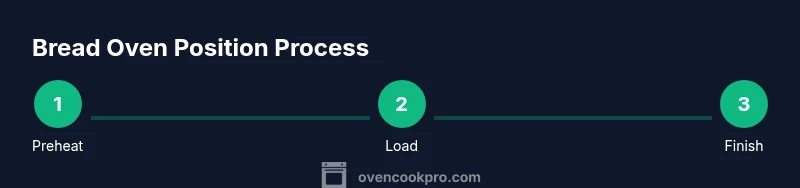
To maximize success, maintain a clean oven with minimal heat loss and ensure your racks are level and stable. Keep a consistent preheating ritual and use a reliable dough hydration level to support oven spring. Consider keeping a dedicated baking stone or a particular Dutch oven set aside for bread day. A simple routine—preheat, load, bake covered, finish uncovered, cool—saves time and improves repeatability. Remember that even the best technique needs practice; with regular bakings you’ll quickly dial in your oven’s quirks and achieve reliable results.
Tools & Materials
- Dutch oven (cast iron, with lid)(Largest size you own; 4-6 quart is common for 1-2 loaves)
- Baking stone or steel(Use if you don’t have a Dutch oven; helps bottom crust)
- Parchment paper(For easy transfer and cleanup)
- Baking sheet (optional)(Useful for baked-in loaves without a vessel)
- Digital kitchen scale(Precise hydration and consistent dough weight)
- Mixing bowl(Large enough for dough rise)
- Dough scraper(For portioning and shaping)
- Bench flour(Lightly dust to prevent sticking)
- Oven mitts(Heat-resistant and sturdy)
- Kitchen thermometer(Optional for checking internal doneness)
Steps
Estimated time: 45-60 minutes
- 1
Preheat the oven and vessel
Set the oven to 450-500°F (230-260°C). Place your Dutch oven with lid inside to preheat, or position a baking stone on the middle rack. This ensures an immediate heat sink when the dough is loaded, encouraging oven spring and a strong bottom crust.
Tip: Preheating for at least 20 minutes helps stabilize heat before the dough enters the chamber. - 2
Prepare dough and shaping
Mix and knead or fold dough, shape into a tight round or baton, and rest briefly to relax the gluten. Transfer to parchment on a flat surface for easy transfer into the oven. This minimizes handling and preserves the dough’s surface tension.
Tip: Keep surface tense during shaping to improve rise and scoring quality. - 3
Score the loaf
Make a shallow cut with a sharp blade to guide expansion and control the oven spring. Scoring creates a plan for the loaf's expansion and helps form a blistered crust.
Tip: A clean diagonal or cross-cut often yields elegant loaf aesthetics and controlled expansion. - 4
Load dough into the oven
Carefully transfer the dough on parchment into the preheated vessel or onto the stone. If using a Dutch oven, cover immediately to trap steam and protect the dough from direct heat.
Tip: Use a gloved hand or tongs to minimize heat exposure and avoid disturbing the dough’s surface. - 5
Steam phase
Bake with the vessel closed for 20-25 minutes to maximize oven spring. Steam helps keep the surface supple, promoting a blistered crust rather than a dry, hard shell.
Tip: If using a stone, you can create steam by placing a tray of hot water on the rack below the loaf. - 6
Uncover and finish
Remove the lid of the Dutch oven (or switch to direct heat if using a stone) and continue baking until the crust deepens in color and the loaf sounds hollow when tapped.
Tip: An extra 8-15 minutes on a dry surface finishes the crust more evenly. - 7
Check internal doneness
Use an instant-read thermometer if desired; aim for about 190-210°F (88-99°C) for a fully set crumb. You can also rely on color and hollow sound as indicators.
Tip: Avoid cutting too early; allow at least 20-30 minutes of rest. - 8
Cool and rest
Cool the loaf on a rack for at least 20-30 minutes before slicing. Resting sets the crumb and flavors, preventing a gummy interior.
Tip: Cooling is essential for crust to finish crisping and the crumb to set properly.
Questions & Answers
What rack position is best for bread when using a Dutch oven?
Using a Dutch oven often minimizes the impact of rack position because steam is contained inside the pot. Still, placing the pot on the middle rack yields even heat distribution and easier monitoring. Adjust if you notice underbrowning or scorching.
With a Dutch oven, rack position matters less for steam, but the middle rack still helps even heat. Adjust if you see browning issues.
Should I preheat a baking stone and for how long?
Yes, preheat a baking stone for at least 20 minutes to ensure a stable, hot surface that promotes oven spring and even crust formation. Longer preheat can improve crust color and texture.
Preheat the stone for about twenty minutes or more so the surface is thoroughly hot when you load the dough.
Can I bake bread without a Dutch oven or stone?
You can bake on a preheated baking sheet or cast iron pan, but it typically yields less crust depth and more irregular crumb. If you don’t have a vessel, consider a covered pan or improvised steam method.
Yes, you can bake bread without a Dutch oven or stone, but expect less crust and more even heating challenges.
How do I know when bread is done without a thermometer?
Look for a deep, even color, a hollow-sounding crust when tapped, and a clean bottom. Internal temperature is a precise check, but color and sound are practical indicators for home bakers.
A hollow tap and deep brown color usually mean it’s done; a thermometer is the surest method if you have one.
Is convection helpful for bread baking?
Convection can help bake evenly by circulating air, but it can also dry the surface. If using convection, lower the temperature by about 25°F (15°C) and watch for faster browning.
Convection helps even heat, but reduce the temp to avoid a too-dark crust.
How long should bread rest after baking?
Let bread rest on a rack for at least 20-30 minutes after baking to allow the crumb to set and flavors to mellow.
Let it cool for at least twenty minutes so the crumb can set properly.
Watch Video
Main Points
- Use the middle rack for a balanced bake
- Preheat vessels and surfaces for best oven spring
- Steam improves crust and texture
- Score correctly to guide expansion
- Check internal doneness and allow cooling before slicing