Making Bread in the Oven: A Complete How-To
Learn to bake perfect oven bread with a step-by-step guide covering hydration, fermentation, shaping, steam, bake times, and troubleshooting for crusty, flavorful loaves at home.


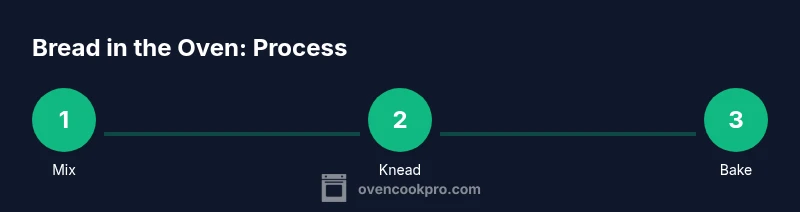
You will learn how to bake a crusty loaf in a standard oven, from mixing to cooling. You'll need flour, water, salt, yeast, a bowl, a baking vessel, and a timer. This guide covers kneading, proofing, shaping, and scoring for a crusty loaf, with temperature ranges and bake times to guide you.
Understanding the Oven-Baked Bread Process
Bread making in the oven starts from simple dough, but the oven's heat, moisture, and time transform it into a loaf with a crust and tender crumb. According to Oven Cook Pro, the best loaves come from patience at each stage: mixing, autolyse, fermentation, shaping, and baking. You’ll learn how gluten develops during kneading, how fermentation builds flavor, and how steam during early bake helps crust formation. The goal is to create a loaf that rises with oven spring, holds structure, and finishes with a deep, caramelized crust. Keep in mind that every oven behaves differently, so you may need small adjustments in temperature or bake time for your kitchen.
This section lays the groundwork for why certain steps matter and how the oven’s behavior interacts with dough. A steady preheat, adequate steam, and a hot bake surface set the stage for peak oven spring and a blistered crust that sounds hollow when tapped. If you are new to bread, start with a simple, forgiving dough and gradually build toward more complex formulas.
From the Oven Cook Pro perspective, the combination of precise technique and consistent oven conditions makes the difference between good bread and excellent bread.
Key Dough Variables: Hydration, Flour, and Yeast
Hydration is the percent ratio of water to flour; higher hydration yields an open crumb but is trickier to handle. Flour type also matters: bread flour provides more gluten strength than all-purpose; whole wheat adds flavor but can weigh down rise if not balanced. Yeast amount and fermentation time determine flavor and rise; long, cool fermentations produce tang. A balanced dough for most home bakers sits around 65-70% hydration using typical bread flour, with salt around 2% and yeast around 0.5-1%. These ranges give good structure and crumb while remaining workable. You can experiment with hydration in small increments to observe changes in texture. For best results, weigh ingredients precisely and track changes in each bake to build your intuition.
The hydration level influences both the crumb and the crust; higher hydration doughs produce a more open crumb and a thinner, crisper crust when baked properly. If you’re starting out, a 65% hydration dough is a forgiving sweet spot that balances handling and yeast activity. Remember that flour absorbs water differently depending on temperature, humidity, and age, so small adjustments will be necessary as you bake more often.
Gluten Development, Autolyse, and Mixing Techniques
Gluten develops as flour hydrates and kneads. An autolyse—resting flour and water before adding salt and yeast—improves extensibility and reduces kneading time. Mixing influences how evenly gluten forms; too little mixing yields weak dough, too much can overdevelop gluten and produce a tight crumb. For home bakers, a modern approach is to mix to a shaggy mass, rest 15-45 minutes (autolyse), then finish mixing with salt and yeast until smooth. During kneading, the dough should become elastic and pass a gentle stretch without tearing. If you use a mixer, keep the speed moderate to avoid overheating the dough.
Autolyse helps with gluten development by hydrating the flour thoroughly before introducing salt and yeast, which can tighten dough. The rest period also allows starches to swell, improving crumb structure and flavor. By combining autolyse with a controlled kneading plan, you’ll achieve dough that’s both extensible and strong enough to trap gas for a good rise.
Fermentation, Bulk Rise, and Shaping Readiness
Bulk fermentation allows yeast to metabolize sugars and develop flavor. Temperature and time determine how much expansion occurs. You’ll know dough is ready when it passes the poke test and shows a jiggly but not overly wet surface. Gentle folds during bulk rise help redistribute gas for better oven spring. After bulk rise, lightly shape into a ball or batard, then rest on a floured surface or in a proving basket to gain tension. Fermentation conditions influence flavor as much as time; cooler, longer fermentations yield complex flavors, while warmer, shorter rises emphasize yeast activity and aroma. The dough should feel soft, supple, and slightly domed when ready for shaping.
Shaping and Scoring for Great Oven Spring
Shaping builds surface tension that helps loaf rise in the oven. Use a light touch; avoid tearing the dough. Scoring allows controlled expansion and creates an appealing crust pattern. Dust with flour, use a sharp blade, and make a quick, decisive slash. Rest briefly after shaping to regain surface tension before bake. The shape you choose (boule, batard, miche) affects crumb layout and baking time; a tighter shape often yields a taller loaf with a finer crumb, whereas a more open shape creates a broader, rustic profile.
For best results, practice consistent tension on the dough surface and keep the dough’s moisture content balanced during shaping. Proper scoring and surface tension help the loaf spring upward rather than burst unpredictably at the rim.
Preheating, Steam, and Bake Setup
Preheating to a high oven temperature is key to good crust and oven spring. If using a Dutch oven, preheat it with the lid on inside the oven so the crust forms on contact. Steam during the first 10-15 minutes of bake keeps the crust from hardening too quickly and helps the loaf expand. You can achieve steam by placing a tray of water in the bottom or by using a hot cast-iron pan to generate moisture. If you don’t have a Dutch oven, bake on a preheated stone or steel and rely on a pan of water or a spray bottle to generate steam for the first portion of baking.
Steam delays crust formation long enough for the loaf to expand fully, creating a better oven spring. A preheated surface ensures the crust begins crisp and colored early, setting the loaf’s final shape. Don’t skip preheating; a cold oven dramatically reduces peak spring and yields a denser crumb.
Temperature, Doneness, and Crust Color
Maintain oven temperature within the target range for the loaf. Bake until the crust is deeply colored and crisp. Internal temperature of the loaf should reach around 190-210°F (88-99°C). Remove from oven and let cool on a rack to set crumb structure. Tap test: a hollow sound indicates the loaf is fully baked and the interior has set. Color, aroma, and texture are reliable cues alongside the internal temperature. If the crust is dull or pale, increase bake time slightly or enhance steam to promote browning and caramelization. Cooling is essential; it allows the crumb to finish setting and moisture to redistribute.
With practice, you’ll learn to read your oven’s behavior and adjust heat, steam, and bake duration to produce your ideal crust and crumb.
Variations: Enriched vs Lean Doughs
Lean doughs rely on flour, water, salt, and yeast; enriched doughs include fats, milk, sugar, or eggs for tenderness and finer crumb. Enriched doughs require longer proofing at cooler temperatures and may brown faster due to sugars. When baking enriched doughs in the oven, adjust hydration and scoring to prevent overproofing. Enriched doughs are excellent for sandwich loaves and soft-crusted breads, but they require careful temperature management to avoid over-browning or gummy interiors. Lean doughs showcase stronger crust and more pronounced aroma, especially when fermented slowly. Both approaches benefit from precise hydration and good shaping technique.
Troubleshooting Common Issues and Fixes
Flattened loaf can result from underproofing, overproofing, or insufficient tension. Dense crumb is usually caused by underkneading or insufficient fermentation. A loaf that sinks after baking often means overproofing or collapsing during cooling. Crust color that's too pale signals insufficient heat or steam; increase bake temperature or steam in the early minutes. If the crust becomes too thick, shorten bake time slightly or adjust dough hydration to promote a thinner crust. When in doubt, reproduce a small-lot bake using a simpler dough to isolate variables and learn what works best in your oven.
Tools & Materials
- Digital kitchen scale(Weigh ingredients for accuracy; 0.1 g precision preferred)
- Large mixing bowl(Stainless steel or glass; room for doubling dough)
- Dough scraper / bench scraper(For cleaning and handling dough)
- Proofing basket (banneton) or bowl lined with a floured towel(Gives loaf shape and tension)
- Dutch oven or baking stone(Dutch oven provides steam; preheat the stone for crisp crust)
- Parchment paper(Ease transfer; prevents sticking)
- Sharp knife or lame(For clean, decisive scoring)
- Oven thermometer(Helpful to verify temperature)
- Kitchen towels(Cover dough during proofing)
- Cooling rack(Cool bread completely for best crumb)
- Spray bottle (optional)(Misting during bake can aid crust)
Steps
Estimated time: 3-4 hours
- 1
Gather ingredients and equipment
Measure ingredients by weight and lay out all tools before starting. This ensures you can move smoothly through the recipe without surprises.
Tip: Weigh flour and water first to verify hydration levels before mixing. - 2
Mix flour and water (autolyse optional)
Combine flour and water until just mixed, then let rest for 20-45 minutes to hydrate the starch and improve gluten development. Salt and yeast added after the rest.
Tip: Autolyse improves dough extensibility and reduces kneading time. - 3
Add salt and yeast, then mix
Add salt and yeast to the dough and mix until a cohesive mass forms. Stop when the dough pulls away from the bowl but isn’t tight.
Tip: Overmixing early can overdevelop gluten and hinder extensibility. - 4
Knead or stretch-and-fold until smooth
Knead by hand or with a mixer until the dough passes the windowpane test or shows good elasticity. If you prefer, use stretch-and-fold every 20 minutes during bulk rise.
Tip: If dough sticks, wet hands lightly or dust with a touch of flour. - 5
Bulk fermentation with folds
Let the dough rise in a warm place, performing gentle folds every 30 minutes to distribute gas and strengthen the dough. The surface should become slightly domed and shiny.
Tip: Watch for the dough to roughly double; timings depend on temperature. - 6
Divide, shape, and rest
Turn the dough onto a lightly floured surface, divide if needed, and shape into a tight loaf. Place in a proofing basket or bowl lined with a floured towel and let it proof until springy.
Tip: Tension on the surface improves oven spring. - 7
Preheat oven and prepare steam
Preheat your oven to the target temperature (and preheat your Dutch oven if using one). Add steam during the first 10-15 minutes to set the crust.
Tip: A hot start with steam helps maximum oven spring. - 8
Bake, then cool
Score the loaf, transfer to the oven, bake until deeply browned, then cool on a rack to finish crumb development.
Tip: Avoid slicing hot bread; wait at least 1 hour for the crumb to set.
Questions & Answers
What flour should I use for making bread in the oven?
Most beginners start with bread flour for structure, but all-purpose works too. Whole wheat can be added gradually for flavor and texture.
Bread flour is a good starting point; you can mix in whole wheat gradually.
What hydration level is best for a crusty loaf?
Hydration typically ranges from 60% to 75% depending on flour. Higher hydration yields a more open crumb but is harder to handle.
Hydration usually between sixty and seventy-five percent.
Can I bake bread without a Dutch oven?
Yes. You can bake on a baking stone or sheet with steam; results vary but oven spring can still be good.
You can bake without a Dutch oven using steam and a hot stone.
Why is my bread dense?
Density usually comes from underkneading or insufficient fermentation. Ensure proper gluten development and adequate rising time.
Dense crumb usually means underproofing or underkneading.
How should I store fresh bread?
Store at room temperature in a breathable bag for 2-3 days; freeze for longer. Refrigeration dries crumb.
Store bread at room temperature in a bag; freeze for longer.
Can dough be frozen for later baking?
Yes. Freeze shaped dough or dough balls; thaw in the fridge before final proofing. Plan for extra proofing time.
You can freeze dough and thaw before baking.
What if the crust is not browning?
Increase oven temperature slightly or ensure there is enough initial steam and heat contact with the loaf.
Increase heat or steam if the crust isn’t browning.
Watch Video
Main Points
- Weigh ingredients precisely for consistency.
- Hydration controls crumb and crust.
- Steam in the early bake yields better crust color.
- Preheat thoroughly and bake on a hot surface.