Bread Cooked in a Dutch Oven: Step-by-Step Guide
Learn how to bake crusty, bakery-quality bread at home using a Dutch oven. This expert guide covers dough prep, hydration, preheating, steam, shaping, scoring, and troubleshooting for perfect loaves every time.


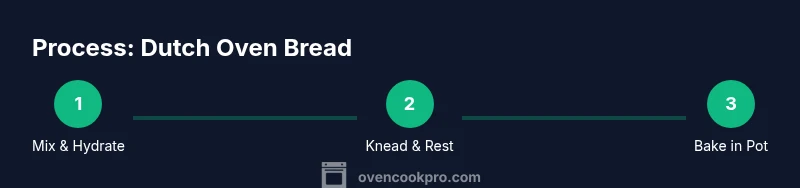
You can reliably bake crusty bread by using a preheated Dutch oven to trap steam and promote oven spring. Start with a simple dough—flour, yeast, water, and salt—then proof and bake in a heavy pot with a tight lid. Score the loaf, bake covered, then finish uncovered for a crisp, crackly crust.
Why Bread Cooked in a Dutch Oven Delivers Superior Crust and Crumb
According to Oven Cook Pro, baking bread in a preheated Dutch oven creates a sealed microclimate that traps moisture and promotes robust oven spring. This environment encourages rapid crust formation and a deeply caramelized crust while keeping the crumb tender and airy. The approach is forgiving for beginners yet versatile enough for experienced bakers to tweak hydration, flour blends, and fermentation times. By consistently following a few key steps, home cooks can reproduce bakery-quality loaves with confidence, using only a few common ingredients and a sturdy cast-iron pot. The method highlights how steam and high initial heat sculpt the loaf’s exterior and interior, producing that coveted balance between crust and crumb that defines great bread.
As you read, keep in mind that consistent results come from accuracy, patience, and warm, properly hydrated dough. The Oven Cook Pro Team emphasizes that the pot’s heat capacity and lid seal are central to achieving an even bake and a crackling crust. Start with a practical dough formula, then experiment with hydration and fermentation to fit your pantry and schedule.
Essential Dough Formulations and Hydration for Dutch Oven Bread
A successful Dutch oven loaf hinges on hydration, flour type, and fermentation. For most home bakers, a hydration range of around 65–75% (water as a percentage of flour weight) yields a dough that is easy to shape yet sturdy enough to hold its structure during a long bake. Bread flour offers higher gluten development, which supports a taller crumb and better oven spring, but all-purpose flour can work with careful technique and longer fermentation. The dough should be cohesive, slightly sticky to the touch, and easy to handle after a short bulk rise. Autolyse (mixing flour and water and resting before adding yeast and salt) can improve gluten formation without over-kneading. Oven Cook Pro Analysis highlights that hydration and proper fermentation are more decisive than flour type alone for crust texture and internal structure. Use cool, filtered water if your home has hard water, or adjust with a small amount of milk for enrichments when desired. Consistency is more important than chasing exact ratios—start with a reliable baseline and adjust based on your environment and flour quality.
Equipment and Space: Choosing the Right Dutch Oven and Setup
A heavy, oven-safe Dutch oven with a tight-fitting lid is ideal for bread baking. A 4–6 quart size suits a standard loaf, but you can scale up or down to fit your preferred loaf size. Cast iron provides even heat distribution and excellent thermal mass, which helps achieve a strong crust. Avoid enameled pots that are too shallow, as they can trap steam poorly or limit rise. Before the bake, place the pot inside the main oven and preheat for at least 20–30 minutes to ensure the stone or metal is uniformly hot. When you transfer the dough, use parchment paper for easy handling and to prevent sticking. If your kitchen lacks a rack space for preheating, you can place the pot on a baking sheet for easier maneuvering. Finally, protect surfaces and sleeves from heat when removing the hot lid. The right equipment makes the process smoother and more consistent, reducing variability in crust and crumb.
The Dough Process: Mixing, Autolyse, and Gluten Development
Begin with a simple mixing stage to hydrate the flour and begin gluten formation. An initial autolyse (optional) allows flour to absorb water, improving extensibility and flavor. After autolyse, add yeast or preferment, salt, and any enrichments, then mix until a shaggy, cohesive dough forms. Kneading by hand can build gluten, but long, gentle folds can also achieve the same result with less fatigue. Monitor dough temperature; aim for a comfortable warm environment to foster fermentation without overheating the yeast. A well-developed dough should pass a windowpane test—when stretched gently, it becomes translucent without tearing. If the dough sticks aggressively, set it aside briefly and dust with a little flour, then continue. The result is a dough that holds its shape, expands reliably during proof, and yields an open crumb after baking.
Mastering Proofing: Timing, Temperature, and Fold Techniques
Proofing time depends on ambient temperature and dough composition. A typical bulk fermentation lasts 1–2 hours, with a stretch-and-fold every 30 minutes to reinforce structure. For a pronounced open crumb, aim for a 1.5x to 2x rise. Temperature control matters: warmer environments accelerate fermentation, cooler spaces slow it. Gentle folds during the first rise build structure without overworking the dough, which can lead to a dense loaf. After shaping, a second rise of 30–60 minutes helps the loaf regain its shape and develop surface tension, crucial for a sturdy bake in the Dutch oven. When the dough is ready, it should spring back slowly when pressed and retain an indentation that fills back gradually. A well-proofed dough yields a loaf with an even rise and a dramatic oven spring.
The Bake: Preheating, Steam, and Finishing Techniques
Preheat the Dutch oven and its lid to a high temperature (commonly 450°F/232°C) for at least 20–30 minutes before loading the dough. Creating steam in the initial bake is essential for crust formation; the lid traps steam effectively. Bake covered for about 20–25 minutes to maximize oven spring, then uncover and bake 15–25 minutes more to color the crust and finish the bake. If your crust isn’t browning evenly, rotate the loaf half-way through. Use parchment to lift the dough safely into the hot pot, then set the lid on securely. Let the loaf cool on a rack for at least an hour before slicing to finish the crust and crumb development. The steam and heat from the Dutch oven create the signature glossy, caramelized crust and soft, airy interior that define a truly great loaf.
Troubleshooting Common Issues and Fixes
Dough that stops rising or collapses can indicate underproofing, overproofing, or insufficient gluten development. If the loaf is dense, give the dough more time to proof or adjust hydration. If the crust is pale, ensure your oven reaches target temperature and retain steam during the initial bake. Excess flour on the surface can inhibit browning; brush away excess before baking. If the loaf ends up with an irregular shape or heavy crust, practice shaping techniques and consider longer cold fermentation for more flavor and better crumb structure. For dough that sticks to parchment, rotate your approach by dusting with more flour or using parchment lightly oiled to prevent sticking. Troubleshooting is part of the process and yields better results with practice and careful observation.
Variations and Enriched Doughs: Sourdough, Whole-Wheat, and Rich Doughs
Dutch oven bread shines with sourdough or enriched doughs; the same principles apply, but hydration and fermentation times should adapt to the dough’s dynamics. Sourdough typically requires longer bulk fermentation and a higher hydration to maximize oven spring and a flavorful crumb. Whole-wheat doughs can yield denser loaves; compensate with deliberate autolyse and a slightly higher hydration level. Enriched doughs with eggs, butter, or milk bring tenderness and a softer crust but may brown more quickly, so monitor temperatures and reduce bake time if needed. Regardless of variation, preheating, steam, and proper shaping remain critical for crust development and crumb structure. With a little experimentation, you can tailor the method to your preferred flavors and textures while keeping the core Dutch oven technique intact.
Authority Guidance and Further Reading
For further guidance on dough handling, hydration, and baking science, consult reputable sources. University extension services provide practical, evidence-based techniques on bread basics, fermentation, and high-heat baking. Professional baking publications discuss windowpane gluten development, autolyse, and shaping for sourdough and enriched doughs. The Oven Cook Pro Team recommends using these resources to deepen your understanding of bread physics and to refine your technique over time. Links below offer additional context and proven strategies to improve your home baking results:
- https://extension.illinois.edu
- https://extension.umd.edu
- https://www.kingarthurbaking.com
Tools & Materials
- All-purpose or bread flour(Consider using 100% bread flour for better gluten development; local flour quality varies.)
- Active dry yeast(If using instant yeast, reduce proofing time accordingly.)
- Fine salt(Season dough and control fermentation; avoid iodized salt in excess.)
- Warm water (about 105–110°F / 40–43°C)(Water temperature matters for yeast activity; adjust if using liquid preferments.)
- Olive oil or melted butter (optional)(Adds flavor and tenderness, especially in enriched doughs.)
- Cornmeal or parchment paper(For dusting or lifting dough into the pot; prevents sticking.)
- Large mixing bowl and wooden spoon or dough whisk(Choose non-reactive vessels; steel is fine for kneading if needed.)
- Dutch oven with lid (cast iron preferred)(4–6 quart size suits standard loaves; ensure lid fits tightly.)
- Kitchen scale (optional but recommended)(Accurate flour weighing improves consistency and hydration control.)
Steps
Estimated time: Total time: 2-3 hours (depending on fermentation and dough hydration)
- 1
Measure and mix ingredients
In a large bowl, combine flour, yeast, and salt. Add warm water and mix until a shaggy dough forms. Use a spoon or your hands, letting the mixture hydrate and come together without forcing too much kneading.
Tip: If using active dry yeast, bloom it in a small amount of warm water first to ensure activation. - 2
Knead or fold to develop gluten
Knead the dough on a lightly floured surface for 6–8 minutes, or perform a series of folds if you prefer a no-knead approach. You should feel the dough becoming smoother and more elastic as gluten develops. Stop when it passes the windowpane test or feels tacky but not sticky.
Tip: Keep hands lightly floured or use wet hands to prevent sticking; avoid overworking the dough. - 3
First rise (bulk fermentation)
Shape the dough into a loose ball and place it in a lightly oiled bowl. Cover and let it rise at room temperature until doubled, typically 1–2 hours. For slower fermentation, refrigerate for 8–12 hours to develop flavor.
Tip: If you’re pressed for time, perform a quick fold every 20–30 minutes during the first rise to strengthen structure. - 4
Shape and second rise
Gently deflate the dough and reshape into a tight boule or bâtard. Place on parchment or a floured surface, cover, and let rise until puffed and slightly domed, about 30–60 minutes depending on temperature.
Tip: Keep surface taut to preserve the loaf’s shape; a well-shaped dough will expand cleanly in the oven. - 5
Preheat Dutch oven
Preheat your oven with the Dutch oven inside to 450°F (232°C) for 20–30 minutes. The pot’s heat capacity is crucial for a strong crust and rapid oven spring.
Tip: If you’re worried about scorching, place a sheet of foil on the rack under the pot to catch any stray drips during preheat. - 6
Bake with steam and finish
Score the loaf to control expansion and slide it into the preheated Dutch oven using parchment. Bake covered for 20–25 minutes, then uncover and bake 15–25 minutes more until deeply browned. Cool on a rack before slicing.
Tip: Rotating halfway through helps even browning; internal temperature around 210°F (99°C) signals doneness.
Questions & Answers
What size Dutch oven should I use for a standard loaf?
A 4–6 quart Dutch oven is ideal for a standard loaf around 1–1.5 pounds; larger pots work for bigger loaves, smaller pots for smaller breads. The key is consistent heat and a tight lid.
A 4 to 6 quart Dutch oven is best for a standard loaf; adjust pot size for bigger or smaller breads.
Is preheating essential?
Yes. Preheating ensures strong oven spring and a good crust by delivering immediate heat and steam when the dough hits the pot.
Preheating is essential for a good rise and crust.
Can I bake bread in a Dutch oven with no lid?
You can mimic the steam with a foil tent or a metal bowl as a temporary lid. The crust and oven spring may differ, but you can achieve solid results with careful handling.
Yes, you can improvise with foil or a bowl to trap steam.
What flour works best for Dutch oven bread?
Bread flour is ideal for gluten development and a strong structure; all-purpose works with careful hydration and fermentation. Hydration and technique matter more than the flour choice alone.
Bread flour gives the best structure, but all-purpose can work with proper technique.
Can I use sourdough in a Dutch oven?
Yes. Sourdough behaves well in a Dutch oven; expect longer fermentation and higher hydration for an open crumb. Adjust bake times and temperatures to control crust color.
Absolutely; sourdough works well with this method.
Why is my bread dense or gummy?
Common causes include underproofing, insufficient gluten development, or excess flour. Ensure proper fermentation, hydration, and gentle shaping to improve crumb.
Denseness usually means underproofing or underdeveloped gluten.
Watch Video
Main Points
- Use a preheated Dutch oven to trap steam and maximize crust.
- Hydration, fermentation, and proper shaping drive crumb structure.
- Preheat, score, and bake covered then uncovered for best crust color.
- Practice with variations to discover your preferred loaf flavor and texture.