Which Oven Rack Is Hottest: A Practical Guide
Discover which oven rack is hottest and how to position pans for even browning. Learn top vs middle vs bottom rack heat, how to test your oven, and practical tips for baking, roasting, and broiling with confidence.


In most conventional ovens, the top rack is the hottest because it sits closest to the top heating element. However, heat distribution varies by model, bake vs. broil modes, and whether convection is active. Always test with an oven thermometer on multiple racks to map hot spots, then rotate pans for even baking.
Understanding heat distribution in ovens
Heat distribution in most home ovens is not perfectly even. The top portion often reads hotter because radiant heat from the upper element rises directly toward the rack. But many modern ovens also use convection fans and back-wall elements that can shift hot zones. According to Oven Cook Pro, knowing your oven's real heat map is essential for reliable results. The Oven Cook Pro team found that even within the same model, rack-to-rack variations can occur due to door sealing, rack wear, and venting positions. Start by charting where hot spots live in your oven, then tailor your cooking plan around that map. This upfront mapping pays off for everything from cookies to roasts by reducing guesswork and preventing underdone centers or burnt edges.
How rack position affects baking and roasting outcomes
Rack position dramatically influences browning, crust development, and internal doneness. The top rack sits near radiant heat and browns quickly but can risk scorching if left unattended. The middle rack tends to offer the most balanced heat, helping ensure even browning across the surface of cookies, pastries, and roasts. The bottom rack is closest to the air circulating within the oven cavity and may excel for bread bottoms, denser vegetables, and heavier roasts where a gentler, bottom-centered heat is beneficial. When convection is active, these general rules shift slightly, with circulating air smoothing extremes and potentially making the middle rack the safest default for even results. Use this as a starting framework, then test with your own oven to confirm.
How to test which rack is hottest in your oven
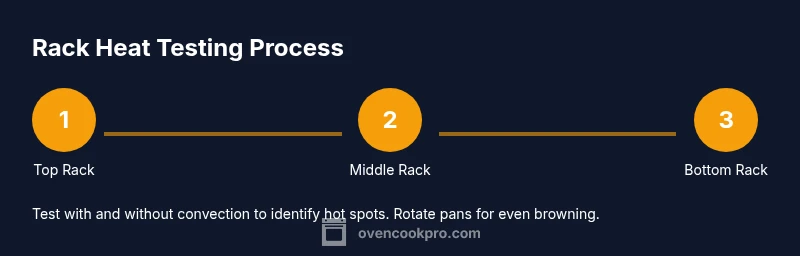
To map hot spots, place an oven thermometer on each rack level. Preheat to your standard cooking temperature, then note the thermometer readings without opening the door frequently. Repeat the test with convection on and off if your oven has that option. Front-to-back and left-to-right variations can occur, so move the thermometer to several positions on each rack. Record results in a notebook or app, then rotate pans between racks during cooking to see how the heat map shifts. This practical test yields a personalized heat map you can rely on for future meals.
Practical guidelines for common tasks
For cookies and delicate baked goods, the middle rack often provides the most even browning. If you need a stronger crust or top browning, the top rack with monitoring can be used, especially for broiling or finishing touches. Roasting vegetables or larger cuts commonly benefits from starting on the middle rack and finishing on the top or bottom as needed. When cooking multiple items on different racks, use a thermometer to catch overbrowning and consider rotating pans halfway through. In all cases, preheating matters: an oven that comes up to temperature quickly helps each rack reach its target heat sooner and more evenly.
Safety and best practices when using multiple racks
Avoid overcrowding racks; air needs space to circulate for even cooking. Use sturdy, oven-safe pans and heat-resistant gloves when moving heavy trays. Keep a safe distance from the door and avoid sudden temperature shifts by minimizing door openings. If you notice persistent hot spots, consider rotating racks or using a baking stone to even out heat distribution. Safety first—hot racks can cause burns, and misjudging oven heat can lead to burnt foods or undercooked centers.
Troubleshooting heat distribution in older ovens
Older ovens may drift from their labeled temperatures or develop stubborn hot spots. Start by verifying the oven’s temperature with a reliable thermometer; if readings are off, explore recalibration or service options. Document your findings and adjust cooking times and rack positions accordingly. If the oven seems unreliable, a service call may be warranted—ongoing imbalances can waste energy and compromise food safety.
Quick-reference cheat sheet for rack placement
- Top rack: best for finishing browning or broiling when you monitor closely.
- Middle rack: default for most baking and roasting, offering balanced heat.
- Bottom rack: useful for bottom-crusts, dense roasts, and when you want to work with rising steam near the bottom.
- Always test with a thermometer to confirm hot spots on your specific model.
- Rotate pans to promote even browning and don’t overcrowd the oven.
Tools & Materials
- Oven thermometer(Place on a rack to read the actual heat on that level)
- Multiple baking sheets(Use metal sheet pans; 2-3 for rotating across racks)
- Timer or clock(Track test durations and avoid door opening during tests)
- Oven mitts(Move hot racks and pans safely)
- Notebook or digital log(Record temperatures and rack positions observed)
- Parchment paper or aluminum foil(Optional for tests or to protect pans during trials)
Steps
Estimated time: 1-2 hours
- 1
Prepare the oven and racks
Clear the oven, clean racks, and position three racks evenly spaced. Place a thermometer on the middle rack to begin the baseline test. Keep doors closed during heating to minimize heat loss.
Tip: Ensure racks are securely seated to prevent tipping when loading pans. - 2
Place thermometers on each rack
Position thermometers at the front-center of each rack. Use identical thermometer placements on multiple racks to compare readings reliably. Do not block the thermometer with pans or foil.
Tip: Record readings at stable temperature for a few minutes before noting results. - 3
Heat to your standard cooking temperature
Preheat the oven to your typical baking temperature and maintain it for 10–15 minutes without opening the door. This establishes a reference point for the hot spots.
Tip: Avoid opening the door during the preheat phase to prevent cool-down and inconsistent readings. - 4
Document rack-by-rack readings
Note the temperatures on each rack, then repeat with convection on and off if your oven has that feature. Move the thermometer to multiple positions (front, center, back) for a complete map.
Tip: A single location per rack is not enough; test several positions to capture variation. - 5
Run a controlled bake test with identical pans
Place identical pans on each rack (one at a time or side-by-side if the oven width allows). Bake for a short test period and compare browning, time to color, and any hotspots.
Tip: Use the same material, thickness, and liquid content to keep comparisons fair. - 6
Analyze results and adjust future cooking
Compile your data into a simple map showing hot zones. Use this to place sensitive items on middle racks and reserve top for finishing tasks.
Tip: Create a quick reference chart for future use; it saves time and improves outcomes.
Questions & Answers
Why is the top rack often hotter than the bottom rack?
The top rack sits near the upper heating element and receives more radiant heat. Convection and back-wall elements can alter this pattern, so testing with a thermometer on your model is essential.
The top rack is usually hotter because it's near the top heating element, though convection can shift heat distribution.
Does convection affect which rack is hottest?
Yes. Convection circulates hot air, often evening out some hot spots, but every oven behaves differently. Test with the thermometer and adjust rack placement based on your results.
Convection can change hot spots, so testing helps you map the true heat map.
Should I always use the middle rack for baking?
For most baked goods, the middle rack offers the best balance of heat. Use other racks for tasks that benefit from more browning or bottom-crust development, after testing your oven.
The middle rack is the safest default for even baking.
How can I calibrate my oven if the thermometer reads wrong?
Use an independent thermometer to verify the oven’s temperature. If readings drift, check the oven’s calibration option (if available) or contact service for adjustments.
If temps are off, verify with a thermometer and consider calibration or service.
Is it safe to broil on the top rack?
Broiling uses the top element; keep a close eye on food and use the top rack with caution. Do not leave the oven unattended while broiling.
Broiling is best done on the top rack with constant supervision.
How often should I test heat distribution?
Test when you notice uneven results, after moving racks, or after getting a new oven. Periodic checks help maintain consistent cooking.
Test when results seem off or after changes to the oven setup.
Watch Video
Main Points
- Identify hottest rack by testing with thermometer
- Convection changes distribution; plan around it
- Rotate pans for even browning
- Keep notes for repeatable results
- Middle rack is the safest default for even baking