Where in the Oven to Bake Cake: A Step-by-Step Guide
Learn exactly where to place cake batter in your oven for even rise and golden crust. This guide covers rack position, pan selection, preheating, doneness tests, and troubleshooting for reliable results.


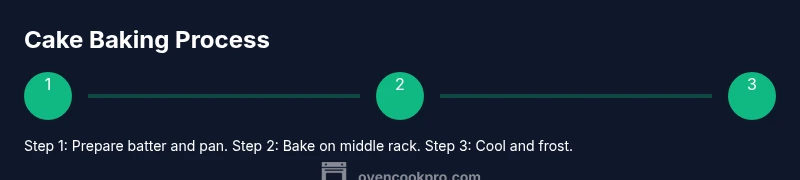
Bake cakes on the middle rack of a preheated oven using a standard pan. Leave space around the pan for airflow, and rotate if baking multiple cakes. Always preheat to the recipe temperature and verify the oven's heat with a thermometer. This placement helps minimize hot spots and promotes even browning for most cake types.
Understanding oven zones and bakeware basics
When you bake a cake, heat must reach the batter evenly to ensure a uniform rise and golden crust. Ovens have hot and cool spots, and heat circulates differently at the top, middle, and bottom. The middle rack generally offers the best compromise between even airflow and browning for most standard cakes. According to Oven Cook Pro, this position minimizes temperature gradients that can cause doming or sinking. If your oven has a known hotspot on the upper rack, staying on the middle rack can help you avoid premature browning on the top. Use a rack that allows at least 1 inch of clearance around the pan for air to circulate. Choosing the right bakeware matters, too: heavy metal pans conduct heat evenly, while dark nonstick pans can intensify browning. For lighter batters, you may want to place two pans on the rack with a bit more space between them to promote airflow. In all cases, place your pan on parchment or a greased, floured surface to prevent sticking and ensure clean release. To prepare for future bakes, keep a few spare parchment rounds and a cooling rack within reach so you can swap quickly between tasks.
Tools & Materials
- Oven thermometer(To verify true oven temperature)
- Cake pans (8-9 inch, round preferred)(Choose pans with straight sides for even rise)
- Parchment paper(Prevent sticking; easier release)
- Wire cooling rack(Elevates cake for even cooling)
- Mixing bowls and spatula(For batter preparation)
- Nonstick spray or butter and flour(Grease the pan for clean release)
- Oven mitts(Protection while handling hot pans)
Steps
Estimated time: 35-45 minutes
- 1
Preheat oven and prepare pan
Preheat the oven to the recipe’s stated temperature and allow the indicator to signal readiness. While it warms, grease the pan and line with parchment if not already done. This ensures the batter starts cooking at the right temperature and releases cleanly after baking.
Tip: Pro tip: Use parchment circles for round pans to guarantee a smooth release. - 2
Position the rack for even heat
Place the rack in the middle of the oven to balance heat from top and bottom elements. If your oven has known hotspots on the top, starting on middle helps prevent over-browning. Avoid crowding by leaving at least 1 inch of space around the pan.
Tip: Pro tip: If baking two pans, arrange them side by side with space in between and rotate halfway through. - 3
Prepare batter and pan
Measure and mix batter according to the recipe, then pour evenly into the prepared pan. Use a spatula to level the surface and remove any air pockets. Uniform batter helps prevent uneven rise and doming.
Tip: Pro tip: Fill to about two-thirds full for standard cakes to allow room for expansion. - 4
Bake and monitor
Place the pan on the middle rack and bake for the time specified in the recipe. Resist opening the door frequently, as heat loss can cause uneven baking and longer times. If baking more than one cake, rotate pans once during the bake.
Tip: Pro tip: Use the oven light to peek instead of opening the door. - 5
Rotate pans if needed
If you have multiple pans, rotate their positions halfway through to equalize exposure to heat. This helps prevent one cake from browning too quickly while another remains underdone.
Tip: Pro tip: Use a timer to remind you when to rotate. - 6
Check for doneness
Insert a clean toothpick into the center; it should come out with a few crumbs or clean. If batter sticks, bake a few minutes longer in small increments, checking after each interval.
Tip: Pro tip: Doneness can occur before the minimum time, so rely on the tester more than the clock. - 7
Cool and release
Let the cake rest in the pan for about 10 minutes, then invert onto a cooling rack. Cool completely before frosting to avoid sliding and maintain crumb structure.
Tip: Pro tip: Cooling on a rack prevents condensation and soggy edges. - 8
Store or layer
Once cooled, store layered or sealed in an airtight container. If frosting, ensure the surface is fully cool to avoid melting.
Tip: Pro tip: For layered cakes, chill layers slightly to help with clean frosting.
Questions & Answers
What rack position is best for baking a cake?
For most cakes, the middle rack offers the best balance of heat and air circulation. If your oven has hotspots, rotate the pan and monitor browning. Use a thermometer to confirm the oven is at the target temperature.
Use the middle rack for even baking, and rotate if you notice hot spots.
Do I need to preheat the oven before baking a cake?
Yes. Preheating ensures the batter starts cooking at a stable temperature, promoting even rise. Placing batter in a cold oven can lead to uneven texture.
Yes—preheat to the recipe temperature before baking.
How does convection baking affect cake texture?
Convection can bake faster and promote even browning, but it may dry delicate batters. If you use convection, lower the temperature by about 25°F (15°C) and check doneness earlier.
Convection bakes faster; lower the temp and monitor closely.
What causes doming or cracking on a cake?
Doming often results from heat hitting the edges too quickly; cracks can come from overbaking or dry batter. Adjust temp, bake time, and batter moisture to improve structure.
Doming can happen when heat is uneven; cracks often mean overbaking.
How can I tell when a cake is done without overbaking?
A toothpick inserted into the center should come out with a few crumbs or clean. If wet batter remains, bake a little longer in short increments and retest.
Use a toothpick test to confirm doneness.
Can I bake multiple cakes at the same time?
Yes, with proper spacing and rotation. Leave space between pans and rotate positions halfway to ensure even heat distribution.
Yes, but keep space between cakes and rotate.
Watch Video
Main Points
- Preheat and bake on the middle rack for even heat.
- Choose pan size and material to match the batter.
- Rotate pans and test doneness to prevent underbaking.
- Cool completely before frosting to preserve crumb structure.