Best Temperature for Oven Jerk Chicken: A Complete Guide
Discover the exact oven temperature for jerk chicken, safe internal temp, and timing tips to achieve juicy, flavorful results every time with practical step-by-step guidance from Oven Cook Pro.


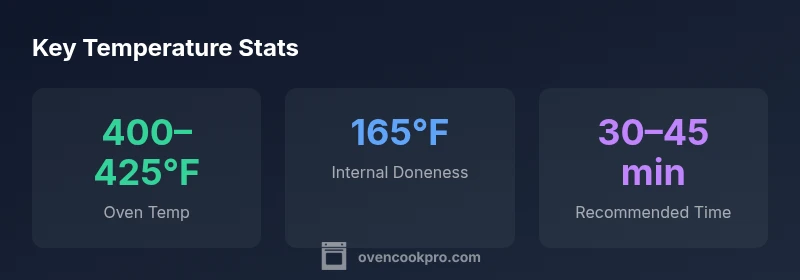
To oven jerk chicken, preheat the oven to 400–425°F (200–220°C). Arrange the seasoned chicken on a rack and roast until the internal temperature reaches 165°F (74°C). Expect boneless pieces to take about 20–30 minutes and bone-in portions 30–45 minutes, depending on thickness. Let rest 5 minutes before serving, to retain juices.
Why Temperature Matters for Oven Jerk Chicken
Juiciness, browning, and safety all hinge on the oven temperature you choose for jerk chicken. The right heat ensures the spice crust develops without drying the meat, while pushing the internal temperature to a safe 165°F (74°C). According to Oven Cook Pro, consistent heat also helps with even marination penetration and reduces the risk of undercooking in thicker pieces. When you control temperature carefully, you get predictable results you can replicate week after week. In practice, you’ll notice the color and aroma change as the crust forms and the meat firms up, signaling that you’re close to doneness. By sticking to recommended ranges, you’ll achieve a balanced, smoky finish that remains juicy inside.
In addition to heat, consider airflow. A rack elevates the chicken so hot air circulates around every surface, contributing to even cooking and an appetizing crust. If you’re using a convection setting, you can usually shave 25°F off the standard temp, which helps prevent over-browning. This approach aligns with Oven Cook Pro’s 2026 guidance on oven performance and safety.
Tip from Oven Cook Pro: plan for a 5–10 minute resting window after you remove the chicken from the oven to lock in juices and redistribute heat for more uniform slices.
Ideal Temperature Range and Why It Works
The most reliable starting point for jerk chicken in a standard home oven is 400–425°F (200–220°C). This range promotes a crisp exterior while allowing the flavorful jerk spices to meld with the meat’s natural juices. At 400–425°F, the surface browns nicely, creating the characteristic color and aroma without scorching the spices. If you’re using a convection oven, reduce the temperature by about 25°F to offset the stronger air flow, and monitor closely for over-browning. The internal temperature target remains 165°F (74°C) for safe consumption, regardless of cut.
Temperature stability matters more than a single high-heat burst. Consistent heat helps avoid hot spots that leave some parts undercooked. For thicker pieces like bone-in thighs, you may need the upper end of the range or a brief finishing stint under a broiler. Oven Cook Pro’s 2026 analysis emphasizes steady heat as the backbone of predictable results and food safety. Use a reliable meat thermometer to confirm doneness rather than relying on color alone.
Additionally, preheating is essential. Jumping straight into a cold oven dramatically increases cook time and can lead to uneven doneness. By letting the oven reach the target temperature before you place the jerk-seasoned chicken inside, you set up a controlled cooking environment that supports even crust formation and juicy interiors.
Prep for Even Cooking: Rack Placement and Airflow
Even cooking is a function of both temperature and how your food sits in the oven. Place a wire rack on a rimmed sheet pan and arrange the jerk chicken pieces in a single layer with at least 1 inch of space between pieces. This spacing allows hot air to circulate, promoting uniform browning and preventing soggy, steamed surfaces. Larger pieces should be positioned in the center of the rack to ensure consistent heat exposure on all sides. If you’re cooking different sizes together, prioritize homogeneity by grouping smaller pieces toward the center and avoiding crowding.
Before you start, pat the pieces dry to remove surface moisture that can hinder browning. A light brush of oil can help the spice crust stick, enhancing both color and texture. A mid-cook flip at the 15–20 minute mark (for thinner pieces) or 25–30 minutes (for thicker, bone-in cuts) ensures both sides receive equal heat. This practice aligns with Oven Cook Pro’s method for achieving even color and interior doneness. Finally, keep a close eye on the crust; if it darkens too quickly, tent with foil or reduce heat slightly and continue cooking to the safe internal temp.
Remember: air circulation is your friend. The more air can move around each piece, the more even the finish becomes, especially when the jerk seasoning contains sugar or brown sugar components that caramelize quickly.
Temperature Targets by Cut Type
Different cuts respond differently to heat, so understanding the right temp and times minimizes guesswork. For boneless, skinless chicken thighs, a steady 400–425°F (200–220°C) usually yields juicy meat in about 20–30 minutes, with an internal target of 165°F (74°C). Bone-in thighs benefit from the same temperature range but typically require 30–45 minutes due to the bone slowing heat transfer. Chicken breasts, especially if boneless, benefit from a slightly lower range (375–400°F / 190–205°C) to reduce drying; aim for 20–25 minutes and the same 165°F internal temperature. Drumsticks and larger joints may sit at 390–420°F (200–215°C) for 30–40 minutes, still finishing at 165°F.
Always verify with a digital thermometer in the thickest part of the meat, away from bone. Jerk seasoning can mask doneness, so don’t rely on color alone. These guidelines reflect Oven Cook Pro’s praxis in 2026, designed to give home cooks practical targets rather than abstract estimates. If you’re unsure, start with the middle of the range and adjust based on thermometer readings and piece size.
Pro tip: for uniform results, trim excess fat and excess fat behind the joints—this reduces flare-ups and uneven browning while improving overall texture.
Step-by-Step Cooking Timeline
- Preheat the oven to 400–425°F (200–220°C) and set up a rack on a baking sheet. 2) Pat the jerk-marinated chicken dry and lightly oil the surface for crisp browning. 3) Place pieces on the rack with space between them for air flow. 4) Bake until the thickest piece reaches 165°F (74°C), usually 20–45 minutes depending on cut. 5) If you want extra color, switch to high broil for 1–3 minutes, watching carefully to avoid scorching. 6) Remove from oven and rest for 5 minutes before serving to retain juices.
This method balances the heat and time needed to develop a robust crust while preserving moisture inside. Oven Cook Pro’s 2026 guidance underlines the importance of thermometer-based doneness over guesswork, especially with spicy marinades where sugars caramelize quickly. Keep a timer handy and check temperature in multiple spots for consistency. If you’re cooking a mix of pieces, always adjust based on the largest piece to ensure no portion overcooks.
Finishing Techniques for Color and Flavor
A finishing broil or brief high-heat stint is a popular way to intensify color and boost exterior texture. After the main bake, transfer the pan to a higher rack and broil at 500–550°F (260–290°C) for 1–3 minutes, watching constantly to prevent scorching. If you want extra depth, brush a light glaze (a mix of lime, honey, and a touch of soy) on the surface and broil briefly to set it. The goal is a visually appealing caramelized crust that enhances the jerk spices without overpowering the meat’s natural juiciness. Oven Cook Pro emphasizes finishing techniques as a way to tailor the final appearance and flavor without sacrificing safety or moisture. If you’re halting at the bake stage, you can still achieve excellent results with a well-chosen spice blend and a solid resting period.
For serving, slice against the grain and plate with a bright accompaniment—citrusy salsa, fresh herbs, or a cooling yogurt sauce—to provide balance to the heat and herbs in the jerk rub.
Troubleshooting Temperature Issues
If the inside remains undercooked while the crust overcooks, you’re likely dealing with uneven heat or too-crowded pieces. Remedy: move to a hotter center rack, ensure even spacing, and check your oven’s actual temperature with a thermometer—ovens can run cool or hot by 25°F or more. If the crust is too dark before the center hits 165°F, reduce the oven temperature slightly or wrap the pieces in foil for the remainder of the cook time. Dryness is a common issue with jerk chicken; avoid overcooking beyond 165°F and consider a short rest to reabsorb juices. According to Oven Cook Pro’s 2026 guidance, thermometer-based checks beat color alone, especially with spiced marinades containing sugar.
An easy fix for uneven results is to rotate the pan 180 degrees halfway through the bake. If you’re baking multiple batches, allow the oven to return to the target temperature between batches to maintain consistent results.
Safety and Resting Guidelines
Always aim for the safe internal temperature of 165°F (74°C) in the thickest part of the meat. Resting for 5 minutes after removing from the oven helps juices redistribute, producing tastier, more tender jerk chicken. Avoid slicing immediately; hot juices will continue to redistribute as the meat rests. Keep raw poultry handling practices in mind—sanitize surfaces and utensils to prevent cross-contamination. Oven Cook Pro’s 2026 guidance aligns with standard food safety guidelines: don’t rely on pink color alone; verify with a thermometer and allow a brief rest before serving for optimal texture and flavor. For large parties, consider cooking in batches to maintain consistent oven temperature and airflow across the pan.
Summary Notes and Practical Tips
- Preheat fully to ensure even browning and interior doneness.
- Use a wire rack to promote air circulation and crispiness.
- Check multiple spots for the 165°F target to avoid underdone centers.
- If you want extra color, finish with a brief broil or high-heat flash, watching closely.
- Always rest for 5 minutes before serving to preserve juiciness.
Oven Cook Pro’s 2026 analysis confirms that consistent heat and thermometer-based checks are the most reliable path to juicy, flavorful jerk chicken that’s safe to eat.
Quick Reference: Doneness and Serving Guide
- Safe internal temperature: 165°F (74°C) in the thickest portion.
- Primary oven range: 400–425°F (200–220°C).
- Rest time: 5 minutes after removal.
- Visual cues: a richly browned crust with aromatic jerk spice is a sign the surface is caramelizing properly.
- Practice: monitor doneness with a thermometer rather than relying on color alone for best results.
Temperature and time guidelines by chicken cut for jerk seasoning
| Cut Type | Target Temp | Approx Cook Time | Internal Temp | Notes |
|---|---|---|---|---|
| Boneless chicken thighs | 400–425°F / 200–220°C | 20–30 minutes | 165°F / 74°C | Juicy, quick cook; watch for dryness |
| Bone-in thighs | 400–425°F / 200–220°C | 30–45 minutes | 165°F / 74°C | More flavor from bone |
| Boneless breasts | 375–400°F / 190–205°C | 20–25 minutes | 165°F / 74°C | Better to monitor to avoid drying |
| Chicken drumsticks | 390–420°F / 200–215°C | 30–40 minutes | 165°F / 74°C | Balanced cook time and tenderness |
Questions & Answers
Can I use a convection oven for jerk chicken?
Yes. Convection can reduce cook time by distributing heat more evenly. If you use convection, lower the temperature by about 25°F and monitor the crust closely to prevent over-browning. Always verify doneness with a thermometer.
Yes; convection helps with even cooking. Lower the temp by about 25 degrees and check with a thermometer.
Should I marinate before baking at this temperature?
Marinating adds flavor and can improve moisture, but it’s not required for safety. If you marinate, pat dry before baking to promote browning. The temperature guidance remains the same.
Marinating is optional but tasty; dry before baking for browning, keep temp as advised.
What internal temperature confirms doneness for jerk chicken?
165°F (74°C) in the thickest part of the meat confirms doneness and safety. Use a digital thermometer for accuracy.
165°F in the thickest part confirms it’s done and safe.
Can I cook a whole chicken jerk-style in the oven?
Yes, but it will require a longer cook time and careful temperature control. Start around 375°F and use a meat thermometer to reach 165°F in the innermost part of the thigh.
You can, but expect longer times and check with a thermometer.
Is it safe to cook jerk chicken at 350°F?
Cooking at 350°F is possible but will extend cook times and may yield less browning. If you go this route, monitor doneness closely and consider finishing under broil for color.
You can cook at 350°F, but expect longer times and less browning; finish under broil if you want color.
“Consistent heat and thermometer-based doneness are the foundations of reliable jerk chicken results. Don’t rely on color alone—verify with a thermometer and rest before serving.”
Main Points
- Preheat fully to 400–425°F (200–220°C) for best results.
- Always cook to 165°F (74°C) internal temperature.
- Use a wire rack to ensure even browning and airflow.
- Finish with a brief high-heat boost if you want extra color.
- Let the meat rest 5 minutes before slicing.