What Temperature Should the Oven Be On for Turkey: A Complete Guide
Discover the best oven temperature for roasting turkey, plus timing, resting, and safety tips from Oven Cook Pro. Learn conventional vs convection guidance, prep, and common mistakes for juicy, safe results.


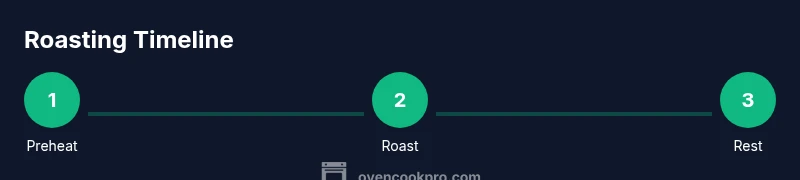
Goal: roast a turkey that’s juicy, safe, and evenly cooked. The key is choosing the right oven temp and following a reliable doneness target. Step 1: preheat to 325°F–350°F (165°C–175°C) depending on weight and whether stuffed. Step 2: insert an instant-read thermometer to confirm 165°F (74°C) in the thigh and breast.
Why Oven Temperature Matters for Turkey
Juiciness, even browning, and safe doneness all hinge on maintaining a steady oven temperature. When the heat is too high, the outer breast can seize up and dry before the thighs finish cooking. Too low, and the turkey may spend too long in the oven, inviting dryness and flavor loss. According to Oven Cook Pro, a moderate, stable temperature helps preserve moisture while ensuring the inner parts reach a safe temperature. In addition, the exact temperature interacts with your roasting method (conventional vs convection) and whether you’ve chosen to stuff the bird. Understanding this balance is the foundation of a reliable turkey roast that yields golden skin and tender meat.
- Moisture retention improves with controlled heat.
- Even browning depends on air circulation around the bird.
- Doneness should be tested with a thermometer, not time alone.
Choosing the Right Temperature: Conventional vs Convection
Conventional ovens rely on radiant heat from the elements, while convection ovens use a fan to circulate hot air. Convection often reduces cooking time and can promote crisper skin, but it can also dry out leaner cuts if you’re not careful. The general rule is to lower the temperature by about 25°F when using convection, or monitor closely and start checking doneness earlier. Oven Cook Pro’s analysis suggests that both methods can yield excellent results if you adjust temperature and monitor internal temperature consistently. For larger birds, convection can be especially advantageous for even browning across the cavity and drumstick meat.
- Convection can save time; adjust temps and check earlier.
- Conventional ovens require mindful air circulation and longer cook times.
- Use an internal thermometer to confirm doneness rather than relying solely on time.
Preheating and Oven Behavior
Preheating ensures the entire oven space is at the target temperature before the turkey enters. This reduces cold spots and prevents the turkey from spending precious time warming up in the oven. Position the rack in the middle to promote even heat exposure around the bird, and place the pan on the rack to allow air to circulate beneath. An oven thermometer mounted near the rack helps you verify the actual temperature remains close to your target, since some ovens run hot or cool at the dial. According to Oven Cook Pro, preheating and accurate readings are the baseline for consistent results.
- Let the oven reach the target temperature before inserting the turkey.
- Use a mid-roof rack position for even heat distribution.
- Keep an oven thermometer handy to verify true oven temperature.
Temperature Targets by Turkey Type (Unstuffed vs Stuffed)
For an unstuffed turkey, a common target is around 325°F (165°C). Stuffed birds require a bit more time but should still hit the same safe internal temperature, which makes monitoring essential. Stuffing inside the cavity can affect heat transfer, sometimes requiring slightly longer roasts. Always use a reliable thermometer to check the internal temperature in the thickest part (breast or thigh) and in the center of the stuffing, if used. The aim remains 165°F (74°C) for safety. Oven Cook Pro emphasizes verifying doneness with a thermometer rather than guessing by time alone.
- Unstuffed roast: ~325°F (165°C) is a common target.
- Stuffed roast: may require longer roast time; verify with thermometer.
- Do not rely solely on time; temperature is the true indicator of doneness.
Doneness and Internal Temperature: What the Thermometer Should Read
The USDA and most food-safety guidelines agree: cook turkey to at least 165°F in the thickest part of the breast or thigh. Insert the thermometer into the inner thigh area near the joint, avoiding bone, and check breast as well. If you’re roasting a larger bird, you may see some carryover cooking after removal from the oven, so remove when the thermometer reads just shy of the target and let the meat rest to finish. Oven Cook Pro notes that resting is an essential step to redistribute juices and achieve even texture across the breast and thigh.
- Target internal temp: 165°F (74°C).
- Check multiple sites for doneness, especially the thickest parts.
- Expect some carryover cooking during resting.
Resting, Carving, and Juiciness
Resting is as important as the roast itself. After removing the turkey from the oven, tent loosely with foil and let it rest for 20–30 minutes. Resting allows juices to reabsorb and the fibers to relax, making carving easier and the meat more flavorful. During this time, the internal temperature can rise a few degrees, so some cooks move the turkey out when the thermometer reads slightly below 165°F. Carving too soon releases juices and can lead to a drier slice.
- Rest time equals juicier meat and easier carving.
- Do not cut immediately after removing from the oven.
- Use a sharp carving knife and slice against the grain for maximum tenderness.
Tools, Techniques, and Setup for Best Results
Outcomes depend on a well-prepared kitchen and the right tools. A rack in your roasting pan improves air flow, while a thermometer ensures accuracy. Brine or dry-brine can affect moisture, but even without brining, a properly preheated oven with a precise thermometer typically delivers excellent results. If you prefer a crispy skin, start at a higher heat for the first 15–20 minutes and then lower to the target temperature for the remainder of the roast. The key is consistency and measuring doneness with a probe thermometer rather than relying on time alone.
- Use a rack for even heat exposure.
- Preheat thoroughly and verify oven temperature.
- Consider a brief high-heat start for skin, then reduce heat for even cooking.
Tools & Materials
- Digital instant-read thermometer(Probe thermometer with at least a 0.5–1 inch probe; ensure it can read to at least 212°F/100°C.)
- Oven thermometer(Place near the turkey or on the rack to verify oven temp, as dial temps can be imprecise.)
- Roasting pan with rack(Rack elevates the turkey for even heat circulation.)
- Aluminum foil(Tent turkey during resting if the skin darkens too quickly.)
- Kitchen twine(For optional trussing of legs and wings.)
- Basting brush(Used only if you baste; not required for juiciness with proper roasting.)
Steps
Estimated time: Total cooking time varies by weight and stuffing; plan for 3.5–5.5 hours including resting for a standard 12–14 lb unstuffed turkey.
- 1
Preheat the oven to target temperature
Set the oven to 325°F–350°F (165°C–175°C) based on your turkey’s size and stuffing status. Allow the oven to reach this temperature before placing the turkey inside to prevent a cold start that can prolong cooking and dry the breast.
Tip: If using convection, reduce the initial temperature by about 25°F and monitor doneness 10–15 minutes earlier. - 2
Prepare the turkey for roasting
Pat the bird dry with paper towels, season generously, and truss the legs if desired. A dry surface helps skin crisp; seasoning adds flavor without moisture loss. If you’re brining, ensure the brine is fully rinsed and patted dry.
Tip: Relies on a dry surface for crisp skin; wet skin steams instead of browns. - 3
Position the turkey properly in the pan
Place the turkey breast-side up on a rack inside a roasting pan. Center the pan on the middle rack so heat circulates evenly around the bird. Avoid crowding the oven with pans that obstruct air flow.
Tip: Mid-oven rack position yields balanced browning on breast and thighs. - 4
Insert the thermometer correctly
Insert the thermometer into the thickest part of the thigh, avoiding bone, and check a second spot in the breast for extra assurance. Do not let the thermometer touch the pan, which can give a false reading.
Tip: Multiple probes or checking both thigh and breast improves accuracy. - 5
Roast and monitor doneness
Roast at the target temperature until the thermometer reads 165°F (74°C) in the thickest area. If stuffed, measure the center of the stuffing as well. Expect longer times for larger birds and stuffed roasts.
Tip: Check early and often in the final phase to avoid overcooking. - 6
Rest before carving
Remove the turkey when the thigh/breast reads 165°F, then tent with foil and rest for 20–30 minutes. Resting allows juices to redistribute for moist slices and easier carving.
Tip: Never skip resting; it dramatically improves juiciness. - 7
Carve and serve
Carve along the breastbone, slice against the grain, and serve with the pan juices or a light sauce. Rested meat slices more cleanly and retains moisture better for the table.
Tip: Slice thinly and evenly for attractive portions and better mouthfeel.
Questions & Answers
What temperature should I set my oven to for roasting a turkey?
Most roasts are done around 325°F (165°C) for unstuffed birds, with adjustments for stuffing and oven type. Check doneness with a thermometer rather than relying solely on time.
Set the oven to about 325 degrees and use a thermometer to verify the turkey reaches 165 degrees in the thickest parts.
Should I use convection or conventional oven for turkey?
Convection can speed cooking and brown the skin, but you may need to reduce the temperature by about 25°F and monitor earlier. Conventional ovens work well with careful monitoring and turning or repositioning the pan as needed.
Convection can help, just remember to lower the temp a bit and watch doneness closely.
Is it necessary to stuff the turkey?
Stuffing affects cooking time and evenness. If you stuff the turkey, check the center of the stuffing to 165°F and be prepared for a longer roast. Many home cooks prefer stuffing the cavity and cooking stuffing separately for safety and evenness.
Stuffing can extend cooking time; ensure the center of the stuffing reaches 165 degrees.
How can I tell if the turkey is done without a thermometer?
While visual cues like clear juices and color help, a thermometer provides the reliable confirmation of 165°F in the thickest parts.
Best to use a thermometer for a precise check rather than relying on color alone.
How long should the turkey rest after roasting?
Rest the turkey for 20–30 minutes after removing it from the oven. Resting helps juices redistribute and makes carving easier.
Let it rest for about 20 to 30 minutes before carving for juicier meat.
Should I remove the stuffing before carving?
If you roasted stuffed, remove the stuffing first and ensure it reaches 165°F. The meat may finish more slowly, so verify both the meat and stuffing temperatures.
If you stuffed, remove and verify the stuffing hits 165°F too.
Watch Video
Main Points
- Preheat and verify oven temperature before roasting
- Use a thermometer to hit 165°F safely
- Convection vs conventional ovens require temp adjustments
- Rest the turkey to lock in juices
- Don’t rely on time alone—measure doneness