What Oven Setting for Roasting: A Practical Guide
Master roasting with the right oven setting. Learn convection vs conventional bake, preheating tips, temperature guidelines, and a practical step-by-step approach for succulent roasted dishes.


To roast successfully, set your oven to the appropriate roasting temperature and use the right mode. For most meats and vegetables, start with conventional bake at about 190–205°C (375–400°F). If you want faster browning, switch to convection and reduce the temp by 20–25°C (about 25°F). Always preheat to the target temp and use a probe thermometer for accuracy.
what oven setting for roasting
Roasting is a dry-heat cooking method that relies on hot air circulating around the food to create a browned exterior and a juicy interior. The oven setting you choose directly affects how quickly the interior cooks and how evenly the surface browns. According to Oven Cook Pro, the most reliable approach starts with a conventional bake at standard roasting temperatures and then uses convection judiciously to accelerate browning without drying out the meat or vegetables. This is not just about heat; it’s about air flow, rack position, and timing. By understanding how the oven environment interacts with moisture loss and Maillard browning, you can predict outcomes more accurately and reduce guesswork in busy weeknight roasts or holiday feasts alike.
why the right setting matters for roasting
Choosing the correct oven setting influences surface texture, interior doneness, and juiciness. A higher heat at the outset can create a crisp exterior, but if the interior lags, you risk over-browning on the outside and undercooking inside. Conversely, a gentler, steady heat promotes even cooking but may miss the quick crisp you want. The goal is a balance: fast enough to brown and render, but slow enough to cook evenly through the center. The answer hinges on food type, pan, and whether you’re aiming for a roast with a crust or a roasty, even finish.
practical starting point for common roasts
For many roasts, a conventional bake range of 190–205°C (375–400°F) is a dependable starting point. This range allows interior cooking without excessive drying. If you’re working with dense meats or larger joints, you can begin at the lower end to ensure doneness in the center and then finish with a brief high-heat flare or a convection boost for browning. Always anchor your plan with an internal temperature check to avoid overcooking, and let resting juices redistribute for best texture.
how to think about convection and conventional roasting
Convection robots (the oven’s built-in fan) circulate hot air for faster browning and shorter cooking times. Use convection for small, thin cuts, vegetables that benefit from extra crisp, or when you want to pull a deeply browned crust quickly. When cooking large, dense roasts or delicate items with marinades, conventional bake at a steady temperature can be more forgiving and helps prevent uneven browning. If you do switch to convection, lower the temperature by 20–25°C (about 25°F) and monitor closely.
preheating and pan setup for even roasting
Preheating ensures the oven walls deliver an immediate burst of heat as soon as roasting begins. Aim for a full preheat of 10–15 minutes before loading. Use a wire rack set on a rimmed baking sheet to elevate food and promote air circulation. If you’re roasting vegetables, pat them dry and spread in a single layer with space between pieces to avoid steaming. For meats, season and optionally sear the outside for a crust, then transfer to the planned roasting setup.
step-by-step approach to a reliable roast
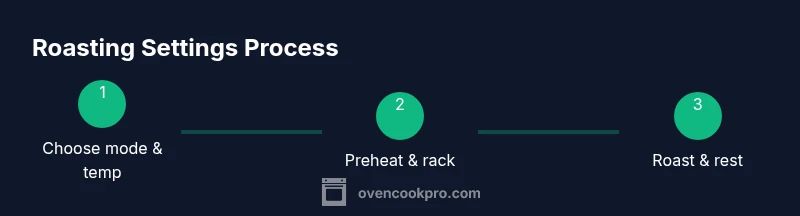
- Preheat to the target temperature on the intended mode. 2) Prepare the food, pat dry, season evenly, and arrange with space for air circulation. 3) Load onto a rack if possible, or spread on a parchment-lined sheet for easy release. 4) Roast until the interior reaches the desired doneness, checking with a thermometer near the end. 5) Rest briefly before slicing to retain juices. 6) Finish any final browning with a brief high-heat blast or broil if necessary.
keeping outcomes consistent across meals
Consistency comes from procedure: use the same temperature range for similar dishes, monitor with a thermometer, avoid overcrowding, and permit resting time. Record your results for future reference—note the exact temperature, rack position, and approximate time that yielded your preferred result. Over multiple roasts, you’ll begin to anticipate how different proteins, vegetables, and pan setups respond to the same oven setting.
Tools & Materials
- Oven(Clean and calibrated; preheat to target temperature)
- Roasting pan with rack(Elevates food for air circulation)
- Parchment paper or silicone mat(Prevents sticking and aids cleanup)
- Meat thermometer / instant-read thermometer(Check internal doneness accurately)
- Oven mitts or heat-resistant gloves(Protect hands when loading hot pans)
Steps
Estimated time: 40-70 minutes
- 1
Preheat to target temperature
Power up the oven and set to the chosen roasting temperature within the recommended range. Allow the oven to reach temperature before loading food to ensure an immediate start to cooking and browning.
Tip: A consistent preheat helps avoid temperature sag when you load food. - 2
Prepare and season the food
Pat the surface dry, apply even seasoning, and, if desired, lightly oil the surface to promote browning. Uniform thickness guarantees even cooking across pieces.
Tip: Dry surfaces before roasting to maximize Maillard browning. - 3
Arrange with space on the rack
Place food on a rack over a sheet or parchment-lined pan, leaving space between pieces for air to circulate. Overcrowding steams rather than roasts.
Tip: Tip: double-check the rack is stable before loading. - 4
Roast and monitor doneness
Roast until the interior reaches your target doneness, using a thermometer to guide decisions. If browning is slow, briefly increase heat or switch to convection for a short burst.
Tip: Check toward the end of the expected window to avoid overcooking. - 5
Rest before slicing
Let the roasted food rest for a few minutes to redistribute juices and finish carryover cooking. Slice against the grain where appropriate for tenderness.
Tip: Resting time improves moisture retention. - 6
Cleanup and reflection
Cool cookware slightly, wash, and store for next use. Note the results to refine temps and times for future roasts.
Tip: Keep a roasting log to build consistency over time.
Questions & Answers
What oven setting should I use for roasting vegetables?
Roast vegetables using a conventional bake at about 190–205°C (375–400°F) for even browning and tender interiors. For crisp edges, a brief convection boost can help, but monitor closely to prevent burning.
Roast vegetables at 190 to 205°C using conventional bake; convection can help browning, but watch them closely.
Can I roast with the oven door open?
No. Keeping the door closed maintains a consistent temperature and airflow. Opening the door causes heat loss and uneven cooking.
Never roast with the oven door open; it disrupts heat and cooks unevenly.
Is convection better for roasting poultry?
Convection can help poultry brown faster and equalize heat around the bird. If using convection, lower the temperature by 20–25°C and check internal doneness with a thermometer.
Yes, convection browns poultry faster; lower the temp and verify doneness with a thermometer.
How do I prevent dryness in roasted meat?
Choose a moderate oven temperature, avoid overcrowding, and use a rack to allow airflow. Rest meat after roasting to redistribute juices and retain moisture.
Moisture comes from proper temp, space, and resting time after roasting.
Should I adjust temperature for different pan sizes?
Yes. Larger roasts may benefit from a longer initial phase at a lower temp, while smaller pieces can brown quickly. Use a thermometer to guide timing and adjust heat as needed.
Pan size affects cooking time; monitor with a thermometer and adjust heat if needed.
Why isn’t my roast browning properly?
Possible causes include overcrowding, insufficient oven temperature, or using a dark pan that conducts heat differently. Try spacing pieces, ensuring the oven reaches the target temp, and using convection if appropriate.
If browning is slow, check spacing, temperature, and consider a brief convection boost.
Watch Video
Main Points
- Preheat thoroughly before roasting
- Convection heats faster; adjust temp accordingly
- Space pieces for even browning
- Use a thermometer for accuracy
- Rest meat after roasting for juiciness