What oven heat for roast potatoes
Discover the ideal oven temperature for perfect roast potatoes. Learn preheating, timing, and tips for crispy edges and fluffy centers with Oven Cook Pro guidance.


For crispy, evenly browned roast potatoes, preheat your oven to about 220°C (425°F). Use a single layer on a light metal sheet, toss with oil and salt, then roast 35-45 minutes, turning once halfway. This temperature balance delivers crisp exteriors and tender interiors.
Why oven heat matters for roast potatoes
The oven temperature you choose determines how quickly potatoes brown, how crisp their edges become, and how evenly the interior cooks. A good rule of thumb is that hotter temps yield crisper crusts but can risk over-browning if you crowd the pan. According to Oven Cook Pro, heat level is the single most influential factor in achieving a crisp, fluffy outcome when roasting potatoes. Using too low a temperature will often leave potatoes pale with soft edges, while too high a temperature can burn the exterior before the interior is tender. Understanding heat helps you tailor texture to your preferred bite, whether you like a light golden crust or a deeply browned, nearly crackly surface. In practice, most home cooks start with a standard 220°C (425°F) baseline and adjust for oven performance and potato variety. The goal is a balance between exterior crunch and interior softness, achieved by sensible heat, good air exposure, and an even spread on the pan.
Preheating basics for reliable results
Preheating is a simple step with outsized impact. Allow your oven to reach the target temperature before you introduce potatoes. Most ovens need 10–15 minutes to stabilize at 220°C (425°F), though some models run hotter or cooler by a few degrees. An analog or digital oven thermometer placed inside the oven can confirm accuracy, preventing under- or over-cooking. If you’re cooking multiple dishes, plan around the hottest element in your oven to avoid temperature drift. Consistency is key, so resist the urge to open the door repeatedly or to jam more potatoes onto the sheet; both actions drop heat and extend roasting time.
The best temperatures for crispy roast potatoes
A baseline of 220°C (425°F) is widely recommended for most potato varieties, offering a reliable crust while keeping the interior tender. If you crave extra crispness, you can push toward 230°C (450°F), but monitor closely to avoid scorching. For a softer bite with less browning, 200°C (395°F) works, though the crust won’t be as dramatic. If you use a convection setting, you may benefit from a slight reduction in temperature (about 10–20°C/20–40°F) to prevent uneven browning. The choice between gas and electric ovens matters less than the uniform heat distribution you achieve with a single-layer spread and proper pan choice.
Pan choices and layout for even browning
The pan selection can dramatically affect your results. A sturdy, light-colored baking sheet or a shallow roasting pan conducts heat evenly and promotes a crisp crust. Avoid dark, heavy, or enamel-coated pans that may over-brown the edges. Arrange potatoes in a single layer with at least 1 cm (about ½ inch) of space between pieces; crowded potatoes steam instead of roast, leading to limp texture. Lined parchment paper helps with cleanup and can prevent sticking, but a lightly oiled pan also works well if you prefer no paper.
The roasting method in practice: getting it right
A practical approach begins with a proper cut and a balanced oil coating. Cut potatoes into uniform chunks, rinse briefly if using starchy varieties, and pat dry thoroughly. Toss with 2–3 tablespoons of oil per kilogram of potatoes, plus salt and pepper. Distribute in a single layer across the sheet, and slide into the preheated oven. Roast for 25–35 minutes, then flip with tongs and continue for another 10–15 minutes until edges are crisp and centers are tender. The exact times depend on potato size and oven behavior. A light final broil for 1–2 minutes can boost browning, but watch closely to avoid burning.
Troubleshooting and common mistakes
If you don’t achieve crispness: check for moisture on the surface of the potatoes—pat them dry before oiling; crowding the pan; or too cool an oven. Ensure even spacing so air can circulate around each piece. If edges brown too quickly, lower the oven temperature slightly or use convection with the door closed. If the interior remains undercooked, consider cutting pieces smaller or increasing roasting time by 5–10 minutes. On the flip side, if the potatoes taste dry, reduce the oil slightly and choose a higher-moisture potato variety.
Variations and finishing touches for flavor
Roast potatoes are highly versatile. Add a crushed garlic clove or two to the oil for a subtle allium note, or finish with chopped fresh rosemary or thyme just as you pull them from the oven. For extra crunch, toss with a teaspoon of cornstarch before roasting. A squeeze of lemon at the end brightens the flavor profile and helps cut through the richness. If you’re cooking for a crowd, consider mixing potato varieties (e.g., half Yukon Gold, half Russet) to balance texture and flavor.
Safety, cleanup, and care after roasting
Hot trays demand caution. Use oven mitts to transfer pans to a heat-safe surface, and allow them to cool completely before cleanup. Wipe up any oil splatter to prevent smoking the next time you roast. If you used parchment paper, discard only after the sheet has cooled to prevent paper burning. Store leftover potatoes in an airtight container for up to 2 days; reheat in a hot oven for best re-crisp.
The bottom line: a reliable heat strategy for perfection
Choosing the right oven temperature is the foundation of successful roast potatoes. Start with 220°C (425°F) for most potatoes, and adjust by small increments based on your oven and preferred texture. With careful preheating, even spacing, and mindful timing, you’ll consistently achieve crisp, flavorful roast potatoes with a tender center that pair beautifully with roasts, vegetables, or simple weeknight mains.
Tools & Materials
- RUSSET or YUKON potatoes(about 1-1.5 kg for 4 servings)
- Olive oil(2-3 tablespoons per kg of potatoes)
- Salt(to taste; coarse salt preferred)
- Black pepper(freshly ground, optional)
- Baking sheet or roasting pan(prefer light metal for crisper edges)
- Parchment paper(optional for easy cleanup)
- Garlic (optional)(minced or sliced)
- Fresh herbs (rosemary or thyme)(for finishing aroma)
- Kitchen tongs(to turn potatoes midway)
- Oven thermometer(to verify oven temperature)
Steps
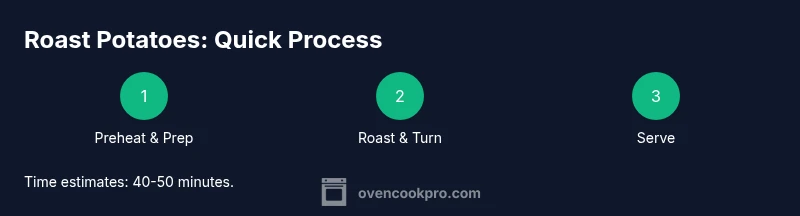
Estimated time: Total time: 40-50 minutes (prep to finish)
- 1
Preheat the oven
Set the oven to 220°C (425°F) and allow it to come fully to temperature. Preheating ensures the potatoes begin browning immediately when placed in the oven, which improves crust formation and reduces overall roasting time.
Tip: If your oven runs cool, use convection or extend preheat by 5 minutes; an accurate oven thermometer helps. - 2
Prepare the potatoes
Rinse the potatoes to remove surface starch, then cut into uniform chunks about 2–3 cm. Dry thoroughly with a clean towel to promote browning and crisp crust.
Tip: Smaller, even pieces roast more uniformly; avoid large pieces that stay soft inside. - 3
Oil and season
Toss potatoes with 2–3 tablespoons of oil per kilogram, plus salt and pepper. A light coating helps browning without pooling oil.
Tip: Add a crushed garlic clove or herbs for extra flavor if desired. - 4
Spread in a single layer
Arrange potatoes on the sheet with at least 1 cm of space between pieces. Crowding traps steam and softens edges, reducing crispness.
Tip: Use parchment paper for easy cleanup, especially with garlic and herbs. - 5
Roast and turn
Roast for 25–35 minutes, then flip potatoes with tongs and spread again in a single layer. Return to oven and roast until edges are deeply golden and interiors are tender.
Tip: Turning halfway exposes all sides to heat, improving even browning. - 6
Finish for extra crispness
If you crave extra crunch, give the potatoes a 1–2 minute blast under high heat or a quick broil. Watch closely to prevent burning.
Tip: Remove the sheet if edges darken too quickly; brief rest helps set the crust. - 7
Rest and season before serving
Allow a 2–3 minute rest on the counter to finish crisping, then season again lightly with salt if needed before serving.
Tip: Season after roasting to retain crunch and saltiness in the crust. - 8
Variation and cleanup
Experiment with herbs, garlic, or a dusting of paprika for a different flavor. Clean pans while they’re still warm to prevent sticking and accumulate residue.
Tip: Paring down cleanup time makes weeknight roasting more appealing.
Questions & Answers
What oven temperature is best for roast potatoes?
A common, reliable temperature is about 220°C (425°F). This balances browning and tenderness. Some ovens benefit from a slight adjustment to 200–230°C depending on performance. Always preheat and avoid overcrowding the pan.
Most cooks use around 220°C (425°F) to get a crisp exterior and tender interior. If your oven browns too quickly, lower the temperature a bit and give extra time.
Should I parboil potatoes before roasting?
Parboiling is optional but can improve interior fluffiness and exterior crust. Boil for 3–7 minutes, drain, and dry thoroughly before oiling and roasting. This method adds time but often yields lighter, crunchier potatoes.
Parboiling is optional but can help. If you skip it, just cut smaller and roast a bit longer for similar results.
What oil should I use for roasting potatoes?
Choose a high-smoke-point oil such as olive oil, canola, or a neutral vegetable oil. Use enough to lightly coat each piece; too much oil can make the potatoes greasy and slow browning.
A light coating of oil is all you need—enough to coat, but not pool. Olive oil is a great all-round choice.
Can I roast potatoes on parchment paper?
Yes. Parchment paper helps prevent sticking and makes cleanup easier. If you prefer less waste, you can skip it and lightly oil the sheet instead.
Parchment makes cleanup simpler and helps prevent sticking.
How do I prevent potatoes from sticking to the pan?
Use parchment paper or a well-oiled pan, and ensure pieces are dry before oiling. Avoid overcrowding, which increases moisture and reduces browning.
Keep the pan well-oiled and the pieces spaced apart to prevent sticking.
Why are my roast potatoes not crispy?
Common causes are crowding, moisture on the surface, and too-low heat. Space the pieces, dry them well, and roast at 220°C (425°F) or higher, flipping halfway.
Crispiness comes from air exposure and heat; spread out the potatoes and give them a heat boost.
Watch Video
Main Points
- Preheat the oven to 220°C (425°F) for best crust.
- Cut potatoes uniformly to promote even browning.
- Roast in a single layer and flip halfway for even color.
- Finish with a brief high-heat blast if you want extra crispness.
- Rest briefly before serving for optimal texture.