What to Oven Roast Potatoes At: A Step-by-Step Guide
Learn what to oven roast potatoes at for perfect crisp edges and fluffy centers. Step-by-step prep, temps, timing, and flavor ideas from Oven Cook Pro.


To oven roast potatoes well, preheat a hot oven, cut potatoes evenly, and toss with oil and seasonings. Spread in a single layer on a large sheet pan and roast until deeply golden with a fluffy interior, turning once for even browning. For extra flavor, add minced garlic and herbs after tossing. Use parchment for easy cleanup and avoid overcrowding the pan.
The science of oven-roasted potatoes
Crisp, flavorful oven-roasted potatoes start with a few simple physics tricks: heat, moisture control, and surface area. Potatoes are starchy by nature; when the surface dries and meets a hot surface, sugars and amino acids undergo the Maillard reaction, creating the brown crust we crave. According to Oven Cook Pro, achieving a crisp exterior relies on high heat, dry surface, and ample space on the pan. The interior remains fluffy when pieces are uniform in size and not overcrowded. Choosing the right potato type also matters: russet offers a light, fluffy interior, while Yukon Gold yields a creamy center with good browning. Prep matters just as much as heat, so wash, dry thoroughly, and cut into even chunks for consistent browning across all pieces.
Key takeaways from the science: uniform pieces, dry surface, hot oven, and a single warm sheet pan promote browning without steaming. You’ll get a better crust if the pan is hot when the potatoes land and there’s air around each piece for heat circulation. The Oven Cook Pro team emphasizes starting with evenly sized chunks to maximize browning surface and minimize undercooked centers.
Potato varieties and prep for roasting
Not all potatoes roast the same, and choosing the right type helps you land the texture you want. Russet potatoes provide a dry, fluffy interior that absorbs fat well and browns beautifully. Yukon Golds deliver a creamier center with nice color but can brown a touch faster due to their moisture content. For most home roasts, aim for pieces around 1.5–2 inches in diameter so they cook through and brown evenly. Wash thoroughly to remove any dirt, then dry completely with a clean towel. Moisture on the surface slows browning, so dry surfaces = crisper results. When you’re ready to season, a simple mix of oil, salt, and pepper works perfectly, with optional garlic and herbs added after tossing for extra aroma.
Prep steps you can trust: use the same-size pieces, pat dry, and space them on the pan to ensure air can circulate for even browning. The quick-heat technique isn’t just about oven temperature—it’s about how fast moisture escapes from the surface to leave that sought-after crust.
Temperature, timing, and tray setup
The golden rule for crispy potatoes is hot oven, dry pan, and space. Preheat the oven to a high temperature, typically around 425–450°F (218–232°C). A hot oven encourages rapid browning, while a well-oiled pan helps transfer heat and prevents sticking. Use a rimmed sheet pan to catch any oil and juices. If you’re roasting a larger batch, consider two pans and rotate trays halfway through the cook time to maintain even browning. Timing varies with piece size and your oven’s quirks, but most potatoes reach deep amber in 25–40 minutes with a flip about halfway. Parboiling instead of waiting for the full roast can cut the total time and yield an even lighter interior, though the surface may not be as crisp unless you finish with high heat on a dry surface.
Practical tips: line the pan with parchment for easier cleanup, and don’t crowd the potatoes. Airflow is essential for browning; overcrowding traps steam and yields soggy edges. If you want extra-crisp edges, toss the potatoes in a touch more oil and spread them out in a single layer.
Parboiling vs. skip parboiling: two paths to crispness
There are two common approaches to roasted potatoes: parboil first, then finish in the oven, or skip parboiling and go straight to roasting. Parboiling softens the center, helping ensure the interior is tender when the crust forms. This can reduce total roasting time and produce fluffy centers. If you skip parboiling, you’ll rely on the oven’s heat and a longer roasting period to break down the potato’s interior. Both methods work well; the choice depends on your timeline and texture preference. If you’re new to roasting, try parboiling first (about 5–7 minutes) and see how you like the texture after finishing in the oven.
What to try first: start with medium-sized chunks, parboil briefly, drain well, and pat dry before roasting for best results.
Flavor boosters and optional extras
Garlic, herbs, and spices can elevate your roasted potatoes from good to irresistible. Toss the potatoes with a light coating of olive oil, coarse salt, and cracked pepper. After tossing, add minced garlic, rosemary, thyme, or smoked paprika. If you prefer a milder flavor, skip the garlic at toss time and add it in the last 5–7 minutes of roasting so it doesn’t burn. Finish with a light sprinkle of flaky salt right before serving for a bright, crisp bite. For extra texture, a pinch of grated Parmesan or a dusting of chili flakes can add dimension without overpowering the potato’s natural goodness.
Flavor tips: start mild, then taste and adjust. A little goes a long way with potent aromatics. Consider a small amount of lemon zest or fresh parsley garnish to brightened the finish.
Serving, storage, and safety
Roasted potatoes are best served hot from the oven, right after resting for a few minutes. A brief rest allows steam to escape and the crust to set, enhancing texture. Store leftovers in an airtight container in the refrigerator for up to 3–4 days; reheat in a hot oven or skillet to restore crispiness. When handling the hot sheet pan, always use oven mitts and place the pan on a heat-safe surface. If you’re cooking with kids or beginners, keep a close eye on oil splatter and keep the oven door closed to maintain temperature stability.
Serving ideas: pair roasted potatoes with roasted vegetables, a protein centerpiece, or a simple herbed yogurt dip for contrast. They also make a great side for weeknight meals and holiday feasts alike.
Troubleshooting and quick fixes
If your potatoes aren’t turning out crispy, the most common culprits are crowding the pan, insufficient preheating, or too little oil. Make sure each piece has space on the pan, and consider increasing the pan’s oil slightly if you’re not getting the desired browning. If they brown unevenly, flip the pan once during roasting to promote consistent browning across all pieces. For extra crispness, finish under the broiler for 1–2 minutes, watching carefully to avoid burning. Adjust salt only after tasting; under-salted edges can dull flavor while over-salted edges can overwhelm the dish.
Tools & Materials
- Potatoes (Russet or Yukon Gold)(2–3 medium per person; aim for evenly sized pieces)
- Cooking oil (olive oil or neutral oil)(1–2 tablespoons per pound of potatoes; enough to lightly coat)
- Salt(Fine or coarse salt to taste)
- Black pepper(Freshly ground improves aroma)
- Garlic (optional)(Minced or sliced for flavor after tossing)
- Fresh or dried herbs (optional)(Rosmary, thyme, or parsley work well)
- Sheet pan(Size to fit potatoes in a single layer)
- Parchment paper or silicone mat(For easier cleanup and easier release)
- Sharp knife or mandoline(For evenly sized pieces)
- Tongs or spatula(For turning halfway)
Steps
Estimated time: 30-45 minutes total
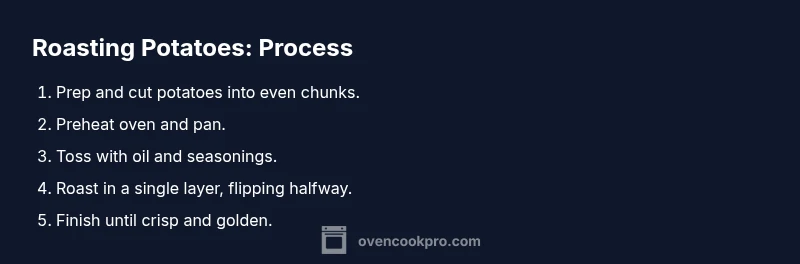
- 1
Prepare the potatoes
Rinse and dry the potatoes, then cut them into evenly sized chunks (about 1.5–2 inches). Pat dry to remove surface moisture. This ensures maximum browning and a consistent texture.
Tip: Dry surfaces promote better browning. - 2
Preheat the oven and pan
Preheat the oven to 425–450°F (218–232°C). Place a rimmed sheet pan in the oven while it heats so the pan is hot when the potatoes hit it.
Tip: A hot pan starts the Maillard reaction quickly, giving you a crisper crust. - 3
Toss with oil and seasonings
In a large bowl, toss the potato chunks with 1–2 tablespoons oil per pound, plus salt and pepper. Add minced garlic and herbs after tossing if using.
Tip: Oil should lightly coat each piece; excess oil can lead to greasy results. - 4
Spread in a single layer
Remove the hot sheet pan carefully and spread the potatoes in a single layer, giving each piece space to brown. Avoid overcrowding.
Tip: Crowded potatoes steam instead of roast. - 5
Roast and turn halfway
Roast 25–40 minutes, flipping once halfway through to promote even browning. Start checking around the 25-minute mark for your preferred level of crispness.
Tip: Turning halfway ensures uniform browning on all sides. - 6
Finish and rest
Roast until deeply golden and crisp around the edges. Remove from the oven and rest for 5 minutes before serving to let surfaces set.
Tip: Resting helps maintain crisp texture when served.
Questions & Answers
What is the best temperature for roasting potatoes?
Common guidance is to roast at 425–450°F (218–232°C) for a balance of browning and interior tenderness. Adjust within this range based on your oven and potato size.
Roast at about 425 to 450 degrees to get a crispy crust and fluffy inside.
Should I parboil potatoes before roasting?
Parboiling softens the interior and can speed up cooking, leading to fluffier centers. If you’re short on time, skip parboiling and still achieve good browning by baking longer and ensuring a single-layer spread.
Parboiling can help your potatoes cook faster and be fluffier inside.
Can I roast potatoes with garlic without burning it?
Yes. Add minced garlic after tossing or sprinkle on in the last 5 minutes to avoid scorching the garlic while still infusing flavor.
Add garlic toward the end to avoid burning.
Do I need to use parchment paper?
Parchment or a silicone mat is optional but helps prevent sticking and makes cleanup easier. It doesn’t affect browning significantly if you prefer not to use it.
Parchment paper makes cleanup easier but isn’t strictly required.
How do I fix soggy potatoes?
Soggy results usually come from overcrowding or insufficient heat. Roast in a single layer with space between pieces and ensure the oven is properly preheated for best browning.
Give them space and a hot oven to avoid soggy edges.
Watch Video
Main Points
- Roast at high heat with even-sized pieces
- Space potatoes to promote browning
- Flip halfway for uniform color
- Add garlic/herbs after tossing for aroma
- Let rest briefly before serving