Recipe for Oven Roasted Potatoes: A Step-by-Step Guide
Learn to make perfectly crispy oven roasted potatoes with a reliable, step-by-step guide from Oven Cook Pro. Prep, season, roast, and serve confidently with expert tips and variations.


By the end, you'll master a reliable recipe for oven roasted potatoes with crispy skins and fluffy centers. You'll learn exact prep steps, ideal oven temperature, roasting time, and how to season for maximum flavor. Essential before you start: potatoes, neutral oil, salt, pepper, optional garlic, and a hot oven rack. This quick guide sets you up for success.
Why this recipe works
Potato roasts are a classic test of technique: the goal is a crisp, caramelized exterior with a tender, creamy interior. The key is creating a hot, steady heat and giving each piece enough space to brown rather than steam. The Maillard reaction—the browning that creates complex flavors—happens best when moisture is minimized and surface area is exposed. In this guide, we leverage a high oven temperature, proper oil coating, and even-sized chunks to maximize browning. According to Oven Cook Pro analysis, uniform cuts and a preheated oven are foundational to consistent results, whether you’re making a weeknight side dish or a crowd-pleasing roasted potato platter. Expect noticeable improvements with simple changes like using parchment for cleanup, keeping the pan uncovered, and flipping halfway through for even color.
Beyond texture, we’ll explore flavor pairings that suit different mains—from herbs and garlic for a savory profile to lemon zest and smoked paprika for brightness. The objective is flexible technique: you can stick to a simple, classic preparation or tailor the seasoning to fit your meal. Readers who follow these steps will gain confidence in the oven and a reliable baseline recipe that can be scaled up or adapted with your pantry staples.
Potato choices and prep
Not all potatoes are created equal for roasting. Russet potatoes deliver the crispest exterior due to their high starch content, while Yukon Golds offer a creamier interior with a gentle sweetness. For a balanced result that holds up to bold seasonings, many home cooks prefer a mix of sizes, but uniform chunks ensure even cooking. Start by washing the potatoes thoroughly to remove any dirt, then cut them into roughly 1 to 1.5 inch (2.5 to 3.8 cm) pieces. Keeping the pieces similar in size minimizes uneven browning and prevents some potatoes from drying out while others finish cooking. After cutting, pat the pieces dry with a clean towel. Moisture on the surface will steam rather than brown, so drying is a critical step before oiling.
If you’re starting from whole potatoes, consider a quick paring method: cut into halves or quarters depending on size, then dry and season as you would with pre-cut pieces. Oddly shaped or oddly small pieces can be trimmed to even sizes, or saved for a different roast where uniformity isn’t as critical. For best results, choose potatoes that are fresh—not sprouted—and avoid those that feel soft or spongy. Fresh potatoes cook more predictably and brown more evenly when roasted. Flavor boosters such as crushed garlic or a pinch of paprika can be added at this stage or after the initial roast for a more nuanced aroma.
Preheating and equipment setup
Begin with a properly preheated oven to kick-start browning. Preheat to a high heat that suits your oven’s performance—typically around 425°F (220°C) for conventional ovens or 400°F (205°C) if you’re using convection. The difference between convection and conventional roasting matters: convection fans move hot air around the pan, which can reduce cooking time slightly and promote crisper edges. If you use convection, plan for a shorter cooking window and keep an eye on color to prevent burning. Gather the right tools: a sturdy rimmed baking sheet, parchment paper or a silicone mat to reduce sticking, a good-quality spatula or tongs for turning, and a sharp knife or chef’s knife for clean cuts.
Line the sheet to minimize sticking and set it within easy reach. Having the pan ready ahead of time reduces delays and ensures the oil coats each piece quickly, which promotes browning. A hot sheet helps sear the potatoes as soon as they touch the surface, so you’ll get vibrant color without sacrificing tenderness inside. If you must roast without parchment, a light brushing of oil on the sheet reduces sticking and aids browning. Finally, position the rack in the middle of the oven for even heat distribution and to avoid scorching the top layer.
Flavor planning and pantry prep
Before your hands touch the potatoes, decide on your flavor direction. A simple mixture of olive oil, kosher salt, and cracked black pepper never fails. For a more robust profile, plan a blend of minced garlic, fresh or dried herbs like rosemary or thyme, and a pinch of smoked paprika or chili flakes. These additions can be stirred into the oil and tossed with the potatoes just before they hit the sheet. If you have parsley, chives, or a squeeze of lemon at the end, a little fresh brightness goes a long way. Keep your seasoning balanced—potatoes are the vehicle for flavor, so you want enough seasoning to bring out their natural sweetness without overpowering it.
Seasoning, oil, and the toss technique
The coat-and-roll method ensures every potato receives equal treatment. Place the cut potatoes in a large bowl, drizzle with oil (2–3 tablespoons for a 2–3 pound batch), and toss 15–20 seconds until each piece glistens with a light sheen. Add salt and pepper to taste, then stir in optional aromatics like chopped garlic or herbs if you’re using them. The goal is a thin, even layer of seasoned oil that sticks to the surface without pooling. If you’re using parchment, lay the coated potatoes in a single layer, giving each piece space for air to circulate. Overcrowding crowds the surface and creates steam, which can ruin crispness. Consider the size of your pan: a larger sheet with a single layer will brown better than a crowded tray.
Roasting technique and turning for even browning
Roasting creates the coveted crisp edges when heat is applied directly to the potato surface. Roast the potatoes in a single layer on a parchment-lined sheet, without crowding. Bake for 25–35 minutes, then flip the pieces to expose all sides to the heat. Return to the oven and continue roasting for another 15–25 minutes, or until the potatoes are golden brown and easily pierced with a fork. The exact timing depends on your oven and the size of the pieces, so start checking color around minute 30. If you prefer extra crispness, you can increase the browning by finishing under the broiler for 1–2 minutes, watching carefully to prevent burning. Rest briefly after removing from the oven to let the starches settle and the surface to firm up slightly for serving.
Troubleshooting and common mistakes
Common mistakes include crowded pans, insufficient preheating, and uneven cuts. Crowding traps steam between pieces, resulting in soggy potatoes rather than crisp ones. If you notice steaming rather than browning, remove a few pieces or use an additional tray. Another frequent error is not letting the potatoes rest after roasting; a brief rest helps reabsorb surface moisture and yields a firmer crust. If your potatoes brown unevenly, rotate the pan halfway through cooking or use two pans for better air circulation. Finally, remember that the potatoes should taste lightly salted; you can always adjust seasoning after roasting if needed. For extra-crispy potatoes, a light dusting of cornstarch or flour is sometimes used in high-end kitchens, but this is optional and not necessary for home cooking.
Serving suggestions and make-ahead ideas
Oven roasted potatoes are versatile and pair well with almost any main dish. Serve them hot with a squeeze of lemon, a sprinkle of fresh herbs, or a dollop of herbed yogurt to balance richness. They also store well in the refrigerator for up to 3–4 days when kept in an airtight container. To reheat, spread on a fresh sheet and roast at 425°F for 5–10 minutes to recapture their crispiness. For meal-prep, roast a larger batch, then reheat portions individually as needed. You can also vary flavor profiles by changing the fat (e.g., butter for a richer finish) or adding different herbs and spices to tailor the dish to your weekly menu.
Tools & Materials
- Potatoes (Russet or Yukon Gold), about 2-3 lb(Cut into 1–1.5 inch chunks for even cooking)
- Neutral oil (olive, canola, or avocado oil)(2–3 tablespoons total for a 2–3 lb batch)
- Kosher or sea salt(To taste)
- Freshly ground black pepper(To taste)
- Garlic (optional)(Minced or sliced for aroma)
- Dried or fresh herbs (rosemary, thyme) optional(A small pinch or handful)
- Baking sheet (rimmed)(Lined with parchment or silicone mat)
- Parchment paper or silicone mat (optional but helpful)(For easier cleanup)
- Tongs or spatula(For turning pieces halfway)
- Knife and cutting board(For uniform chunks)
Steps
Estimated time: 60-75 minutes
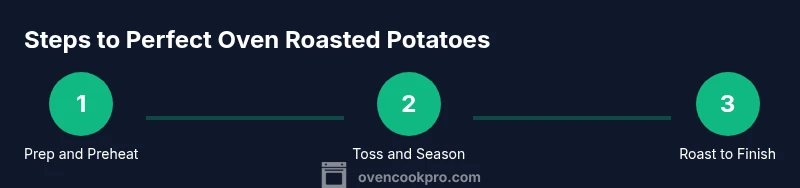
- 1
Preheat and prepare the oven
Preheat the oven to 425°F (220°C). Line a baking sheet with parchment or a silicone mat. This setup minimizes sticking and starts browning as soon as the potatoes hit the sheet.
Tip: Preheating ensures crisp edges from the first minute of roasting. - 2
Prepare potatoes
Wash, dry, and cut potatoes into evenly sized chunks (1–1.5 inches). Dry thoroughly to remove surface moisture, which can steam rather than brown.
Tip: Uniform pieces cook more evenly and brown consistently. - 3
Oil and season
Toss potatoes with oil, salt, pepper, and optional garlic or herbs until evenly coated. Use just enough oil to sheen the surface without pooling.
Tip: A light coat promotes crispness without greasiness. - 4
Spread and arrange
Spread potatoes in a single layer on the prepared sheet, giving each piece room to breathe. Crowding leads to steaming and soggy edges.
Tip: Space is the secret to that bakery-crisp exterior. - 5
Roast and flip
Roast 25–35 minutes, then flip and roast another 15–25 minutes until golden and tender inside. Color is your cue for doneness.
Tip: Flip halfway so all sides brown evenly. - 6
Finish and serve
Optional: broil 1–2 minutes for extra crispness, monitor closely to avoid burning. Rest 2–3 minutes before serving to reabsorb surface moisture.
Tip: Resting helps maintain crispness in each bite.
Questions & Answers
Can I use baby potatoes for this recipe, and should I cut them?
Yes, you can use baby potatoes. If they’re small, you can halve or quarter larger ones to keep pieces uniform, then roast as directed. This helps them cook evenly and achieve crisp edges.
Yes, baby potatoes work well. Halve or quarter larger ones to keep them uniform, then roast as directed.
Should I soak or parboil potatoes before roasting?
Soaking isn’t necessary for traditional oven roasting, but some cooks parboil for 5–7 minutes to ensure tenderness inside. If you skip parboiling, your result will be crispier on the outside with a slightly longer roast.
Parboiling is optional; it can make the interior tender more quickly, but you’ll still get crisp edges with roasting.
What temperature and time produce the best results?
Roast at 425°F (220°C) for conventional ovens, or 400°F (205°C) if using convection. Expect about 40–60 minutes total, depending on chunk size and oven performance. Check for crisp, golden edges and tender centers.
Roast at 425 degrees for conventional ovens, or 400 with convection, for about 40 to 60 minutes until crisp and tender.
Why are my potatoes soggy or not crispy?
Sogginess usually comes from crowding the pan or insufficient preheating. Ensure a single-layer spread with space between pieces and preheat the oven fully. Dry surface moisture before oiling.
Crowding and not preheating cause soggy potatoes. Spread them out and preheat fully for best crispness.
Can I make this ahead and reheat later?
You can roast ahead and reheat. Store cooled potatoes in an airtight container, then re-crisp in a hot oven for 5–10 minutes. They won’t be exactly as fresh as immediately after roasting, but the flavor remains excellent.
Yes, cook ahead and re-crisp in a hot oven for a quick finish later.
Is olive oil spray acceptable, or should I pour oil?
Oil spray can be convenient, but a light pour with agitation ensures even coverage. If using spray, apply in multiple light coats while tossing to avoid pooling.
Oil spray works, but a light pour with tossing gives even coverage.
Watch Video
Main Points
- Cut potatoes evenly for uniform cooking
- Preheat for reliable browning
- Do not overcrowd the pan
- Flip halfway for even color
- Rest briefly before serving