What Temperature to Bake Jacket Potatoes for Perfect Results
Discover the ideal oven temperature for jacket potatoes, with expert tips on prep, timing, parboiling, and achieving crisp skins and fluffy interiors from Oven Cook Pro.


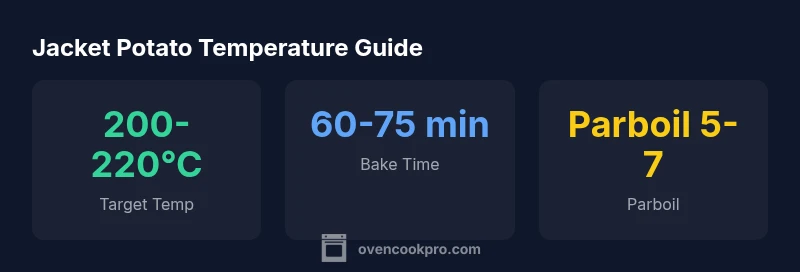
To bake a jacket potato, aim for a hot oven in the range of 200-220°C (390-430°F). Preheat fully, scrub the potato, pierce it, and bake for about 60-75 minutes until the skin is crisp and the interior soft and fluffy. Parboiling for 5-7 minutes beforehand can shorten bake time and improve texture.
Choosing the right potato and prep
Selecting the right potato is the first step toward a perfect jacket potato. For reliable texture, choose large Russet or Idaho potatoes; their high starch content yields a fluffy center when baked. Waxy varieties can still work but tend to stay firmer inside. After selecting your potatoes, give them a thorough wash to remove any dirt, then dry completely. Any residual moisture on the skin will create steam instead of browning, which undermines crispness. Lightly rub each potato with a small amount of oil or melted butter, then sprinkle with salt. The oil helps conduct heat to the skin and helps it crisp; salt enhances browning through the Maillard reaction. Prick the skins several times with a fork to vent steam; this is especially important at higher oven temperatures. If you’re not sure what temperature oven jacket potato should use, aim for a moderate-to-hot range to avoid undercooked interiors. Preheating is essential; a fully heated oven ensures the skin begins to dry out and brown as soon as the potato goes in. Some cooks parboil for 5-7 minutes to speed cooking and improve interior texture; this step is optional but can be worthwhile if you’re in a hurry or want exceptionally fluffy centers.
The science behind crispy skins and fluffy interiors
Two forces shape jacket potato texture: moisture loss from the skin and starch gelatinization inside. Dry skin is key: surface moisture must be reduced so the oven heat can drive browning rather than steaming. Pat the potatoes dry after any washing, and consider a brief air-dry rest before oiling to maximize dryness. The interior texture depends on starch granules absorbing water and expanding. The hotter the oven (within a safe range) and the longer a bake, the more the starch converts to a fluffy, tender center. But too high a temperature or too long a bake can burn the skin or dry the interior. Using oil creates a micro-thin barrier that helps distribute heat evenly and promotes crisping. Salt on the skin also helps draw out surface moisture and enhances browning. If you’re aiming for a very crisp jacket, you can finish under a higher heat or a brief broil at the end of the bake. These principles apply whether you use a conventional oven or a convection oven; convection tends to cut bake times and can promote even browning, so you may need to adjust time slightly.
Temperature and timing: what to bake at
The most common guideline is to bake jacket potatoes in the 200-220°C range (390-430°F). Closer to 200°C yields a longer bake with very fluffy interiors but less intense browning, while 210-220°C gives a crisper skin in a shorter window. If you’re using a convection oven, you can drop the temperature by about 20°C (roughly 25°F) and shorten the bake time slightly; watch for signs of crusting earlier. For small potatoes, 60-70 minutes often suffices; medium potatoes typically require 65-75 minutes; larger specimens may need 75-90 minutes. The key is to check doneness with a fork or skewer: it should glide in with little resistance, and the skin should feel crisp to the touch. Resting the potatoes for 5-10 minutes after baking helps the interior finish its starches and improves slicing. If you parboiled them, the bake time can be shorter by about 10-15 minutes, depending on size. Remember that oven performance varies; use the range as a starting point and adjust based on your own oven’s behavior.
Parboiling: to parboil or not
Parboiling is optional but can be a timesaver and texture enhancer. To parboil, rinse the potatoes, then place them in a pot of cold, salted water. Bring to a boil and simmer for 5-7 minutes, depending on potato size. The exterior surface will begin to soften and roughen, which helps create an extra-crispy crust when roasted. Drain and shake the potatoes in the colander to rough up the skins slightly; this roughness is what improves browning during roasting. Let the potatoes dry completely before oiling and baking. If you skip parboiling, you’ll typically need the full 60-75 minutes at the higher end of the temperature range to ensure the interiors are tender. Parboiling also reduces the risk of ending up with a pale, undercooked center and a burnt skin, especially when baking at the higher end of the range.
Techniques for extra crisp skins
To maximize crispness, focus heat distribution and surface dryness. Ensure the potato skins are dry, then apply a light coat of oil and a pinch of salt. If you have a convection oven, you can use the fan setting to accelerate moisture loss and browning; just monitor to prevent over-drying. For even browning, rotate the baking tray halfway through the bake. For an extra crackly crust, score the skin with shallow cuts or a cross hatch about 1-2 mm deep before roasting; this helps steam escape and increases surface area for browning. Some cooks finish with a brief blast under a broiler for a minute or two, watching closely to prevent scorching. If you’re cooking multiple potatoes, ensure they’re not overcrowded; proper air circulation is essential for even browning. Finally, placing the potatoes directly on the rack rather than a tray can help airflow reach the skin, promoting crispness.
Troubleshooting common issues
If your jackets come out with pale skins or undercooked interiors, reassess temperature and time. A pale crust usually means the oven temperature is too low or the bake time too short; raise the temp by 10-20°C or add 5-10 minutes. If the interior is still hard, consider parboiling first, or extend the bake time for an additional 10-15 minutes. Soggy skins often result from moisture trapped under the skin; pat dry and ensure you don’t crowd the tray. Burnt edges are a sign of too-high heat or too-long bake at the end; move the tray lower in the oven or reduce the temperature slightly. In convection ovens, reduce time by 5-10 minutes and watch for rapid browning. If you’re cooking with garlic or herbs, add them toward the end of baking to prevent burnt flavors. The goal is a crisp exterior and a fluffy interior; with practice, you’ll dial in the exact settings for your favorite potato variety.
Temperature and time ranges by potato size
| Potato Size | Temperature (°C) | Time (min) | Notes |
|---|---|---|---|
| Small (150-180 g) | 200-210 | 60-70 | Even crust, quick bake |
| Medium (200-250 g) | 210-220 | 65-75 | Balanced crust and fluff |
| Large (300 g+) | 220-230 | 75-90 | Crips skin, longer bake |
Questions & Answers
What temperature should I bake jacket potatoes for crispy skin?
Bake at 200-220°C. Higher heat promotes browning, while dry skins help achieve a crisp crust. Use a fork test and adjust times as needed for your oven.
Bake jacket potatoes at 200-220°C for a crisp skin and fluffy center; adjust time if your oven runs hot or cold.
Do I need to parboil jacket potatoes before baking?
Parboiling is optional but beneficial. It shortens bake time and helps interior texture. 5-7 minutes is typical, then finish in the oven.
Parboiling is optional but can help; 5-7 minutes pre-boil often yields fluffier interiors.
How can I tell jacket potato is done?
The fork should glide in easily and the skin should be crisp. The interior should be soft and fluffy, not doughy.
Check for a tender interior and a crisp skin by poking with a fork.
Should I wrap jacket potatoes in foil?
Wrapping traps steam and softens the skin, reducing crispness. Bake unwrapped or use a light oil coating on the skin.
Avoid foil if you want truly crispy jackets.
Does oven type affect the temperature?
Convection can reduce bake time by several minutes; you may lower the temperature by about 20°C and monitor closely for browning.
Convection ovens cook faster—lower the temp a bit and watch carefully.
“A well-controlled temperature is the backbone of a perfect jacket potato, delivering crisp skin and a soft, fluffy interior.”
Main Points
- Preheat oven to 200-220°C for best results
- Choose Russet/Idaho for fluffier interiors
- Parboil 5-7 minutes to speed up baking
- Dry skins thoroughly before roasting
- Finish with a brief broil for extra crispness