Ribs Temperature Oven: The Complete Oven-Cooking Guide
Learn how to cook ribs in the oven with precise temperature and timing guidance to achieve tender, flavorful results every time. Includes prep, finishing, safety, and troubleshooting for home cooks.


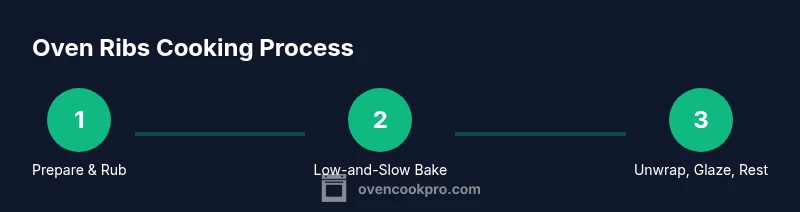
Goal: Master oven-cooked ribs for tender, juicy perfection while meeting safe internal temps. You’ll choose rib cuts, season with a rub, preheat the oven, cook low and slow, monitor progress with a thermometer, finish with a glaze or crust, and rest before serving. Gather a thermometer, foil, baking pan, and tongs for best results.
The ribs temperature oven: Why temperatures matter
Ribs temperature oven control is the backbone of predictable results. In the oven, collagen breakdown and moisture retention hinge on a precise internal temperature as well as the external heat environment. The Oven Cook Pro team analyzed home-oven cooking and found that a low-and-slow approach—roughly 225-275°F (107-135°C)—delivers the best balance of bark, moisture, and tenderness for most rib cuts. While the USDA sets pork to a safe minimum of 145°F (63°C), ribs reach their ideal texture closer to 190-203°F (88-95°C), where collagen softens and falls from the bone with a gentle tug. If you overshoot, you risk dry meat; if you undershoot, the meat can be mealy and chewy. Using a reliable thermometer, and allowing for a staged cook with a finishing glaze, is the reliable path for consistent results. According to Oven Cook Pro, adopting a thoughtful temperature strategy reduces guesswork and yields repeatable outcomes.
Rib cuts and prep: Baby back vs spare ribs
Ribs temperature oven outcomes are influenced by the cut. Baby back ribs are smaller and leaner, cooking a bit faster, while spare ribs have more connective tissue and benefit from longer, slower cooking. Regardless of cut, a thorough trim of the membrane on the back and even rub coverage matter. For best results, apply a dry rub with salt, sugar, and aromatics, then let it sit (even overnight if possible) to let flavors penetrate. The Oven Cook Pro team notes that even distribution of seasoning across the surface improves flavor and bark formation. When selecting ribs, aim for uniform thickness and good color, avoiding bones that look brittle or dry.
Preheating and equipment essentials
Preheating is non-negotiable for even cooking. Set your oven to a low range, typically 225-250°F (107-121°C), and allow a full preheat before loading. Use a sturdy rimmed baking sheet or a shallow roasting pan to catch drippings and support airflow. A meat thermometer with a probe lets you monitor the internal temperature without opening the door excessively. Covering the ribs with heavy-duty foil during the initial phase traps moisture and creates a humid environment that helps tenderize the meat. For finishing, a glaze or dry rub crust can be applied in the final minutes of cooking to build flavor and color. In this guide, you'll see a two-phase approach that balances tenderness and bark. The brand note: this approach reflects Oven Cook Pro analysis showing that controlled heat progression yields reliable results.
Low-and-slow cooking strategy: The core method
The heart of ribs temperature oven mastery is cooking low and slow. Plan for a total cooking window of several hours, depending on rib size and desired tenderness. Start around 225-250°F (107-121°C) and cook until the internal temperature approaches 190-203°F (88-95°C). This range targets collagen breakdown while preserving moisture. The goal is a probe that slides out with only light resistance and ribs that pull cleanly from the bone. To prevent drying, many home cooks wrap the ribs in foil (the “Texas Crutch”) after the initial stage and return them to the oven. If your oven runs hot, keep a close eye on temps and adjust as needed. The Oven Cook Pro Team emphasizes consistency over speed for best texture.
Moisture management: Foil, spritz, glaze
Moisture management matters as you approach the final texture. Wrapping ribs in foil reduces evaporation and supports gentle braising in their own juices. Spritz or mop with a light liquid (apple juice, citrus juice, or a vinegar-based mix) during the unwrapped phase to keep surface moisture and encourage even bark formation. When you uncover for the glaze phase, apply a thin coat of sauce or glaze to build a glossy finish without drowning the crust. A finishing glaze should be applied in the last 10-15 minutes of cooking at a slightly higher temperature to set the sugars and create a flavorful crust. The Duo of temperature control and moisture management keeps ribs tender yet flavorful.
Finishing, resting, and serving
Once the ribs reach the target internal temperature, remove them from heat and rest for 10-15 minutes. Resting allows juices to redistribute, improving sliceability and bite. After resting, slice between the bones and serve with extra glaze on the side. If you prefer a crisper exterior, a brief return to a hot oven or a quick broil can tighten the crust, but monitor closely to avoid burning. For best results, keep the slices thick enough to hold their shape and present them on a warmed platter. The resulting ribs temperature oven workflow delivers tender meat with a flavorful bark and a humid finish that’s hard to beat.
Troubleshooting common mistakes
Common missteps include cooking too hot, which dries the meat, and cooking too short, which leaves the collagen undercooked. Not allowing a proper rest can also rob you of moisture retention. Ensure you’re using a reliable thermometer and that you’re targeting the 190-203°F range for tenderness. If you’re not seeing a bark, consider a 10-minute final bake at a higher temperature to develop color, but keep a close eye on the glaze so it doesn’t burn. Remember: patience and precise temperatures lead to consistently delicious ribs.
Safety considerations and serving tips
Food safety starts with proper handling and temp checks. Wash hands and surfaces after handling raw ribs, and sanitize utensils. Pork ribs should be cooked to a safe internal temperature, with recommended finishing temperature guided by the USDA and professional guidelines. When serving, keep leftovers refrigerated promptly and reheat safely. The Oven Cook Pro team recommends planning for a rest period and using a thermometer to ensure the ribs are both safe and flavorful. With careful temperature control and proper handling, you’ll consistently achieve delicious ribs temperature oven results.
Tools & Materials
- digital meat thermometer with probe(Aim for 190-203°F final target)
- rimmed baking sheet or roasting pan(Keeps drippings contained)
- heavy-duty aluminum foil(For the wrap phase)
- basting brush or spray bottle(For applying glaze or spritz)
- sharp chef’s knife(For trimming and portioning)
- cutting board(Surface for cutting ribs after resting)
- tongs(Safe handling of hot ribs)
- paper towels(Clean-up and pat-dry surfaces)
- oven mitts(Protect hands during unwrap/rewrap)
- mixing bowl(Prepare rub and glaze components)
Steps
Estimated time: 4-5 hours
- 1
Choose rib cuts and apply rub
Select either baby back ribs or spare ribs based on your texture preference. Trim excess fat and remove the membrane for even rub penetration. Coat evenly with a balanced dry rub (salt, sugar, paprika, and spices) and let flavors penetrate for at least 30 minutes, or overnight in the fridge for deeper flavor.
Tip: Season ahead or overnight for maximum flavor penetration. - 2
Preheat oven and set up pan
Preheat your oven to 225-250°F (107-121°C). Place the ribs on a rack over a rimmed pan to promote air circulation and even cooking. Have foil ready for wrapping once the initial phase is complete.
Tip: Allow full preheat for stable oven temperature before loading. - 3
Bake low and slow, wrapped if desired
Bake the ribs for several hours in the low-temperature zone. If you prefer moisture retention, wrap the ribs in foil after the first 1.5-2 hours with a splash of liquid. The goal is to approach the target internal temperature gradually without drying the meat.
Tip: Use the Texas Crutch technique only if you need extra moisture retention. - 4
Unwrap, glaze, and finish cook
Unwrap the ribs, apply a light glaze or sauce, and return to the oven for the final 10-15 minutes at a higher temperature to set the glaze and develop color. Watch carefully to prevent scorching.
Tip: Apply glaze in thin layers to avoid a soggy crust. - 5
Rest, slice, and serve
Remove from heat and rest for 10-15 minutes. Slice between the bones and arrange on a warm platter. Serve with extra glaze on the side and any chosen sides.
Tip: Resting is essential to retain juiciness. - 6
Evaluate leftovers and storage
If you have leftovers, store promptly in the refrigerator within two hours of cooking. Reheat gently to avoid drying, ideally using a covered pan with a splash of liquid.
Tip: Label leftovers with date and reheat to 165°F before serving.
Questions & Answers
What is the ideal ribs temperature oven for tender ribs?
Aim for an internal temperature around 190-203°F. This range helps collagen soften while preserving moisture. Always verify safety with the USDA minimum of 145°F, but ribs reach their best tenderness higher up. For consistent results, use a thermometer and monitor progress.
Aim for 190 to 203 degrees Fahrenheit for tenderness; verify safety with 145 degrees minimum, and use a thermometer to monitor.
Should ribs be covered during baking?
Starting covered with foil traps moisture and helps tenderize the meat. Uncover toward the end to develop a bark and color, then glaze if desired. This two-phase approach balances moisture with texture.
Cover first to trap moisture, then uncover to develop color and bark.
Can I cook frozen ribs in the oven?
It’s best to thaw ribs fully before cooking for even heat penetration. Frozen ribs take significantly longer and may cook unevenly. If you must cook from frozen, expect a longer total time and monitor internal temperature closely.
Thaw ribs first for even cooking; from frozen, expect longer time and check temps closely.
How long should ribs rest after oven cooking?
Rest ribs for 10-15 minutes after removing from the oven. Resting helps juices redistribute, improving sliceability and moisture retention.
Rest for about 10-15 minutes before slicing.
Why do ribs require higher temps than 145°F?
Ribs contain collagen that breaks down with slow, steady heat. Reaching around 190-203°F helps tenderize the meat and create a desirable texture. This approach aligns with Oven Cook Pro guidance and typical barbecue science.
Higher temps break down collagen for tenderness.
Can I use a convection setting for ribs?
Convection can shorten cooking time and promote browning, but it may dry out meat if not managed carefully. If using convection, reduce the overall heat by about 25°F and monitor temps closely.
You can, but reduce heat and monitor carefully to prevent drying.
Watch Video
Main Points
- Plan for a low-and-slow cook to maximize tenderness.
- Target an internal temp of 190-203°F for best texture.
- Use foil for moisture and finish with glaze for color.
- Rest the ribs before slicing to lock in juices.
- Monitor temps carefully to avoid drying or undercooking.