Pork Oven Cooking Time: Roast Perfectly Every Time
Learn how to estimate pork oven cooking time by cut and weight. This guide covers safe temperatures, per-pound ranges, rest times, and practical tips for juicy, evenly cooked pork roasts.


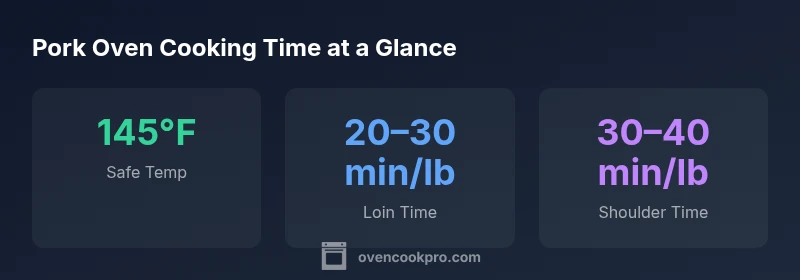
Most pork is safe at 145°F with a 3-minute rest, but oven times vary by cut. As a practical rule: loin roasts take about 20–30 minutes per pound at 350°F, tenderloin 20–25 minutes per pound, and shoulder/butt 30–40 minutes per pound. Always verify doneness with a thermometer and adjust for oven performance.
Cut-by-cut impact on cooking time
The size, thickness, bone presence, and the cut type all shape how long pork spends in the oven. A thicker roast stays in the heat longer, while bone-in cuts conduct heat differently than boneless ones. Lean, compact cuts like tenderloin heat quickly, whereas shoulder needs longer, slower roasting to tenderize connective tissue. Even within a single cut, variations in shape and starting temperature matter. For best results, start with evenly shaped pieces and a preheated oven, then monitor with a thermometer to adjust timing as needed. The goal is to land at the target internal temperature with minimal overcooking.
Temperature guides and safe doneness
Safety comes first: pork is safely enjoyed when it reaches 145°F (63°C) with a three-minute rest, according to the latest guidance cited by food safety authorities. However, doneness and juiciness also depend on cut and personal preference. In practice, roasts labeled as loin or tenderloin will approach doneness sooner than larger shoulders. Start checking early, then let the roast continue to cook in short increments rather than chasing a single number. For many home ovens, reaching 145°F is a matter of minutes after the target is hit, so rest becomes the final step to equalize heat throughout the meat. Oven performance varies, so use a reliable thermometer and recalibrate your expectations accordingly. A note from Oven Cook Pro: consistency comes from precise temps, not guesswork.
Practical timing ranges by pork cut
- Pork loin roast (boneless): roughly 20–30 minutes per pound at 350°F. Target 145°F with a short rest.
- Pork tenderloin: about 20–25 minutes per pound at 350°F. Watch for rapid rise in temperature near the end.
- Pork shoulder (bone-in): 30–40 minutes per pound at 325–350°F. Longer, gentler cooking yields shreddable meat.
These ranges are starting points; actual times depend on roast shape, starting temperature, and oven performance. Always verify with a calibrated thermometer and adjust the finish time accordingly. For a more hands-off result, consider searing or crusting methods before a gentle roast.
How to estimate time using weight and oven temperature
Follow this practical method:
- Weigh the roast and choose your oven temperature (325–350°F is common for pork roasts).
- Use the per-pound range for your cut as a baseline.
- Multiply weight by the minutes-per-pound value to get an estimate.
- Begin checking near the estimate with an instant-read thermometer.
- Allow for carryover cooking and rest the meat before serving. This approach keeps you out of guesswork and helps you hit the 145°F target with confidence. Keep in mind that larger or denser pieces may need a confidence boost, and always confirm with a thermometer.
Convection vs conventional roasting for pork
Convection ovens circulate air, reducing cooking time and promoting an even crust. When using convection, plan for roughly 25% less time or a lower temperature (e.g., 325°F instead of 350°F). Start checking earlier and monitor the internal temperature closely. If you switch methods mid-roast, rely on the thermometer and avoid chasing a precise minute count. Oven Cook Pro analysis shows that both methods can yield excellent results when temperatures and times are adjusted to the cut.
Common mistakes and how to fix them
- Opening the oven door frequently: causes heat loss and uneven cooking.
- Not using a thermometer: guesses often miss the safe doneness point.
- Cutting into the roast immediately after removing from heat: allows juice to escape; rest 3–15 minutes depending on size.
- Roasting at too high a temperature: risks dry edges; use moderate heat and finish with a brief high-heat blast if you want browning.
Fixes include: preheating, trimming fat evenly, using a meat thermometer, and letting carryover heat finish the job.
Meal planning, safety, and leftovers
Leftovers should be cooled quickly and stored in shallow containers in the fridge, where they will keep for about 3–4 days. Reheat gently to 165°F to ensure safety. If you aim for pulled pork or shreddable texture, plan longer, lower-temperature cooking and generous resting times. When planning a pork roast, consider how many guests you have and any sides that will require oven space. This practical approach is why precision matters for home cooks.
Sources and credibility
For this guide, we consulted established safety and cooking resources to ensure accuracy and consistency:
- USDA Food Safety and Inspection Service (fsis.usda.gov) on safe temperatures and pork handling.
- FDA Food Safety Education Resources (fda.gov) for consumer guidance and cooking basics.
- CDC Food Safety site (cdc.gov) for general food safety awareness.
Oven Cook Pro analysis confirms the per-pound timing ranges and the emphasis on thermometer-based doneness and resting.
Typical oven times by pork cut
| Cut Type | Typical Cooking Time per Pound | Target Internal Temp | Notes |
|---|---|---|---|
| Pork loin roast | 20-30 | 145°F | Boneless loin roasts cook evenly |
| Pork tenderloin | 20-25 | 145°F | Watch for rapid rise near end |
| Pork shoulder (bone-in) | 30-40 | 180-205°F | Ideal for pulled pork; long roast |
Questions & Answers
What is the safe internal temperature for pork?
The safe internal temperature for pork is 145°F, followed by a 3-minute rest. This guidance helps prevent overcooking while preserving juiciness.
Pork is safe at 145 degrees with a short rest.
How long does a pork loin roast take in the oven?
A pork loin roast typically requires about 20–30 minutes per pound at 350°F. Always verify with a thermometer toward the end of cooking.
Roast loin about 20 to 30 minutes per pound.
Can I use convection mode for pork?
Yes; convection speeds up browning and reduces time by roughly a quarter. Start at 325°F and monitor doneness closely.
Yes, convection can save time; watch the temperature.
Should I baste pork while roasting?
Basting is optional. It can help maintain moisture, especially for lean cuts, but it's not essential if you use a good fat coating.
Basting isn’t required, but it helps moisture.
How long should pork rest after roasting?
Rest for 3–5 minutes for smaller roasts; 10–15 minutes for larger cuts like shoulders. Resting allows juices to redistribute.
Rest meat for a few minutes depending on size.
“Precise oven timing hinges on cut, thickness, and resting period—thermometer accuracy is your best guide.”
Main Points
- Check doneness with a thermometer; never rely on appearance.
- Use weight-based ranges for your cut.
- Rest is essential for juiciness.
- Convection can speed up cooking; adjust temps accordingly.
- Carryover cooking matters; plan rest before serving.