How Long to Cook Pork Chops in Oven: A Practical Guide
Learn exact oven times for bone-in and boneless pork chops, including temperature ranges, rest periods, thickness considerations, and practical steps for juicy, evenly cooked chops every time.


To cook pork chops in the oven, aim for 145°F internal temperature after resting. Preheat to 375-400°F, based on bone-in vs boneless and chop thickness. Use a thermometer for accuracy and let the meat rest 3-5 minutes before serving. For thicker chops, add a few minutes; for thinner ones, reduce time. If you want extra crust, finish under the broiler for 1-3 minutes.
Why Oven Cooking Works for Pork Chops
According to Oven Cook Pro, the oven is a reliable way to cook pork chops evenly with minimal babysitting. Oven cooking lets heat surround the meat and preserve moisture when you manage temperature and resting. For many home cooks, oven-baked chops deliver consistent results whether you’re meal-prepping or feeding a family. The key is understanding that doneness is about internal temperature, not time alone, because thickness and bone presence change the required time. In addition, convection ovens can reduce total time and promote browning, but you may need to adjust by lowering the temperature about 25°F. By locking in temperature and allowing a proper rest, you’ll avoid the dry, overcooked result that too many home cooks fear.
Bone-In vs Boneless: Timing Differences by Thickness
Bone-in chops deliver more flavor thanks to the bone, but they also require slightly more time to reach a safe internal temperature. Boneless cuts heat through faster but can dry out if overcooked. Thickness is the biggest driver: 1 inch is a common target, but 0.75 inch or 1.25-1.5 inch will shift the total bake time by several minutes. Start with 18-22 minutes for 1-inch bone-in, 12-18 minutes for boneless, and adjust by 2-4 minutes per 0.25 inch of extra thickness. Always verify with a thermometer.
Temperature Guide: Finding the Right Heat
A reliable approach is to bake at 375°F for most pork chops, or 400°F if you want quicker browning. If you’re using a convection oven, you can lower the set temperature by about 25°F and shorten the cooking time. The target internal temperature is 145°F, followed by a 3-minute rest for safety and juiciness. Avoid the temptation to chase times; use a thermometer and monitor every few minutes near the end.
Prepping for Juicy, Even Chops: Dry Brine, Seasoning, and Dry Rubs
Dry brining helps pork chops stay juicy by drawing moisture to the surface and seasoning at once. Salt the chops 15-60 minutes before cooking, pat them dry, and apply a simple rub of salt, pepper, garlic powder, and paprika. A light brushing of oil helps with browning, but avoid heavy marinades that can waterlog the surface. If you’re pressed for time, a quick 15-minute brine works, but 30-60 minutes yields better flavor.
The Seared-to-Oven Technique: First Browning, Then Baking
Searing the chops briefly on the stovetop creates a flavorful crust and improves texture. Use a heavy skillet (cast iron works best) and preheat with a thin coat of oil. Sear each side 1-2 minutes until golden brown, then transfer to the oven to finish. This technique lets you control the crust separately from the internal doneness, reducing the risk of overcooking the center. If your pan is ovenproof, you can go straight from sear to bake without moving the meat.
A Practical Oven-Cooking Plan
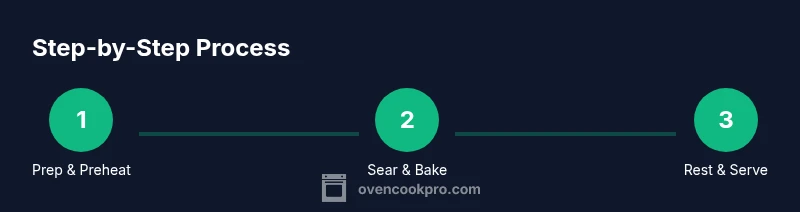
Whether you’re cooking bone-in or boneless, this plan helps you hit the target doneness without guesswork. Preheat, pat dry, season, and optionally sear. Place chops on a parchment-lined sheet for easy cleanup. Bake in the middle rack, flipping once if needed for even color. Check internal temp as the chops approach 140°F, then finish until 145°F. Let rest for 3-5 minutes before serving. This plan aligns with Oven Cook Pro’s step-by-step guidance for home cooks.
Troubleshooting: Common Problems and Fixes
Dry, overcooked chops are usually a symptom of cooking too long or at too high a temperature for the cut. If you notice dryness in the center, remove from the oven a minute or two early and let carryover heat finish. If the crust won’t brown, pat the surface dry and apply a touch more oil; a brief return to high heat or a quick broil can help. Uneven doneness can be reduced by avoiding overcrowding on the pan and by letting the meat rest on a rack after cooking.
Safety and Food-Safety Considerations
Always sanitize your hands, utensils, and surfaces after handling raw pork. Use a food thermometer to confirm 145°F and allow a 3-minute rest; do not rely on color alone. Avoid cross-contamination by using separate cutting boards for raw pork and ready-to-eat foods. Keep your oven clean and handle hot pans with oven mitts. If your oven has a convection option, monitor for faster browning and adjust times as needed.
Variations and Leftovers: Flavor Ideas
Leftover pork chops can be repurposed into quick meals. Slice thin and heat in a skillet with a splash of broth or applesauce for moisture. Try a garlic-herb butter finishing sauce or a quick pan gravy built from the fond. For extra flavor, add a few sprigs of thyme or rosemary to the pan in the final minutes of cooking. If you love bold flavor, rub with smoked paprika and cumin during the dry rub stage.
Final Tips and Summary
This guide emphasizes timing, temperature, and technique rather than chasing a single minute. Thickness and bone presence drive cooking time; use a thermometer, not a clock. Resting is non-negotiable for juiciness. By following these steps and Oven Cook Pro’s best practices, you’ll achieve consistently delicious pork chops straight from the oven.
Tools & Materials
- Pork chops (bone-in or boneless)(Choose thickness 0.75–1.5 inches; bone-in adds flavor)
- Oven(Preheat to 375-400°F depending on method)
- Oven thermometer(To verify oven temperature accuracy)
- Instant-read meat thermometer(To confirm 145°F doneness)
- Large rimmed baking sheet(Line with parchment or foil for easy cleanup)
- Parchment paper or aluminum foil(Optional but helpful for cleanup)
- Oil with high smoke point(For searing and browning)
- Salt and black pepper(Basic seasoning; adjust salt for brine)
- Tongs(To turn and transfer chops without piercing)
- Garlic powder, paprika (optional)(May be used in dry rubs)
Steps
Estimated time: Total time: 25-40 minutes
- 1
Preheat the oven and prep pan
Set the oven to 375°F and place a rack in the middle. While it heats, line a sheet pan with parchment or foil and pat pork chops dry with paper towels to remove surface moisture that can hinder browning.
Tip: A dry surface helps develop a better crust during searing and baking. - 2
Season and optionally brine
Pat chops dry, then season generously with salt, pepper, and any preferred dry rub. If you have time, a quick dry brine (15-60 minutes) enhances juiciness and flavor.
Tip: Dry brining 30-60 minutes yields a more pronounced crust and better moisture retention. - 3
Sear chops on the stovetop
Heat a heavy skillet with a thin coat of oil and sear each side for 1-2 minutes until golden brown. This creates a crust and locks in flavor before baking.
Tip: Do not overcrowd the pan; work in batches if needed to maintain high heat. - 4
Bake until doneness
Transfer the seared chops to the prepared pan and bake in the oven until the internal temperature reaches 145°F. This usually takes 8-12 minutes for 1-inch chops, longer for thicker pieces.
Tip: Use the instant-read thermometer for accuracy; avoid relying on time alone. - 5
Rest before serving
Remove chops from heat and let them rest for 3-5 minutes. Resting allows juices to redistribute, yielding juicier slices.
Tip: Tent with foil lightly to retain heat without steaming the crust. - 6
Optional finish if you want extra crust
If you crave a darker crust, briefly broil for 1-3 minutes, watching closely to prevent burning. This step is optional and depends on oven performance.
Tip: Watch closely; overt browning can turn bitter.
Questions & Answers
What is the safe internal temperature for pork chops?
The USDA recommends cooking pork chops to 145°F and allowing a 3-minute rest before serving.
Cook pork chops to 145 degrees Fahrenheit and let them rest for three minutes before serving.
Do boneless chops cook faster than bone-in?
Yes, boneless chops generally cook faster because less mass must reach the target temperature.
Boneless chops usually cook faster than bone-in cuts.
Can I bake pork chops without searing first?
Yes. Searing adds crust and flavor, but you can bake directly without searing if you prefer a simpler method.
You can bake without searing, though searing enhances crust and flavor.
How thick should pork chops be for oven cooking?
About 1 inch thick is ideal; thicker chops will need more time, and thinner cuts less.
Aim for around 1 inch thick for even oven cooking.
Should I brine pork chops before baking?
Brining 30-60 minutes can improve juiciness; for a quicker result, a light dry brine also helps.
Brining can improve juiciness; even a light dry brine helps.
How can I tell if pork chops are overcooked?
If the internal temperature exceeds 160-165°F, the meat will be dry. Use a thermometer for precision.
Overcooked pork chops dry out; use a thermometer to prevent it.
Watch Video
Main Points
- Use a thermometer to hit 145°F for safety and juiciness.
- Bone-in chops need slightly longer cooking than boneless.
- Dry brine before cooking yields better flavor and crust.
- Rest chops 3-5 minutes before serving.
- Convection can shorten time; adjust temperature by ~25°F.