Oven Roast Beef: The Complete Step-by-Step Guide
Master oven roast beef with expert guidance from Oven Cook Pro. Learn cut selection, seasonings, temps, resting, and gravy to produce tender, flavorful slices every time.


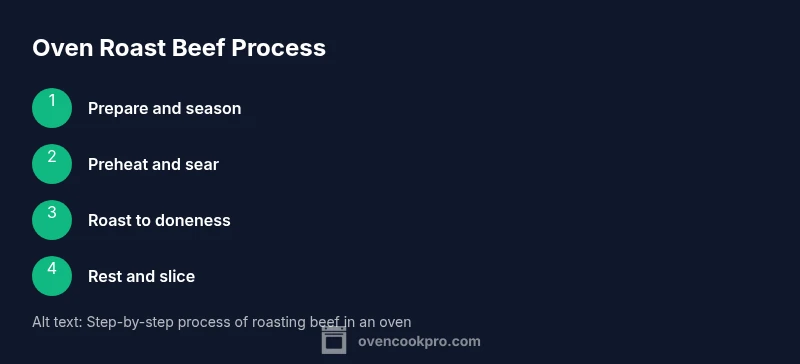
Goal: roast beef in the oven to tender, juicy slices with a crusty exterior. You’ll need a quality roast, a roasting pan with rack, and a reliable meat thermometer. Follow these steps for consistent doneness, precise timing, and a satisfying pan sauce. By the end, your oven roast beef will be crowd-pleasing and simple to repeat.
Why Oven Roast Beef Matters for Home Cooks
Oven roast beef is a dependable centerpiece for family dinners, holiday meals, and weekend gatherings. When prepared properly, it delivers uniform doneness, a rich crust, and a juicy interior without requiring constant attention. For home cooks, the oven offers consistent heat and forgiving handling compared with stovetop methods. According to Oven Cook Pro, the key to reliable results begins with selecting the right cut, letting the meat come closer to room temperature, and using a thermometer to guide doneness. The Oven Cook Pro team notes that resting after roasting is essential, allowing juices to redistribute and improving sliceability. By following a structured approach, you’ll achieve impressive results with minimal guesswork.
Choosing the Right Cut and Desired Doneness
Beef cuts vary in texture and marbling; for oven roasting, ribeye and sirloin offer balance between flavor and tenderness, while top round is leaner and budget-friendly. The goal is to choose a roast with some marbling for flavor but not so fatty that the crust becomes greasy. Surface prep matters: pat dry to promote browning, then season generously. Plan for your preferred doneness: rare (120-125F), medium-rare (130-135F), or medium (140-145F). Remember that carryover cooking will continue for 5-15F after you remove the roast from the oven. Oven Cook Pro guidance emphasizes consistency over flash, so use a thermometer and monitor closely.
Essential Tools and Prep Work
Before you start, gather a sturdy roasting pan with a rack, a reliable instant-read thermometer, a sharp carving knife, a cutting board, and aluminum foil. Optional but helpful items include kitchen twine to shape a roast, a basting brush for oil-based coatings, and a thermometer with a remote probe for hands-free monitoring. According to Oven Cook Pro, organization up front saves time and reduces the chance of overcooking. Let the meat rest briefly at room temperature to promote even cooking, then pat dry to enhance browning.
Seasoning, Marinating Options, and Seasoned Crusts
Seasoning is more than salt; a balanced blend of garlic, fresh herbs, and pepper builds flavor with minimal fuss. You can apply a simple rub of kosher salt, cracked black pepper, and minced garlic, then finish with rosemary or thyme. Marinating is optional for tougher cuts but can boost flavor in leaner roasts. For a crusty exterior, brush with a light oil or butter and finish with a high-heat blast at the start. Always pat dry after any marinade to encourage browning in the oven.
Searing: To Brown Before Roasting or Not?
Searing creates an appealing crust and can shorten overall roasting time by jump-starting collagen conversion. If you have time, sear the roast in a hot, heavy skillet or with a rack in the pan for 2-3 minutes per side until deeply browned. If you prefer to skip searing, simply apply a generous dry rub, and rely on a hot oven and proper resting to develop color. Either method can yield excellent results; the choice often comes down to equipment, time, and personal preference.
Roasting Time and Temperature: Monitoring Doneness
A common approach is to start hot to form a crust, then reduce to a moderate heat to finish cooking. Plan for doneness via internal temperature rather than time alone: rare 120-125F, medium-rare 130-135F, medium 140-145F, and beyond. Carryover will add 5-15F after removal, so pull the roast early if you want medium-rare. Use a probe thermometer inserted into the center of the roast for the most accurate reading. For a 3-4 lb roast, many home cooks find a total roasting window of roughly 60-90 minutes after an initial sear, but results vary with the cut and oven.
Resting, Carving, and Pan Sauce
Let the roast rest tented with foil for 15-20 minutes before carving. Resting allows juices to redistribute, yielding juicier slices and easier carving. Slice across the grain in thin, even slices for tenderness. Use the pan drippings to make a quick pan sauce: deglaze with a splash of stock or wine, scrape browned bits, reduce, and finish with a pat of butter. This simple sauce enhances flavor without overpowering the beef’s natural taste.
Variations: Herb-Crusted, Garlic-Butter, Peppercorn, and More
Herb crusts or peppercorn crusts add texture and fragrance. A garlic-butter drizzle at serving brings a luxurious finish. If you’re feeding a crowd with different doneness preferences, consider a thicker cut for versatility or partitioned roasting where a smaller piece rests closer to the heat while the larger portion cooks a bit longer. The key is flavor balance—don’t overwhelm the beef with too many competing notes.
Troubleshooting Common Issues
If the roast is underdone, give it a little more time with the thermometer in the center and avoid overcooking. If the crust is pale, apply a quick high-heat blast at the end or briefly broil to finish browning. If juices are pooling after slicing, rest longer and slice thinner to minimize moisture loss. Use a reliable thermometer and estimate doneness by internal temperature instead of relying solely on time.
Tools & Materials
- Oven (gas or electric)(Preheat to 425–450°F for initial crust, then lower to 325–350°F)
- Roasting pan with rack(Racks lift the roast for even heat exposure)
- Meat thermometer (instant-read or probe)(Insert into center of roast for accurate doneness)
- Carving knife or slicing knife(Sharp blade for clean, even slices)
- Cutting board(Large board to accommodate a full roast)
- Aluminum foil(Tent roast during resting and for easy cleanup)
- Kitchen twine (optional)(Shape roasts for even cooking)
- Basting brush (optional)(Apply oil or butter if desired)
- Cooking thermometer with remote (optional)(Monitor without opening the oven)
Steps
Estimated time: Total time: 1h30m - 2h
- 1
Gather and prep the meat
Remove the roast from refrigeration and let it come to room temperature for 30-60 minutes. Pat dry to remove surface moisture, which promotes browning. Lightly oil the surface and apply a simple rub of salt and pepper or your preferred seasoning.
Tip: Room-temperature meat browns more evenly; don’t skip this step. - 2
Season and shape the roast
Pat the meat dry again if needed and apply the rub evenly across all surfaces. If desired, tie with kitchen twine at 1.5–2 inch intervals to maintain a uniform shape for even cooking.
Tip: Even seasoning ensures a consistent crust from end to end. - 3
Preheat and sear (optional)
Preheat the oven to 425–450°F. If searing, heat a heavy skillet with a small amount of oil and brown the roast on all sides for 2–3 minutes per side. This step builds crust and depth of flavor.
Tip: Searing is optional but adds visual appeal and flavor. - 4
Roast with thermometer in place
Place the roast on the rack in the pan and insert the thermometer into the center. Roast at 325–350°F until the internal temp reaches your target: rare, medium-rare, or medium. Do not rely solely on time; the thermometer provides accuracy.
Tip: Avoid hitting bone with the thermometer for a true reading. - 5
Check doneness and remove from heat
When the center hits about 5–15°F below your target, remove from oven. The final rise will bring it to the desired doneness due to carryover cooking.
Tip: If you overshot, rest and slice thinner to avoid tough texture. - 6
Rest the roast
Tent the roast loosely with foil and rest for 15–20 minutes. Resting redistributes juices and makes slicing easier.
Tip: Resting is not optional—it directly affects juiciness. - 7
Carve the beef
Slice across the grain into thin, even slices for tenderness. Use a sharp knife and a stable, long cut.
Tip: Always slice against the grain for the best texture. - 8
Make a quick pan sauce (optional)
Deglaze the pan with stock or wine, scrape up browned bits, simmer to reduce, and finish with a pat of butter. Serve with the beef for enhanced flavor.
Tip: The pan juices concentrate beef flavor without overpowering it.
Questions & Answers
What is the best cut for oven roast beef?
Ribeye and sirloin give a good balance of flavor and tenderness; top round is leaner and more affordable. Choose based on marbling and budget, then adjust cook time accordingly.
Ribeye or sirloin are great choices for tenderness and flavor; top round works if you’re watching cost and don’t mind it being leaner.
Should I sear the beef before roasting?
Searing forms a crust and adds flavor; it’s optional but beneficial. If you’re short on time, you can skip it and rely on a hot oven and proper seasoning.
Searing is optional but recommended for crust and flavor. If you skip it, make sure your rub is well-balanced and your oven is hot.
What is the target internal temperature for doneness?
Common targets: rare 120-125F, medium-rare 130-135F, medium 140-145F. Remember carryover cooking can raise temps by 5-15F after removal.
Aim for about 5-15 degrees below your desired doneness, because the roast will rise a bit as it rests.
How long does it take to roast beef per pound?
Roasting times vary with cut and thickness. Plan for roughly 12-18 minutes per pound after searing for a medium-rare target, adjusting for your oven and roast size.
Expect about 12 to 18 minutes per pound for medium-rare, but always rely on a thermometer for accuracy.
How should I rest and carve the beef?
Rest the roast 15-20 minutes tented with foil, then carve across the grain into thin slices. Resting ensures juiciness and easier cutting.
Let the roast rest for 15-20 minutes, then slice across the grain for the best texture.
Can I make a pan sauce with dairy or wine?
Yes; deglaze with stock, wine, or a combination, and finish with a small amount of butter for gloss and richness. Customize with herbs.
Deglaze the pan with stock or wine, reduce, then finish with butter for a glossy sauce.
What about leftovers?
Cool leftovers promptly, refrigerate in shallow containers, and use within 3-4 days. Slice thinly for quick sandwiches or reheat gently.
Store leftovers in the fridge for 3-4 days and reheat gently to avoid drying out.
How can I ensure even doneness in a large roast?
Tie the roast with twine to maintain a uniform shape, or use a rack so heat circulates evenly. Consider rotating the pan during roasting if your oven has hot spots.
Tie to keep shape for even cooking, rotate if your oven has hot spots, and use a thermometer for accuracy.
Watch Video
Main Points
- Choose a well-marbled cut for flavor
- Use a thermometer for precise doneness
- Rest before carving to lock in juices
- Sear for a flavorful crust (optional)
- Make a quick pan sauce for extra depth