Oven Pork Ribs: A Complete Step-by-Step Guide
Master oven pork ribs with a reliable dry rub, low-and-slow baking, and a glossy glaze. Learn prep, timing, safety, and serving ideas to consistently deliver fork-tender ribs at home.


Goal: cook tender, flavorful oven pork ribs with a reliable dry rub, controlled bake, and a glossy glaze. You’ll learn prep, timing, and safety steps to get fall-off-the-bone ribs without drying or oversmoking them. Gather ribs, a dry rub, foil, a sheet pan, basting brush, thermometer, and an oven-safe rack.
Why oven pork ribs shine for home cooks
Oven pork ribs offer a forgiving, consistent path to fork-tender meat with minimal reliance on outdoor grills or smokers. When done well, the result balances a rich, beefy pork flavor with a lightly caramelized crust formed by a careful dry rub and controlled heat. The convenience of an indoor oven means you can cook any day of the year, regardless of weather, while still achieving smoky notes through a gingerly glaze finish. For many households, this method delivers predictable results, especially when you adopt a clear plan: quality ribs, comprehensive prep, steady low heat, and a final glaze that seals in moisture. As you master this technique, you’ll develop a reliable baseline that scales with rib size and preferred tenderness. [Oven Cook Pro] recommends focusing on moisture retention, even rub coverage, and rest time to maximize juiciness and texture.
Sourcing the right ribs and prepping them for success
Choosing bone-in ribs (baby back or spare ribs) affects texture and cook time. Baby back ribs are leaner and cook a bit faster, while spare ribs have more connective tissue and benefit from longer, slower cooking. Regardless of cut, start with a bright red, well-marbled rack and trim any loose fat or silver skin from the bone side. Removing the thin membrane from the bone side helps rubs penetrate and yields a more tender bite. Before cooking, pat the ribs dry with paper towels to promote rub adhesion and avoid steaming rather than roasting. Bringing the meat to room temperature for 20–30 minutes helps ensure even cooking and a better crust.
Building a balanced dry rub for pork ribs
A good rub should balance salt, sweetness, acidity, and aromatics so the meat can shine without being overwhelmed by seasoning. A common starting point is salt and sugar in roughly equal parts, plus smoked paprika for color, black pepper for heat, garlic powder for savoriness, and a touch of chili powder or cayenne for warmth. Apply the rub evenly on all sides and press it gently into the surface to maximize adhesion. For best results, let the rub rest on the meat for 15–30 minutes (or up to 2 hours in the refrigerator) so the flavors begin to meld with the surface. This step also creates a better crust during baking.
Wet finish vs dry finish: choosing your glaze and glaze timing
A glaze or sauce adds a glossy, flavorful layer. A simple glaze can be a mix of apple juice or cider, a sugar component, and a touch of vinegar or citrus to balance sweetness. Some cooks prefer to apply a light glaze in the final 15–30 minutes of uncovered baking to set a lacquer-like crust, while others opt for a dry rub finish with a longer, dry roast for a crisper bark. Either approach works; the key is to avoid overwhelming sweetness or overpowering heat. If you’re unsure, start with a light glaze and adjust in future batches based on texture and tenderness.
Temperature and time guidelines: what to aim for in the oven
Low-and-slow cooking is the cornerstone of tender pork ribs in an oven. A typical range is 250–275°F (120–135°C), which encourages gradual gelatin breakdown in the connective tissue without drying the meat. Plan on several hours of cooking, depending on rib size and cut. Using a thermometer helps you confirm doneness: target internal temps around 190–205°F (88–96°C) in the meaty portion. If you see excessive shrinkage or darkened surfaces early, consider lowering the temperature slightly or wrapping sooner to trap moisture. Remember, the goal is creamy texture with a gentle bite, not a brittle crust.
The wrap-and-foil technique (Texas Crutch) for moisture retention
Wrapping ribs tightly in heavy-duty foil with a small amount of liquid (water, apple juice, or broth) creates a steaming effect that helps tenderize the meat. This method reduces evaporation and slows moisture loss, which is especially helpful for larger racks. After a couple of hours wrapped, uncover to finish with a glaze or dry rub. Return to the oven uncovered for the final stage to develop color and a pull-apart texture. If you prefer a strong bark, skip wrapping for the entire cook, but monitor moisture and color closely.
Step-by-step cooking plan you can follow tonight
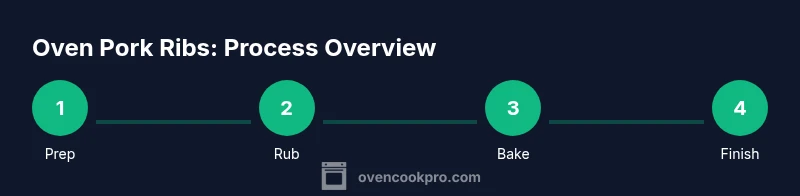
- Prepare workspace, assemble ingredients, and preheat the oven to 250–275°F (120–135°C). 2) Remove the membrane from the bone side and pat ribs dry. 3) Combine a balanced rub and apply evenly. 4) Let the rub rest briefly to set. 5) Place ribs on a rack above a lined sheet pan. 6) Bake wrapped for 2.5–3 hours. 7) Unwrap, glaze, and bake 20–30 minutes uncovered. 8) Rest 10 minutes, then slice between bones and serve. 9) Store leftovers promptly in the fridge for up to a few days.
Serving, rest, and storage tips to maximize leftovers
Resting is essential after removing ribs from the oven; it allows juices to redistribute and makes slicing easier. Cut between bones for clean portions and serve with extra glaze or sauce on the side. For storage, refrigerate promptly in airtight containers and reheat gently to preserve moisture. If you plan to freeze leftovers, portion them into meal-sized packets and reheat with a splash of liquid to prevent drying. These steps help you enjoy the ribs later without losing texture or flavor.
Authority sources and practical safety notes
When cooking pork ribs in the oven, always follow general food-safety principles: keep cold ingredients cold, cook to a safe internal temperature, and avoid cross-contamination. The Oven Cook Pro team emphasizes using a reliable thermometer and cleaning surfaces and tools after use. For further reading and safety standards, consult authoritative sources such as USDA Food Safety and related educational resources listed below.
Tools & Materials
- Rib rack or sheet pan(Sturdy pan to hold ribs above drippings)
- Aluminum foil (heavy-duty)(For wrapping in the Texas Crutch)
- Oven-safe wire rack(Elevates ribs for even heat circulation)
- Meat thermometer(Probe for internal temp around 190-205°F)
- Sharp knife and cutting board(For trimming and portioning)
- Paper towels(Dry surface before rub)
- Brush or spray bottle(For applying glaze or liquid)
- Mixing bowls and whisk(Prepare rub and glaze components)
- Oven mitts(Protection when handling hot foil)
- Basting brush(Optional for glaze application)
Steps
Estimated time: Total time: 4 hours 15 minutes
- 1
Prepare workspace and ingredients
Clear your counter, gather ribs, rub components, and tools. Preheat the oven to 250–275°F (120–135°C). A clean workspace reduces mistakes and speeds up the process. This initial setup ensures consistent results across multiple racks.
Tip: Have all rub ingredients measured and ready to minimize handling meat when rub is applied. - 2
Remove membrane from the bone side
Slide a dull knife under the thin membrane on the bone side to loosen it. Grab the corner with a paper towel and pull away from the rack in a single motion. Removing this membrane helps rubs penetrate and improves tenderness.
Tip: Take your time; a clean removal prevents chewy texture later. - 3
Mix and apply the dry rub
Whisk together salt, sugar, paprika, garlic powder, pepper, and optional spices. Rub it evenly across both sides of the ribs, pressing gently to ensure adhesion. A thorough coating promotes even flavor and a consistent crust.
Tip: Use about 1–2 tablespoons of rub per rack, adjusting for size. - 4
Let rub set
Allow the rub to rest on the meat 15–30 minutes at room temperature, or refrigerate up to 2 hours. This step helps flavors meld and improves crust formation during baking.
Tip: If refrigerating, cover to prevent surface drying. - 5
Prepare for oven and position ribs
Place a rack in the center of a lined sheet pan. If using a foil-wrapped cooking method, wrap ribs tightly with a double layer of heavy-duty foil and add a small splash of liquid. This setup promotes even heat and moisture retention.
Tip: Avoid overcrowding; allow space between racks for air flow. - 6
Bake wrapped for moisture and tenderness
Bake the wrapped ribs for 2.5–3 hours. The wrap traps steam, breaking down connective tissue without drying the meat. Check for tenderness by inserting a toothpick or thermometer probe; the meat should feel very tender near the bone.
Tip: If rib edges brown too quickly, loosely cover with foil to prevent scorching. - 7
Unwrap and glaze for color
Unwrap ribs and brush with glaze or sauce. Return to the oven uncovered for 20–30 minutes to set the glaze and develop a glossy finish. This step adds depth of flavor and a desirable crust.
Tip: Apply a light coat first; a second thin layer can be added if desired. - 8
Rest, slice, and serve
Remove ribs from the oven and let them rest 10 minutes before slicing between bones. Slice carefully to preserve the internal moisture and yield. Serve with additional glaze on the side for dipping if desired.
Tip: Resting redistributes juices and makes slicing cleaner. - 9
Cleanup and storage
Wash utensils, wipe down pans, and sanitize work surfaces. Refrigerate any leftovers in airtight containers within 2 hours of cooking. Reheat gently to preserve moisture and texture.
Tip: Small leftovers reheat best with a splash of water or stock to maintain juiciness.
Questions & Answers
What temperature is best for oven pork ribs?
Most oven rib recipes use a low, steady temperature around 250–275°F (120–135°C) to balance tenderness and moisture. Adjust within this range based on rib size and desired finish.
Cook them slowly at about 250 to 275 degrees Fahrenheit for best tenderness.
Do I need to remove the membrane from ribs?
Yes. Removing the silver skin on the bone side helps the rub penetrate and results in a more tender bite.
Yes, removing the membrane helps flavors penetrate the meat.
How long should ribs cook in the oven?
Wrap ribs and cook for about 2.5–3 hours, then uncover and glaze for 20–30 minutes. Always check for tender pull-apart texture near the bone.
About two and a half to three hours wrapped, then finish uncovered with glaze.
Should I wrap ribs in foil or cook uncovered?
Wrapping in foil traps moisture and speeds tenderization. Unwrap for the final glaze to develop color and texture.
Wrap for moisture, uncover to glaze and finish.
Can I refrigerate leftovers?
Yes. Refrigerate leftovers within two hours of cooking in airtight containers. They typically keep for 3–4 days.
Yes, refrigerate promptly in airtight containers for a few days.
What rubs or sauces work best with oven ribs?
A balanced rub with salt, sugar, paprika, garlic, and pepper pairs well with a mild glaze or BBQ sauce. Adjust sweetness and heat to taste.
A simple salt-sugar-rub with paprika and garlic, plus a glaze, works great.
Is food safety important when cooking ribs in the oven?
Always sanitize surfaces, cook to safe internal temperatures, and avoid cross-contamination. Use a thermometer to confirm doneness.
Yes. Clean surfaces, cook to safe temps, use a thermometer.
Can I use boneless ribs for this method?
Boneless cuts can be cooked in the oven but may require shorter cooking times and careful monitoring to prevent drying.
Boneless rib cuts work, but watch moisture and adjust time.
Watch Video
Main Points
- Cook low and slow for tenderness.
- Season evenly and let rub set before baking.
- Wrap to lock in moisture, then glaze for shine.
- Rest and slice correctly to preserve juiciness.