Oven or Crockpot for Ham: Which Is Best?
Compare oven and crockpot methods for ham, focusing on flavor, texture, timing, and safety. Learn which method fits your schedule and how to achieve juicy results.


TL;DR: If you want a classic ham with a browned crust, the oven is preferred, typically 325-350°F for 1.5–2.5 hours depending on size. For hands-off tenderness and easier shredding, the crockpot shines with 6–8 hours on low. Your choice hinges on crust preference, schedule, and whether you value seared edges or fall‑apart texture.
Role of Ham Size and Cut in Your Decision
Choosing between the oven and crockpot for ham depends heavily on the size and cut you buy. A bone-in ham with a thick glaze responds to high-heat browning in the oven, while a smaller boneless roast may become dry if overcooked in this mode. Conversely, the crockpot shines with larger, pre-sliced, or leftovers that benefit from long, gentle heat. According to Oven Cook Pro, bone-in hams benefit from initial browning steps to develop flavor even when the rest cooks slowly. The Oven Cook Pro team found that trimming excess fat, patting the ham dry, and letting it come to near-room temperature before cooking improves moisture retention in both methods. When you plan an "oven or crockpot for ham" decision, start by deciding whether you want a crusty exterior or a supremely tender interior. If you need a crust, the oven is the clear choice; if you want nearly unattended cooking, the crockpot offers a reliable result with minimal effort.
Oven Method: Heat, Time, and Browning
In the oven, heat and time must be carefully balanced to avoid overcooking. A typical approach is to preheat to 325-350°F, place the ham in a shallow roasting pan, and glaze during the last 15-20 minutes. The glaze adds color and flavor through Maillard browning. Planning for about 1.5–2.5 hours for an 8–12 lb bone-in ham gives you a comfortable margin to reach an internal temperature of 145°F, followed by a 3–5 minute rest. If you prefer a darker crust, you can remove the glaze for a final 5–10 minutes at higher heat, but watch closely to prevent scorching. The Oven Cook Pro analysis indicates that careful basting and tenting with foil can prevent surface drying while preserving juiciness inside. Use a calibrated thermometer and map your ham’s temperature against its weight to avoid surprises.
Crockpot Method: Low and Slow Tenderness
The slow cooker changes the game by delivering consistent, moist heat over many hours with minimal hands-on time. For a standard 8–12 lb ham, set the crockpot to low and cook for roughly 6–8 hours; high settings reduce time to about 3–4 hours, though more time can improve tenderness. Because the crockpot traps moisture, browning during cooking is limited; finishing with a quick sear or under a broiler can reintroduce a crust if desired. Remove most of the liquid if you want the glaze to adhere, or reserve it for a pan sauce. The primary benefit is tender, pull-apart texture that works well for sandwiches and casseroles. The Crockpot method is especially forgiving for boneless hams or larger cuts. For best results, add a small amount of acid or fruit juice to help breakdown connective tissue without loosening flavor.
Glaze, Marinade, and Flavor Profiles
Flavor-building steps differ between methods. Oven cooking thrives with a sugar-based glaze layered early and refreshed late in the bake to create a caramelized crust. In a crockpot, glaze near the end and under high heat can help the surface caramelize as the meat finishes tenderizing, though browning will be subtler. Consider using pineapple juice, brown sugar, honey, or maple for a balanced sweet-savory profile. Salt, pepper, and garlic powder can deepen the natural ham flavors. For both methods, brining or brining-inspired seasoning under the skin can boost moisture and taste, but avoid over-salting, which can toughen meat. The key is to apply glaze or marinade in steps and let the meat rest before serving to retain moisture.
Thermometer Readings and Doneness Guidance
A reliable internal temperature reading is essential regardless of method. Target an internal temperature of 145°F (63°C) for safety and juiciness; allow the ham to rest 10-15 minutes before slicing to redistribute juices. In the oven, compensation may be needed for bone-in ham, which can conduct heat differently. In the crockpot, temperature can plateau, so plan for a short rest period and verify with a thermometer. If you are using a glaze, aim to reach the glaze’s sticky stage around 150-155°F (65-68°C) and remove promptly to prevent sugar burning. Always use a digital probe thermometer placed in the thickest part of the ham, away from bone.
Step-by-Step: Oven Method vs Crockpot Method
- Oven method: Preheat, pat dry, place ham on rack, add liquid or broth, cover loosely with foil, bake until near 145°F, glaze, bake uncovered briefly to set glaze, rest before slicing.
- Crockpot method: Layer in simmering liquid, set your temperature, add ham, check at 6 hours for tenderness, glaze after, broil briefly or sauté to add color.
- Both methods require rest time and a crisp glaze for best texture.
Timing Scenarios: Weeknight vs Weekend Roasts
Weeknight roasts favor the crockpot for convenience if time allows; they deliver reliable tenderness with minimal supervision. Weekend roasts give you the opportunity to develop a crust in the oven and experiment with glaze combinations, sides, and presentation. Regardless of method, plan for resting time and make-ahead sides to maximize flavor. If you’re cooking for a crowd, consider offering both textures—sliced oven-roasted ham for tradition and crockpot ham for quick leftovers.
Energy Use, Cleanup, and Practical Considerations
The oven uses more active energy during the bake, but cleanup is straightforward with a roasting pan and rack. A crockpot offers quieter operation and less active monitoring, but you may need to sear or broil afterward for a crust. Both methods benefit from planning and organization: thawing, trimming, seasoning, and glazing upfront reduces last-minute delays. For leftovers, the crockpot can reheat sliced ham gently without drying it out; the oven is ideal for rekindling a glaze and reviving crust.
Common Mistakes and Fixes
Common mistakes include overcooking bone-in hams in the oven, leading to dry edges; under-seasoning in the crockpot, resulting in bland meat; and glazing too early, causing sugars to burn. Fixes are simple: use a thermometer, tent with foil, apply glaze late in the bake, and consider a finishing broil or quick sear to restore crust.
Comparison
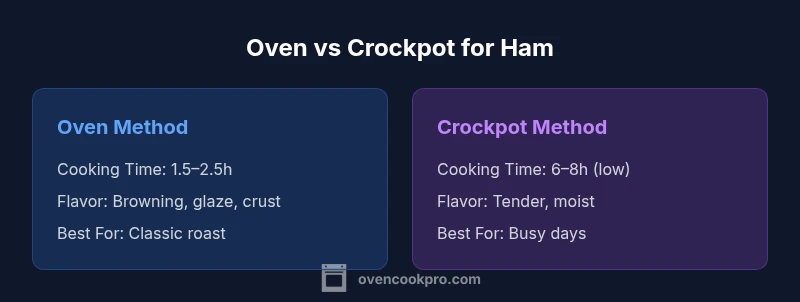
| Feature | Oven method | Crockpot method |
|---|---|---|
| Cooking Time | Approximately 1.5–2.5 hours for 8–12 lb bone-in ham at 325–350°F | 6–8 hours on low (3–4 hours on high for smaller cuts) |
| Flavor & Crust | Crusty glaze with browning through direct heat | Moist, tender interior with limited browning; crust added with finish |
| Internal Temperature Target | 145°F (63°C) before resting; glaze timing affects surface texture | 145°F (63°C) before resting; glaze near end for surface caramelization |
| Best For | Classic roast, traditional glaze, events | Hands-off cooking, shreddable meat, busy days |
| Energy Use | Higher active time and oven energy | Lower active time; relies on slow-cooker energy |
| Texture Outcomes | Firm exterior, juicier interior if timed well | Very tender, pull-apart texture when fully cooked |
| Moisture Management | Basting and foil tenting help retain moisture | Moisture retained inside the pot; glaze may require finishing |
| Cleanup | Roasting pan and rack; straightforward cleanup | Removable insert; easier cleanup but may require scrubbing |
The Good
- Flexible flavor development with glaze and browning in the oven
- Hands-off convenience for busy days with the crockpot
- Good moisture retention with thermometer-guided timing
- Works for both bone-in and boneless hams of varying sizes
Drawbacks
- Oven requires careful monitoring to avoid drying or over-browning
- Crockpot browning is limited; finishing glaze/crust is needed
- Longer total time in the oven for larger hams; energy use is higher during bake
- Less control over precise surface texture without a finishing step
For most home cooks, choose the oven when crust and glaze are priorities; opt for the crockpot when time is tight and tenderness matters more.
If you value a caramelized crust and classic presentation, the oven is the best fit. If you want a hands-off approach with tender, shreddable meat, the crockpot shines. Use both methods as needed based on schedule and texture preference.
Questions & Answers
Which method yields the best crust for ham: oven or crockpot?
The oven tends to yield the best crust and glaze color due to direct heat and browning. The crockpot provides tenderness but browning is limited unless finished under high heat. If crust is a priority, bake in the oven and finish under the broiler or a quick sear.
Oven gives you that crust; crockpot is great for tenderness, finish with a sear if you want crust.
Can I cook a frozen ham in the oven or crockpot?
It’s safer and more even to thaw ham before cooking to ensure the heat penetrates evenly. If you must start from frozen, plan for significantly longer cooking times and verify doneness with a thermometer.
Thaw if possible; cooking from frozen takes longer and can yield uneven doneness.
Is it necessary to preheat the oven for ham?
Yes, preheating helps ensure even heat distribution and accurate timing. Begin with the oven at 325–350°F and adjust based on your glaze and crust goals.
Yes, preheat for consistent results.
What internal temperature should ham reach for safety?
Aim for an internal temperature of 145°F (63°C) in the thickest part, followed by a 10–15 minute rest. This balance ensures safety without over-drying.
Target 145°F, then rest before slicing.
How should I reheat leftovers without drying them out?
Reheat gently in a covered dish with a little broth or glaze, using the oven at a low temp or the crockpot on low. Add moisture as needed and rest before serving.
Reheat slowly to keep moisture.
Main Points
- Choose oven for crust and glaze control
- Use crockpot for tender, hands-off results
- Always rely on a meat thermometer for doneness
- Finish with a glaze or sear to enhance crust when using the crockpot
- Plan resting time to maximize juiciness and flavor