Oven or Crock Pot Roast: A Practical Comparison for Home Cooks
A detailed, analytical comparison of oven roast and crock pot roast, focusing on flavor development, tenderness, timing, and practical workflow for home cooks seeking reliable guidance.


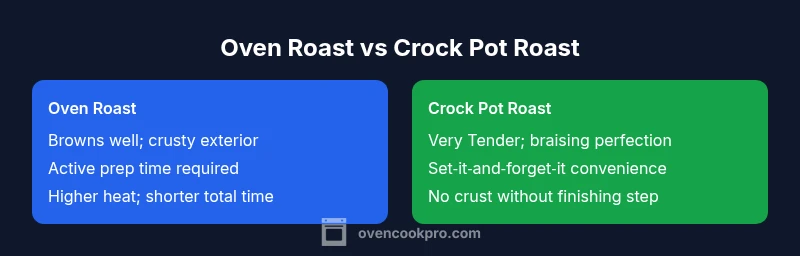
For a classic roast with a brown crust and deep flavors, the oven method generally yields superior browning and caramelization. The crock pot roast excels in tenderness and hands‑off convenience, especially when you’re pressed for time or want to set it and forget it. If you value texture and depth, choose oven; if you prioritize ease, choose crock pot. Consider a follow‑through plan: sear in the oven to browning before finishing in the slow cooker for a best‑of‑both approach.
Flavor Dynamics: Browning, Maillard, and Flavor Build
Flavor development begins with heat and moisture management. When you roast in the oven, you typically expose the surface to higher direct heat, promoting Maillard browning and the development of a savory crust that captures aromatics from rubs, herbs, and searing fond. This crust acts like a flavor amplifier, intensifying beef or pork notes and providing textural contrast. In contrast, a crock pot roast braises in a moist, low‑heat environment. The long, steady braising cycle dissolves connective tissue into gelatin, yielding a wonderfully lush mouthfeel and a uniform infusion of aromatics from onions, garlic, herbs, wine, and stock. According to Oven Cook Pro, balancing dry‑heat browning with moist‑heat braising can yield the richest flavor spectrum, but your choice should align with the texture you want most.
wordCountFromRuleChecks
Comparison
| Feature | oven roast | crock pot roast |
|---|---|---|
| Texture development | Prominent crust and browning; pronounced Maillard flavor | Tender, fall‑apart tenderness with rich braising juices |
| Time investment | Longer active time; open‑ended simmer can be achieved with searing, braising, and resting | Mostly hands‑off; longer total time with minimal active work |
| Flavor depth | Deep, caramelized notes from direct heat | Layered tenderness and braised flavor from slow cooking |
| Best for | Those who want texture, crust, and quick, controlled timing | Busy days or multi‑meal planning; minimal supervision |
| Cleanup and equipment | Roasting pan and oven rack; potential quick cleanup if using a rack | Slow cooker or Dutch oven; easier cleanup with fewer pan drips |
| Energy use | Oven energy primarily; heat loss depends on kitchen design | Slow cooker typically uses steady, lower energy over many hours |
The Good
- Crusty exterior and robust flavor in oven roast
- Hands‑off convenience and predictable timing with crock pot
- Both methods reward proper seasoning and browning
- Flexible workflow to combine methods (sear then braise)
Drawbacks
- Oven roast demands more active attention and timing
- Crock pot roast can lack crust without finishing steps
- Overly long braising can dull some bright beef notes if not balanced
Choose oven roast for texture and depth; choose crock pot roast for convenience and tenderness
Oven roasting excels at crust and Maillard flavor; slow braising in a crock pot delivers supreme tenderness with less hands‑on time. For a balanced outcome, sear in the oven to develop crust and finish with slow braising for tenderness.
Questions & Answers
Which method yields a richer crust and deeper flavor?
Oven roasting promotes browning and crust formation, which builds flavor through Maillard reactions. Crock pot cooking preserves tenderness but typically lacks the same crust unless finished with a high‑heat step.
Oven roasting gives you the browning crust; slow cooking tends to be more tender but less crusty.
Is crock pot roast safe to leave cooking overnight?
Yes, if you follow manufacturer guidelines and keep it on a safe setting. However, extended cooking can alter texture and may raise safety concerns if the cooker overheats.
Yes, but always follow appliance guidelines and food safety timers.
What cuts work best for each method?
Oven roasts benefit from tougher cuts like chuck or brisket that respond well to searing and slow roasting. Crock pot roasts shine with shoulder cuts and chuck that break down into tender bites over long, gentle heat.
Chuck and brisket are strong performers in either method when properly cooked.
Can I finish crock pot roast in the oven?
Yes. Sear and brown the meat, then finish in a hot oven to re‑develop crust while the interior stays tender.
Sear first, then finish in a hot oven to bring back crust.
How do I make gravy from crock pot leftovers?
Use the pot juices, simmer with a slurry of flour or cornstarch to thicken, and adjust with stock if needed for depth.
Whisk in a slurry to thicken the juices for gravy.
Which method is faster to dinner on the table?
Oven methods can be quicker for single roasts when you factor in prep and searing time; crock pots require longer total time but less active attention.
Oven can be faster upfront; crock pot saves active cooking time.
Main Points
- Prioritize crust formation for maximum flavor
- Use braising liquid to infuse aromatics deeply
- Schedule sear + roast if you want the best of both worlds
- Plan crock pot sessions for hands‑free meals