Oven to Crockpot Conversion: A Home Cook's Guide
Learn how to convert oven recipes to slow-cooker versions with timing, liquid, and flavor adjustments. This guide from Oven Cook Pro covers practical workflow, safety, and tips for reliable, flavorful crockpot meals.


You will learn how to convert oven-based recipes to crockpot-friendly versions, including timing, liquid management, and temperature adjustments. This quick guide covers essential steps, common substitutions, and safety considerations to ensure flavorful, safe slow-cooked meals. From choosing the right cut of meat to adjusting herbs and spices, we'll outline a practical workflow you can apply to most oven recipes.
Why Oven-to-Crockpot Conversion Matters
Converting oven recipes to crockpot ones offers convenience, energy savings, and a chance to infuse deeper, slower flavors into ordinary dishes. According to Oven Cook Pro, mastering the oven-to-crockpot conversion can reduce active cooking time for busy weeknights while preserving moisture and tenderness in proteins. This approach is especially valuable for braises, stews, and big-batch meals that benefit from long, steady simmering. With the right adjustments, you can keep the essence of a dish while adapting texture, moisture, and seasoning to suit the slow-cooker environment. The core idea is to translate high-heat oven dynamics, such as browning and reduction, into a slow-cooked process that preserves flavor without drying out ingredients.
Key Differences Between Oven and Slow Cooker Cooking
Ovens heat food by dry, direct heat, often requiring browning and evaporation to develop depth. Slow cookers operate with moist, indirect heat, which keeps moisture locked in but can mute browning flavors if you skip steps. Browning meat before slow cooking helps recreate the Maillard flavors you’d get in a pan-seared dish. Temperature control is continuous in ovens but segmented in crockpots, meaning you’ll often need to adjust cook times rather than temperature alone. Additionally, the volume of liquid matters more in slow cookers; too little liquid leads to a dry result, while too much can dilute flavors. Understanding these contrasts helps you choose the right strategy for each recipe.
Pre-Conversion Checklist: Gather Before You Start
Before you begin the oven-to-crockpot conversion, assemble the essential tools and ingredients. A well-prepared setup reduces guesswork and improves consistency. Ensure your slow cooker is clean and functional, and have a timer handy. Prep vegetables, meats, and aromatics in advance, and measure your liquids (broths, sauces, wines) with proper measuring cups. Keeping a steady rhythm at the prep stage minimizes last-minute substitutions and helps you maintain flavor balance across the dish.
The Conversion Framework: Time, Temperature, and Liquid
Converting temperatures from oven to crockpot isn’t a simple one-to-one swap. In most cases, you’ll reduce the oven temperature by about 25-30°F (14-17°C) and increase the cooking time. For example, a recipe that bakes at 375°F for 60 minutes may require 4-6 hours on low in a crockpot or 2-4 hours on high, depending on the ingredients. Liquid is crucial in slow cooking; you’ll typically need enough to cover ingredients halfway and create a cohesive sauce. If a recipe originally thickens with reduction, you’ll often rely on the crockpot’s long simmer to achieve a similar consistency, finishing with a slurry if needed.
Step-by-Step Conversion Workflow
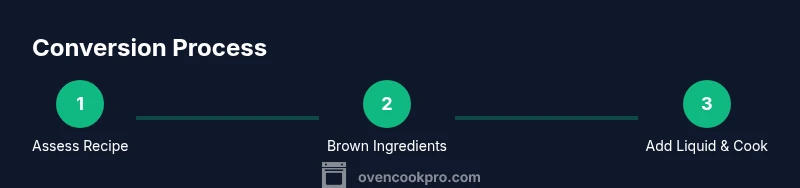
To convert efficiently, follow a clear workflow that preserves flavor while accommodating the slow-cooker environment. Start by selecting recipes with forgiving moisture and sturdy cuts. Brown proteins to develop flavor, then transfer to the crockpot with appropriate liquids. Set the cooker to Low for tougher cuts and longer braises, or High for faster, lighter meals. Monitor liquid levels and avoid overfilling the pot. Finish with a quick thickening step if the sauce isn’t glossy enough. This approach keeps the dish balanced, even after hours of gentle cooking.
Flavor Adjustments and Thickening
Flavor adjustments are often necessary after slow cooking begins. Herbs and spices can mellow; you may need to re-season toward the end. If the sauce seems thin, a cornstarch slurry added at the end can tighten it without breaking the sauce. Dairy additions should be timed toward the finish to prevent curdling. For tomato-based sauces, taste tests at the mid-point help you gauge acidity and sweetness, allowing you to adjust with a touch of sugar or a splash of acidity as needed.
Common Pitfalls and How to Avoid Them
Common issues include too little liquid, overfilled pots, or attempting to cook delicate vegetables for too long. Avoid frequent lid opening, which adds heat loss and extends cook times. If your recipe calls for crispy edges or seared exterior, do the browning step before slow cooking, then rely on the crockpot for tenderness. Always check the final internal temperature of meats to ensure safety, especially when cooking poultry or pork.
Case Study: Converting a Classic Beef Stew
Take a traditional beef stew recipe that bakes at 350°F for 1.5 hours. To convert, brown beef chunks in batches, deglaze with a bit of wine, then transfer to the crockpot with beef broth, carrots, potatoes, and aromatics. Set to Low for 6-8 hours or High for 3-4 hours. At the halfway mark, check liquid levels and stir gently. Finish with a cornstarch slurry if the sauce needs thickening. By preserving browning flavors and maintaining moisture, the slow-cooked version delivers rich, cohesive flavors with less hands-on time.
Safety, Storage, and Reheating Tips
Always use a food thermometer to verify doneness, especially with poultry and pork. Cool leftovers quickly and refrigerate within two hours to minimize bacterial growth. Reheat slowly on the stove or in a microwave-safe dish until steaming hot, then serve promptly. Store portions in airtight containers for up to 3-4 days, or freeze for longer-term storage.
Tools & Materials
- Slow cooker (crockpot)(4-8 quart capacity; choose based on recipe volume)
- Mixing bowls(2-4 bowls for prep and mixing)
- Cutting board and chef's knife(Trimming meat and prepping vegetables)
- Measuring cups and spoons(For liquids, broths, and spices)
- Oven-safe skillet or heavy-bottom pan(Optional for browning before slow cooking)
- Tongs and spatula(For turning meat and gentle mixing)
- Lid or foil for moisture retention(Moisture trapping if lid is partial; helps even cooking)
- Instant-read food thermometer(Ensure safe internal temperatures)
- Timer or smartphone(Track cook times without opening the lid)
- Cornstarch or arrowroot powder(For finishing sauce thickening if needed)
Steps
Estimated time: Total time varies; typically 4-8 hours on Low or 2-6 hours on High, depending on ingredients
- 1
Assess the recipe
Read the oven recipe thoroughly and determine if ingredients and textures will translate well to slow cooking. Identify claim points like browning, layering of flavors, and thickening needs.
Tip: Note which steps rely on quick high heat and plan to mimic or replace them in the crockpot. - 2
Sear or brown ingredients (optional but recommended)
Brown meat in batches to develop color and flavor. Deglaze the pan with a small amount of liquid to lift fond, then add to the crockpot with the rest of the ingredients.
Tip: Do not crowd the pan; browning in batches yields better Maillard reactions. - 3
Add to crockpot with adequate liquid
Place browned meat and vegetables in the slow cooker. Pour in broth, wine, or tomato-based sauce so ingredients are partially submerged (about halfway).
Tip: Too little liquid leads to a dry texture; too much dilutes flavor—aim for a moist, cohesive base. - 4
Set time and temperature
Choose Low for tough cuts and longer braises; High for quicker meals. Typical ranges: 6-8 hours on Low or 3-4 hours on High for many stews.
Tip: Avoid the urge to keep opening the lid; every lid lift adds cooking time. - 5
Check moisture and adjust
Check the pot at the halfway point. Add more liquid if needed, and gently stir to prevent scorching along the sides.
Tip: Keep stirring to encourage even cooking without breaking apart tender vegetables. - 6
Finish and serve
Test for doneness with a thermometer. If a sauce needs thickening, whisk in a cornstarch slurry or reduce briefly after transferring to a pot on the stove.
Tip: Let meats rest a few minutes before serving to reabsorb juices.
Questions & Answers
Is it safe to convert a high-heat oven dish to crockpot?
Yes, with proper adjustments. Avoid relying on high oven temperatures; instead, use low, long cook times and ensure the internal temperature reaches safe levels for meat.
Yes, it's generally safe with proper adjustments and proper cooking temperatures. Make sure to reach a safe internal temperature for meat.
Can I use dairy-based sauces in crockpot dishes?
Dairy can separate if used too early. Add dairy at the end or choose dairy-friendly sauces that won't curdle during long cooking.
Dairy should be added near the end or used in dairy-friendly recipes to prevent separation.
How much liquid is needed for slow cooking?
Use enough to cover ingredients halfway and to prevent scorching. Avoid overfilling the crockpot beyond its fill line.
Make sure there's enough liquid to cover half the ingredients and prevent burning.
Can I speed up cooking by using High instead of Low?
High settings can shorten total time but may compromise texture for some cuts. Use High for faster results with forgiving ingredients.
High can speed things up, but it may affect texture. Use it when you have tender cuts.
What are signs of a failed conversion?
Tough meat, dry edges, or overly thin sauce indicate issues. Reassess liquid levels, cooking time, and whether browning was performed properly.
Look for tough meat or watery sauce as signs to adjust liquid or time.
Can all oven recipes be converted to crockpot?
Most can be adapted, but recipes relying on rapid browning or crust formation may not translate well. Some dishes are better left in the oven.
Most recipes can be adapted, but some work best in the oven for browning or crusts.
Watch Video
Main Points
- Plan time around slow-cooking ranges
- Brown for flavor, not just texture
- Keep liquid levels adequate but not excessive
- Finish with a quick thickening if needed