Oven vs Slow Cooker: A Practical Comparison
An analytic, in-depth comparison of oven and slow cooker performance, texture, energy use, and best-use scenarios to help you choose the right method for each dish. Insights from Oven Cook Pro.


Choosing between the oven and the slow cooker often boils down to texture, timing, and convenience. The oven excels at browning, roasting, and quick finishes, while the slow cooker shines for unattended, low-effort meals. For most weeknight dishes, the oven offers speed and control, whereas the slow cooker delivers tender, pull‑apart textures with minimal hands‑on work.
What are Oven and Slow Cooker, and When Do They Shine?
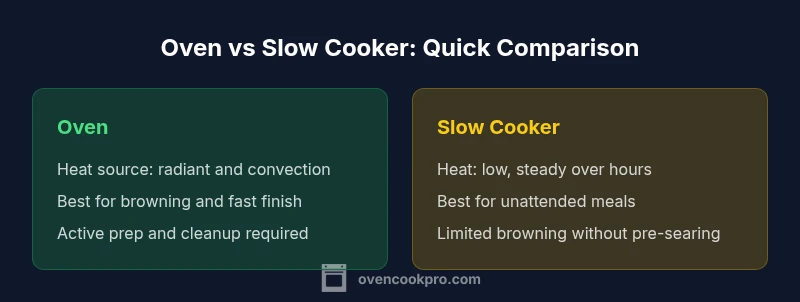
The oven is a versatile thermal appliance that uses radiant and convective heat to bake, roast, and broil foods. A slow cooker, by contrast, relies on steady, low heat over many hours to render tough cuts and meld flavors. Understanding their strengths helps home cooks plan meals that fit busy schedules. According to Oven Cook Pro, the real value comes from matching technique to the dish rather than assuming one method always wins. Use the oven when you want rapid browning, crisp exteriors, or high-heat roasting. Choose the slow cooker for hands‑off stews, chili, or braises that benefit from gentle, moist heat. Recognizing these roles early on helps you decide which path to take for a given recipe.
Core Differences: Heat Source, Temperature Control, and Time
The core difference between the oven and slow cooker is how heat is delivered and controlled. An oven uses radiant heat from coils or burners and often convection fans to circulate hot air, enabling precise temperatures and short, intense cooking bursts. A slow cooker, meanwhile, maintains a gentle, steady temperature over many hours, optimizing moisture retention and collagen breakdown in tougher cuts. Temperature control tends to be more granular in an oven, while a slow cooker emphasizes stability and unattended operation. This contrast affects both cooking time and potential outcomes, so planning ahead is essential. The Oven Cook Pro guidance emphasizes choosing the method that aligns with dish structure: fast, seared edges versus low, steady tenderness.
When to Use the Oven: Finishing Touches and Speed
Ovens excel when you need immediate results, especially for browning, caramelization, and crisp textures. Roasting vegetables to caramelized edges, searing a steak before finishing in the oven, or finishing a casserole with a bubbly, golden crust are classic oven scenarios. Preparation time can be minimized with multi-tasking—preheating while you prep ingredients, then quickly finishing in the hot oven. In many weeknight recipes, you gain precious minutes by prioritizing the oven for steps that require high heat rather than long, slow cooking. The oven is your tool for speed and fine texture control.
When to Use the Slow Cooker: Set-It-and-Forget-It Meals
Slow cookers shine for hands-off meals and dishes that benefit from long, moist heat. Think stews, chili, pulled pork, and braises where the goal is tenderness and melding flavors over extended periods. You can load the pot in the morning and return to a ready-to-serve meal hours later, which is ideal for busy days. The tradeoff is less control over surface browning and a longer overall cook time. When time is plentiful but attention is scarce, the slow cooker becomes a reliable ally. It also thrives on budget-friendly cuts that break down with slow heat.
Texture and Flavor Outcomes Across Methods
Texture is the crisp differentiator between oven and slow cooker results. The oven produces crisp exteriors and more pronounced browning, elevating flavors through Maillard reactions. Slow cookers deliver deeply infused, tender textures, with collagen dissolving into silky sauces. For dishes like beef stew, the slow cooker can yield melt-in-your-mouth meat, while the oven can deliver a roasted finish that adds color and complexity. Flavor development varies with method, but both can achieve excellent outcomes when used with appropriate techniques, seasoning, and timing.
Energy, Time, and Convenience: A Practical Tradeoff
Energy usage tends to align with how actively the appliance operates. An oven draws significant power quickly, but shorter cook times can offset that when browning and finishing are needed. A slow cooker uses steady, low power for hours, resulting in lower instantaneous energy draw but longer total time. If you value convenience and consistent long cooks, the slow cooker wins; if you need speed and precise control for texture, the oven wins. The key is to weigh time against labor and desired texture.
Recipe Scenarios: Plan Like a Pro
Consider three representative scenarios. First, Sunday batch-roasting vegetables and a tray of chicken thighs in the oven for weeknight meals, then finishing with a quick broil for color. Second, a weekend beef stew that benefits from slow simmering to tenderize tough cuts, with the slow cooker doing the heavy lifting. Third, a one-pot chili where browning ingredients in the oven first, followed by slow cooker simmering, blends quick texture with rich depth. These examples highlight how planned technique delivers repeatable results across methods.
Cleaning, Maintenance, and Setup
Both methods require routine care, but the chores differ. The oven needs periodic cleaning to remove baked-on residues and to ensure efficient heat distribution. Slow cookers demand occasional gasket checks and simple pot scrubs. To maximize lifespan, keep oven racks and trays free of grease and ensure slow cooker components seal properly to avoid leaks. A consistent cleaning routine reduces odor transfer and preserves performance, helping you continue making reliable oven vs slow cooker decisions over time.
Safety and Food-Safety Considerations
Safety considerations apply to both appliances. Avoid overfilling cookware to prevent spillover and ensure food reaches safe temperatures quickly when using the oven. Slow cookers should be kept out of the danger zone for extended periods during cooling, and foods should be kept out of the danger zone after cooking to minimize bacterial growth. Follow manufacturer guidelines for wiring, sealing, and pot compatibility, and never submerge electronics in water. Proper handling protects you and your family while preserving recipe quality.
Practical Tips for Transitioning Between Methods
- Pre-brown or sear ingredients for oven-based finishes to maximize color and texture.
- Sear meats before slow cooking to build flavor and depth.
- Use oven-safe, high-quality cookware to ensure even heat and durability.
- Plan for preheating where needed, and account for additional time when transitioning from oven to slow cooker.
- Label leftovers clearly and store according to food-safety best practices to prevent waste.
Quick Decision Framework: 6 Key Questions
- Do you need browning or a crust? 2) Is total cooking time flexible or fixed by your schedule? 3) Can you tolerate longer prep if unattended cooking is desirable? 4) Will the dish benefit from tenderization via moist heat? 5) Do you have the right equipment and space for either method? 6) How important is cleanup and kitchen workflow to your plan?
Final Thoughts: Aligning Your Kitchen with Your Schedule
Choosing between oven vs slow cooker ultimately comes down to your schedule, texture preferences, and willingness to plan ahead. An oven-focused approach favors speed, color, and control, while a slow cooker strategy prioritizes set-and-forget convenience and tender results. By recognizing dish requirements and time constraints, you can tailor your method to each recipe for reliable, satisfying outcomes. The Oven Cook Pro team emphasizes that thoughtful method selection enhances consistency and helps you cook with confidence.
Comparison
| Feature | Oven | Slow Cooker |
|---|---|---|
| Best for | Browning, fast finishes, high-heat roasting | Set-it-and-forget-it meals, tender stews, braises |
| Cooking Time | Typically shorter and more controllable | Often longer due to unattended, low heat |
| Temperature Control | Precise, with wide range and rapid changes | More fixed ranges and steady heat |
| Texture/Flavor Potential | Crisp edges, caramelization, depth from searing | Silky, melt-in-your-mouth tenderness in sauces |
| Energy Use | Higher heat for shorter periods; efficient for short tasks | Lower instantaneous draw; longer total time |
| Versatility | Bake, roast, broil, toast, and more | Moist-heat cooking; limited browning without searing |
| Cleanup/Setup | Racks, pans, preheating steps | Compact insert; simpler cleanup but less browning |
The Good
- Versatile for finishing with browning and quick texture control
- Hands-off convenience for long, low-effort meals
- Strong value for batch cooking and weeknight prep
- Wide range of recipes compatible with either method
Drawbacks
- Oven requires active attention for long cooks to avoid drying
- Slow cooker lacks browning without pre-searing or oven finishing
- Longer total cooking times can constrain dinner plans
- Cleanup can be messier with multiple racks and sheets
Oven for versatility and speed; slow cooker for convenience and tender results
Choose the oven when you need browning, color, and faster finishes. Opt for the slow cooker when you want set-it-and-forget-it meals with tender textures. Your choice depends on dish type, time, and desired texture.
Questions & Answers
Can I use my oven like a slow cooker for long braises?
Yes, you can braise in the oven by using a covered dish and maintaining a steady, low temperature. You’ll get tender meat with flavorful sauces, though it will require monitoring for evaporation and moisture.
Yes, you can braise in the oven with proper coverage and steady heat, giving you tender results.
Can a slow cooker replace an oven for everyday meals?
A slow cooker can replace some everyday meals, especially long-cooked stews and braises, but you’ll lose browning, crisp texture, and quick finish options. You may need to adapt recipes to accommodate gentler heat.
A slow cooker can handle many meals, but you’ll miss browning and fast finishes.
Do slow cookers use less energy than ovens?
In general, slow cookers use less power at any moment, but their longer cooking times can offset the energy savings. Total energy depends on model, duration, and temperature setting.
Slow cookers often use less power at a time, but cook longer, so total energy varies.
Is browning possible in a slow cooker?
Browning isn’t typical in a slow cooker. To get color, sear ingredients on the stovetop or finish in the oven after slow cooking.
Browning isn’t standard in a slow cooker; sear first or finish in the oven.
What recipes transfer well between methods?
Stews, braises, pulled meats, and roasted vegetables can transfer well between methods with time and temperature adjustments. Start with tried-and-true recipes designed for each appliance.
Stews and braises transfer well; adjust times when switching methods.
How do I convert oven times to slow cooker times?
Direct conversions are not exact. Use approximate guidelines, monitor doneness, and rely on tested recipes when switching methods.
Conversions aren’t exact; monitor doneness and adjust as you go.
Main Points
- Choose oven for browning and rapid results
- Use slow cooker for unattended meals and tenderness
- Plan ahead for pre-searing to maximize flavor in both methods
- Balance time, texture goals, and kitchen workflow
- Leverage finishing steps to combine strengths of both appliances