Why Use a Slow Cooker Instead of the Oven: A Comprehensive Comparison
Explore when a slow cooker beats the oven for tender, hands-off meals and when the oven is better for browning, speed, and roasting. This objective guide analyzes efficiency, texture, timing, and cleanup to help you choose.


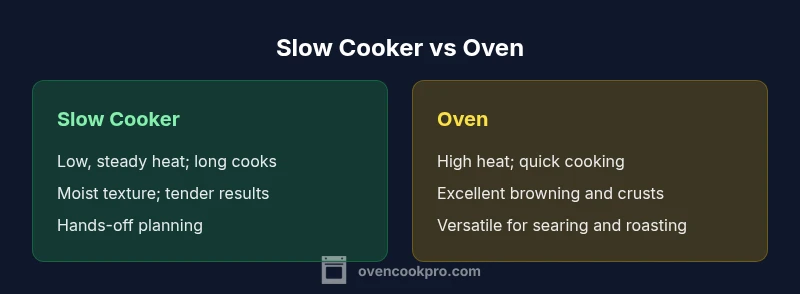
Why use a slow cooker instead of oven? The answer is practical: slow cookers shine for hands-off meals, delivering tender results with minimal supervision and lower energy use. The oven, by contrast, offers faster cooking, browning, and crisp textures. For long braises, stews, or batch meals, a slow cooker saves time in actual attention while the oven handles searing and roasting.
Why use a slow cooker instead of oven
For homeowners evaluating appliance efficiency, the question "why use a slow cooker instead of oven" often boils down to context. According to Oven Cook Pro, the slow cooker excels when you want unattended cooking that yields tender, flavorful results with minimal day-to-day supervision. It relies on steady, low heat to break down connective tissue in tougher cuts, producing gelatin-rich gravies and moist textures without constant stirring. For busy households, this means you can compose a meal in the morning and come home to a ready-to-eat dinner. The oven, by contrast, is a versatile workhorse that supports high-heat searing, roasting, and rapid preparation. The choice is not about one being universally superior; it is about matching cooking behavior to the dish, timing, and cleanup preferences.
Energy and Time Efficiency: Long-Term Savings
Energy use and time are often the deciding factors in a kitchen decision. A slow cooker is designed to draw less energy over extended cooking periods because the appliance runs at a much lower wattage than an oven for hours on end. This can translate into meaningful savings on electricity, especially for weekly meal prep and batch cooking. In contrast, an oven typically consumes more energy per hour but can complete tasks much faster, reducing total cooking time for some dishes. Beyond raw energy numbers, consider how often you start a long-cook dish and whether you value the ability to walk away from the kitchen. The right choice depends on your schedule, the types of meals you prepare, and your tolerance for monitoring the process. Oven Cook Pro notes that energy efficiency is most meaningful when combined with real-life routines and meal planning.
Moisture Retention vs Browning: Texture Differences
Texture is a core differentiator between these two appliances. Slow cookers excel at moisture retention and gentle collagen breakdown, yielding fall-apart tenderness and rich, cohesive sauces. They’re ideal for stews, pulled meats, and braises where moisture is part of the flavor profile. Ovens, however, provide browning and Maillard reactions that develop caramelization on the surface of proteins and vegetables. This results in deeper crusts, crispy edges, and more vibrant roasted flavors. If you crave a crust or a seared exterior, the oven is the natural fit; if you want soft, moist textures with long, low-energy simmering, a slow cooker wins.
Heat Distribution and Recipe Adaptation
Heat distribution matters when adapting oven recipes to a slow cooker. An oven typically delivers high, direct heat and a short cooking window, while a slow cooker delivers uniform, indirect heat over many hours. Adapting recipes often means adjusting method rather than timing alone. You may need to brown ingredients first to build flavor, then transfer to the slow cooker with adequate liquid. Conversely, many slow-cooker meals can finish with a brief oven finish for browning. The key is recognizing that slow cookers are less forgiving for fast-turnaround dishes and that recipe adaptation improves outcomes. If you want both textures, consider a two-step approach: sear in a pan, then finish in the slow cooker, and finish with quick broiling if browning is desired.
Safety, Temperature Control, and Maintenance
Safe operation is essential for any cooking method. Slow cookers operate at consistent, low temperatures that keep perishable ingredients out of the danger zone during cook time, provided you follow manufacturer guidelines and do not exceed recommended fill levels. Oven temperatures rise quickly and require careful monitoring to avoid overheating and uneven cooking. Regular maintenance—clean inserts, sealed lids, and timer checks—helps both appliances last longer and perform consistently. For households with high-sodium or allergen concerns, the slow cooker’s sealed environment can be advantageous for flavor control, while the oven offers precise control for sensitive recipes. Always use correct cookware and keep a clean, dry environment around heat sources to minimize risk.
Convenience for Daily Meal Planning
One of the strongest arguments for a slow cooker is its convenience for daily meal planning. You can load ingredients in the morning, set the programmable timer, and return to a ready-to-eat dish without active supervision. This can reduce last-minute takeout and help you stick to budget-friendly meals. The oven demands more hands-on scheduling—preheating, monitoring, and sometimes multiple steps. If your weekday routine includes work meetings or school activities, the slow cooker aligns with a timed, predictable process. On weekends, when you have more time for tasting and finishing touches, the oven can be a better option for experimenting with textures and bold flavors.
Flavor Development and Aroma Considerations
Flavor development differs between slow cooking and oven roasting. A slow cooker tends to concentrate flavors slowly through long simmering, yielding cohesive blends where moisture carries aromatics through the dish. The oven promotes faster flavor layering through high-heat browning and caramelization, resulting in sharper aroma notes and crusty textures. If your goal is a deeply integrated gravy or a melt-in-your-mouth braise, the slow cooker offers culinary synergy. If you want bright, roasted aromas and crisp edges, the oven’s quick heat is preferable. Taste and adjust with seasonings accordingly, recognizing the distinct flavor profiles each method imparts.
When the Slow Cooker Shines: Best-Case Scenarios
There are several situations where a slow cooker truly shines. Weekend batch meals for the family, overnight stews, shredded meats for sandwiches, and detant meals where you want to avoid constant check-ins are perfect. Slow cookers also excel with tougher cuts of meat, root vegetables, and legumes that benefit from long, moist cooking. If your schedule includes early mornings or late evenings with a need for confected meals, the set-it-and-forget-it workflow can be transformative. However, not every dish benefits from slow cooking; delicate fish, delicate sauces, or recipes requiring crisp textures may fare better in the oven. Use the slow cooker for texture-friendly tasks and the oven for speed, browning, and precise timing.
When to Reach for the Oven Instead: When Quick Results and Browning Matter
There are clear advantages to the oven in scenarios that demand speed and surface browning. Roasting vegetables to crisp edges, searing meats for flavor development, baking breads, and finishing sauces with reduction are tasks where the oven outperforms the slow cooker. A quick preheat and direct heat can drastically shorten total cook time, which matters for weeknight dinners and live-fire flavor. If your dish relies on a crust or caramelized exterior, the oven is the preferred tool. For soups, stews, and tender braises, the slow cooker offers better texture and convenience. Your decision should hinge on the dish’s required texture, schedule, and desired aroma.
Practical Buying Guide: What to Look For
If you’re choosing between a slow cooker and an oven as primary tools, start with capacity, ease of use, and maintenance. For slow cookers, size matters: select a model that matches family size and recipe batch volume, and consider features like programmable timers, high/low settings, and a keep-warm option. Materials and inserts matter for cleanup—ceramic or stone inserts are common and stable, while metal inserts can be more durable. Ovens vary by convection capability, temperature stability, rack configurations, and energy efficiency. For cooks who want both worlds, a two-in-one approach or a modern multi-cooker that combines slow cooking with other modes may be worth considering, but evaluate interoperability and warranty coverage first.
Step-by-Step: Adapting Oven Recipes to the Slow Cooker
Transforming oven recipes for a slow cooker requires a few practical steps. Start by choosing tougher cuts of meat or harder vegetables that benefit from slow tenderizing. Reduce liquid by a third to half, since slow cooking concentrates moisture. Brown meat or aromatics first to develop flavor, then transfer to the slow cooker with the appropriate amount of added liquid. Avoid dairy-heavy sauces that can separate over long cook times; add dairy near the end if your recipe calls for it. Finally, plan for longer cook times and adjust seasonings after tasting. A little experimentation with time and temperature will yield reliable results.
Common Myths About Slow Cookers Debunked
Several myths persist about slow cookers, including the belief that they always overcook or that they can replace every oven dish. In reality, slow cookers are best with braises, soups, stews, and recipes that benefit from long, moist heat and minimal supervision. They do not inherently make food unsafe if used properly, but you must follow manufacturer guidance on fill lines and safe handling. Another myth is that slow cookers are universally energy efficient; while they use modest energy, oven timing that matches slow cooking can also be efficient in some cases. Recognize the strengths and limits of each method to optimize your weekly menu.
AUTHORITY SOURCES
- Energy.gov: https://www.energy.gov/
- FDA: https://www.fda.gov/
- CDC: https://www.cdc.gov/
Endnote: Recap of Key Points
The slow cooker offers hands-off convenience, tenderness, and energy-friendly long cooks, making it ideal for batch meals and those with bustling schedules. The oven offers speed, browning, and surface texture that many dishes rely on. Your best choice depends on the dish, timing, and clean-up preferences. Remember to adapt recipes thoughtfully and use proper food safety practices to maximize results.
Comparison
| Feature | Slow Cooker | Oven |
|---|---|---|
| Core Cooking Method | Low, steady heat with long cook times | Direct high heat with rapid cooking |
| Browning and Maillard | Limited browning; sear before or finish under broiler | Excellent browning and crust formation without pre-cooking |
| Energy Use | Low energy draw over long periods | Higher energy use per hour, variable by duration |
| Texture Outcomes | Moist, fall-apart texture; tender cuts | Crispy edges; roasted interiors |
| Time Commitment | Hands-off; multi-hour to all-day setups | Active management; shorter total time for many dishes |
| Prep and Cleanup | Minimal, removable insert; easy cleanup | More cookware; cleanup can be more involved |
| Best For | Stews, braises, batch cooking | Roasts, baking, quick weeknight meals |
The Good
- Hands-off cooking supports busy schedules
- Tender results from long, moist cooking
- Lower peak energy demand for long cooks
- Easy cleanup with removable inserts
- Consistent results with tough cuts
Drawbacks
- Cannot achieve deep browning without pre-searing or finishing in the oven
- Long cook times limit certain dishes and timing flexibility
- Less control over surface texture and rapid reduction
- May require recipe adaptation to avoid overcooking delicate ingredients
Slow cooker wins for hands-off meals; oven wins for speed and browning
Choose the slow cooker when you value set-it-and-forget convenience and tender textures. Opt for the oven when you need rapid results, crisp surfaces, and precise temperature control. A thoughtful mix of both tools often yields the most reliable home cooking.
Questions & Answers
Can you brown meat in a slow cooker, or should you sear it first?
Browning meat before slow cooking is recommended to build flavor, as the slow cooker itself does not brown well. Sear in a hot pan, then transfer to the slow cooker with the rest of the ingredients.
Sear the meat first for flavor, then slow cook. You’ll get a better brown crust and deeper aroma.
Is it safe to leave a slow cooker on all day?
Yes, when used according to manufacturer guidelines and with proper liquid levels, a slow cooker can run for extended periods. Ensure the lid stays in place and the insert is clean before cooking.
Yes, if you follow the manual and don’t overfill the pot, extended cooking is safe.
Can I bake desserts in a slow cooker?
Many desserts adapt well to slow cooking, though textures will differ from oven-baked versions. Time adjustments and moisture control are key, and you may need to finish with a brief oven or broil for a crust.
Yes, some desserts work in a slow cooker; timing and moisture matter.
How does flavor differ between slow cooking and oven roasting?
Slow cooking yields deeply integrated, moist flavors from long simmering, while oven roasting emphasizes surface browning and crisp textures that create brighter, caramelized aromas.
Slow cookers give you a cohesive, moist flavor; ovens give you browning and crispness.
Is a slow cooker energy-efficient compared to an oven?
In many cases, slow cookers use less energy over long cooking times than an oven, but overall efficiency depends on the dish and duration. Consider your typical recipe profile when deciding.
Yes, often more energy-efficient for long cooks, but it depends on the dish.
Main Points
- Choose slow cooker for unattended meals and tenderness
- Choose oven for speed, browning, and roast texture
- Adapt oven recipes with browning steps if using a slow cooker
- Plan meals around appliance strengths to optimize time and energy
- Prioritize proper food safety and cleaning practices