How to Oven Roast Asparagus: A Complete Guide
Learn how to oven roast asparagus with a clear, expert-guided method. This complete guide covers prep, timing, seasonings, and serving ideas for perfectly caramelized, tender spears every time.


You're going to learn how to oven roast asparagus to tender-crisp spears with caramelized tips. The key steps are trimming, dry-spinning, seasoning, and roasting at a hot temperature until edges brown. Gather a sheet pan, parchment, olive oil, salt, pepper, and optional garlic or lemon zest. A quick 12–15 minute roast yields delicious results.
How to Oven Roast Asparagus: Quick Start
According to Oven Cook Pro, oven roasting asparagus brings out its natural sweetness with a crisp edge. This guide shows you how to prepare, season, and roast asparagus to tender-crisp spears using a simple 425°F (218°C) approach. Gather a sheet pan, parchment, olive oil, salt, pepper, and optional garlic or lemon zest to begin. With a single sheet pan and a few pantry staples, you can turn a humble vegetable into a restaurant-worthy side in under 25 minutes. The technique is approachable for beginners and scalable for larger meals. By following the steps below, you’ll achieve even browning, controlled moisture loss, and balanced flavor that pairs well with fish, chicken, or grains. The emphasis is on even spacing, minimal handling, and timing discipline to avoid soggy results. Remember: practice makes consistent results, and the oven does most of the work when you respect heat, space, and seasoning.
Selecting and Preparing asparagus
Choosing the right asparagus makes a noticeable difference in texture and flavor. Look for spears that feel firm with tightly closed tips. Thinner stalks roast quickly and stay tender, while thicker spears need a touch more time, so plan accordingly. Rinse them quickly and pat dry thoroughly; moisture on the surface can steam rather than roast, dulling browning. Trim the woody end about 1–2 inches from the base, or simply snap where the spear naturally breaks. Drying is a small but crucial step—wet spears don’t crisp as evenly. If you’re preparing ahead, store unwashed spears in a wrapped damp towel in the fridge and dry just before roasting for best results. For extra flavor, you can peel the woody portion of very thick stalks lightly with a vegetable peeler to ensure uniform texture. Always size-match spears when possible so they cook evenly and finish together. This reduces the need to pull out the pan mid-roast.
Preheating, Pans, and Layout
Preheating to a high temperature is essential for rapid surface browning. Preheat the oven to 425°F (218°C) and position the rack in the middle for even heat distribution. Line a sheet pan with parchment paper or a light coating of oil to prevent sticking and make cleanup easy. Spread the asparagus in a single layer with space between spears so heat can circulate. Overcrowding causes steam instead of browning, leading to soggy results. If you have multiple bunches, use two pans or roast in batches. A wide, shallow pan helps achieve more browning than a deep, crowded tray. If you’re using thick spears, start with an extra minute or two of roast time. Some home cooks prefer a convection roast for crisper edges; if your oven has convection, reduce the temperature by 25 degrees or decrease cook time by a few minutes after checking for doneness.
Seasoning and Flavor Ideas
Oil is the vehicle that carries flavor and promotes browning, so start with a light coating of olive oil—about 1–2 teaspoons per bunch depending on size. Season simply with kosher or sea salt and freshly ground black pepper. For variety, add minced garlic, lemon zest, or a drizzle of lemon juice after roasting for brightness. Grated Parmesan or a pinch of nutritional yeast adds savory depth. Herbs such as thyme or rosemary can be used sparingly to avoid overpowering the asparagus’s natural sweetness. If you’re using garlic, mix it with the oil before tossing and distribute evenly. The goal is uniform flavor without heavy coating, which can prevent proper browning.
Cooking Time and Doneness: Convection vs Conventional
In a conventional oven, roast asparagus for about 12–15 minutes, checking at the 12-minute mark for doneness. The stems should feel tender when pierced near the base, and the tips should be lightly browned. If you’re using a convection setting, you can shave a few minutes off the total time, but monitor closely to avoid burning the tips. Thinner spears will finish sooner, while thicker ones may need an extra minute or two. A quick shake or turn halfway through helps ensure even browning on all sides. The result should be spears that are crisp at the tips and tender along the stalk with a gentle caramelized edge.
Troubleshooting Common Issues
If spears turn out soggy, you likely overcrowded the pan or didn’t pat them dry enough. Ensure a single layer with ample space between them before roasting. If browning is too aggressive but the interiors aren’t tender, remove some spears and continue roasting in smaller batches, or reduce the temperature by 25°F and extend the time a bit. For limp, under-flavored asparagus, consider a finishing toss with a touch more olive oil, lemon juice, and a sprinkle of sea salt. Burnt tips indicate the pan was too hot or the spears were very thin; try a shorter cook time next batch or place the spears diagonally to increase airflow.
Serving, Storing, and Leftovers
Serve asparagus immediately after roasting to enjoy the best texture. If you need to store leftovers, cool quickly, then refrigerate in an airtight container for up to 3 days. Reheat gently in a warm oven (about 350°F / 175°C) for a few minutes to revive texture, or add to warm salads for contrast. Roasted asparagus can be frozen, but texture may change; it’s best used in soups or blended dishes if frozen. To maximize flavor, finish with a squeeze of fresh lemon and a light dusting of extra salt just before serving.
Tools & Materials
- Sheet pan(Non-stick or lined with parchment recommended)
- Parchment paper or aluminum foil(For easy cleanup)
- Olive oil(Extra virgin recommended)
- Salt(Sea salt or kosher salt)
- Black pepper(Freshly ground)
- Garlic (optional)(Minced or thinly sliced)
- Lemon zest or juice (optional)(Brightens flavor)
- Parmesan or nutritional yeast (optional)(Finishing touch)
- Tongs or spatula(To turn spears mid-roast)
- Oven thermometer (optional)(Verify temperature if available)
Steps
Estimated time: 20-25 minutes
- 1
Preheat the oven and set up
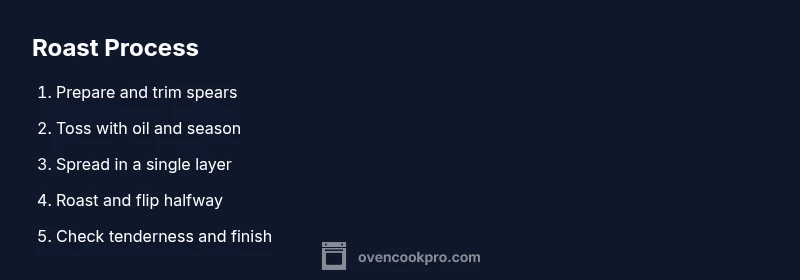
Preheat the oven to 425°F (218°C) and position the rack in the middle. Line a sheet pan with parchment paper to prevent sticking and simplify cleanup. This creates a stable surface for even browning.
Tip: Use a single layer with space between spears to promote crisp edges. - 2
Prepare the asparagus
Rinse the spears and pat dry thoroughly. Trim off the woody base about 1–2 inches, or snap the spears where they naturally break. Dry spears roast more evenly and brown better.
Tip: Drying is essential; moisture creates steam that hinders browning. - 3
Toss with oil and seasonings
In a bowl, toss the trimmed spears with 1–2 teaspoons of olive oil per bunch and season with salt and pepper. Add minced garlic or lemon zest if desired and distribute evenly.
Tip: Keep oil light; too much oil can pool and steam the spears. - 4
Spread on the pan
Arrange the asparagus in a single layer on the prepared sheet pan. Leave space between spears for heat to circulate and browning to occur.
Tip: If you have many spears, use two pans or roast in batches. - 5
Roast and flip halfway
Roast for 12–15 minutes, depending on thickness. Flip spears halfway through to ensure even browning on all sides.
Tip: Thin spears can brown quickly; monitor at the 12-minute mark. - 6
Check for doneness
Test tenderness by piercing near the base with a fork. The spears should be tender yet still have a slight bite, with edges lightly caramelized.
Tip: If needed, roast 1–2 minutes more, then test again. - 7
Finish and serve
Remove from the oven, optionally finish with a squeeze of lemon juice and a light grating of cheese or a dusting of parmesan. Let rest for 1–2 minutes before serving.
Tip: Season to taste after resting to preserve texture. - 8
Variations and extra tips
Experiment with herbs like thyme or rosemary, or finish with a drizzle of balsamic glaze for a touch of sweetness. Adapt timing for thicker spears and consider convection for crisper results.
Tip: Taste and adjust salt at the end for best flavor balance.
Questions & Answers
What temperature is best for roasting asparagus?
Most home cooks roast at 425°F (218°C) for 12–15 minutes, adjusting slightly for spears of different thicknesses. If you use convection, you may shorten the time slightly; monitor for doneness.
Roast at 425 degrees for about 12 to 15 minutes, and adjust if your spears are very thick or thin.
Should I trim woody ends?
Yes. Trim or snap off the woody base of each spear so the entire stalk roasts evenly and is tender when done.
Trim the woody ends so every spear cooks evenly.
Can I roast asparagus with other vegetables?
Absolutely. Asparagus roasts well with vegetables of similar size and cooking times. Keep spacing so air can circulate and avoid overcrowding.
Yes, you can roast asparagus with other veggies if you space them properly.
How can I tell when it’s done?
Tender spears with lightly browned tips indicate doneness. If the stalks aren’t tender yet, roast for another minute or two and test again.
Look for tender stalks and caramelized tips; test with a fork.
What’s a good finishing touch?
A squeeze of lemon juice, a pinch of flaky salt, and optional parmesan or nutritional yeast add brightness and savory depth just before serving.
Finish with lemon and a light cheese dust for brightness.
Can I freeze roasted asparagus?
Roasted asparagus is best eaten fresh. If frozen, expect texture changes; use leftovers in soups, frittatas, or purées.
Roast is best fresh; freezing alters texture.
Watch Video
Main Points
- Preheat to a high heat (425°F/218°C) for quick browning.
- Dry, trim, and space spears for even cook and crisp edges.
- Light seasoning with optional garlic or lemon elevates flavor.
- Check doneness at 12 minutes; adjust for thickness.
- Serve immediately or reheat gently to preserve texture.