How to Oven Roast Garlic: A Simple Step-by-Step Guide
Learn how to oven roast garlic to achieve mellow, caramelized cloves. This master guide covers prep, roasting times, flavoring, storage, and practical ideas to use roasted garlic in recipes.


By the end of this guide you will know how to oven roast garlic to creamy, caramelized cloves with minimal effort. You’ll need garlic bulbs, olive oil or butter, salt, and foil, plus a preheated oven at 400°F (200°C). The result adds depth to breads, pastas, and vegetables.
Why oven-roasting garlic elevates flavor and texture
Oven-roasted garlic transforms pungent bulbs into mellow, spreadable cloves with a silky texture and a warm, caramelized aroma. The Maillard reaction during roasting concentrates sweetness and reduces sharpness, making garlic a versatile flavor booster for breads, vegetables, and sauces. The process is simple, reliable, and forgiving, so even beginner cooks can achieve restaurant-like results at home.
As you roast, the cloves soften, and their flavors mellow from sharp sulfur notes to buttery depth. The garlic scent wafts through the kitchen, signaling dinner is nearly ready. For most home kitchens, 400°F (200°C) delivers a balanced roast: enough heat to caramelize edges without burning the delicate centers. Oven Cook Pro’s testing indicates that careful timing and minimal handling preserve moisture and maximize flavor. When done, you’ll squeeze the cloves out easily and mix them into your dish or store them for future use. When you consider healthful fats and flavor, roasted garlic fits naturally into mashed potatoes, soups, purées, and creamy dressings. The technique also pairs beautifully with herbs like thyme, rosemary, or parsley, enhancing aroma and color.
To maximize success, start with fresh bulbs, don’t overhandle the cloves, and monitor the clock in the final minutes. If you want a milder result, you can shorten roasting time; for richer caramelization, you can let them go a little longer, watching closely to avoid scorching. Overall, oven roasting garlic is a simple, dependable skill that expands what you can do in the kitchen and makes ordinary dishes taste special.
Choosing the right garlic and pre-roasting prep
Start with firm, dry bulbs free of soft spots or sprouting greens. Larger heads yield longer roasting times, but the flavor is richer; smaller heads roast more quickly and evenly. Avoid bulbs that feel mushy or have visible mold. Store garlic in a cool, dry place until you’re ready to cook; refrigerating garlic can cause sprouting and textural changes.
Before roasting, remove excess outer skins so the cloves are exposed. If you want to keep the shape of a whole bulb, cut the top off just enough to expose the tops of the cloves. This makes it easy for the oil to penetrate and for you to squeeze the cloves after roasting. Decide on your roasting method: you can roast whole bulbs wrapped in foil or peeled cloves tossed with oil in a small dish. Both methods work well; foil wrapping preserves moisture and creates a soft texture, while peeled cloves roast faster and can develop a bit more surface browning. For consistency, keep cloves or bulbs roughly the same size. If you’re short on time, you can simply crush the top of the bulb more and press the cloves down so they sear more quickly. Fresh herbs like thyme can be added before roasting to infuse additional aroma.
Temperature and timing: getting caramelized, mellow cloves
Roasting garlic is about balance. A steady 400°F (200°C) yields an even, gentle caramelization without scorching the centers. If your oven runs hot, reduce to 375°F (190°C) and allow extra time beyond the standard 30-40 minutes. For peeled cloves, check after about 25-30 minutes. Whole bulbs in foil often take a touch longer because their centers are insulated by the papery skins. Always start checking at the 25-minute mark and insert a thin knife near the base to feel for softness. You want cloves that yield to gentle pressure and easily squeeze from their skins when cooled. If your garlic looks dry and stiff, it may be undersalted or under-oiled; add a teaspoon more oil and retest for another 5-7 minutes.
If you’re roasting multiple bulbs, ensure they sit in a single layer with space between them to promote uniform browning. Avoid crowding the pan, which traps moisture and steams rather than browns. Some home cooks prefer to roast at 450°F (232°C) for a faster, more deeply browned result, but this increases risk of burnt edges. For best results, monitor closely during the final phase and remove as soon as the cloves are soft and pleasantly golden.
Oil, salt, and flavoring: how to season garlic for rich results
The base is simple: garlic, oil, and salt. Use a light olive oil or neutral oil such as avocado oil to promote even browning without overpowering the garlic’s natural sweetness. A small amount of butter can be added for a richer finish, though oil is more forgiving and has a higher smoke point. Salt enhances flavor and can help draw out moisture, but don’t oversalt; you’re aiming for a gentle seasoning that complements the garlic. For additional depth, add fresh or dried herbs like thyme, rosemary, or a pinch of chili flakes. If you’re using peeled cloves, toss them with 1–2 teaspoons of oil per pound of garlic to ensure even coating.
Spread the garlic in a single layer on a foil-lined sheet or shallow dish, then sprinkle with salt and optional herbs. The goal is a light, even coating that enables caramelization without pooling oil. If you’re preparing ahead, you can mix coated cloves in a small bowl, cover, and refrigerate for up to an hour before roasting to help the seasonings adhere. After roasting, the garlic can be mashed into a paste or whisked into butter for a quick, flavorful spread.
Roasting methods: whole bulb in foil vs peeled cloves in a dish
There are two popular approaches. The classic method is to wrap whole bulbs in a sheet of foil, creating a small steam bath that yields ultra-soft, spreadable cloves. This method is forgiving and great for a traditional, mellow garlic flavor. The second method uses peeled cloves arranged in a shallow dish with a light coating of oil; this promotes more surface browning and a slightly crisper edge on the cloves. In this method, you can add herbs or pepper for extra aroma.
If you want an ultra-smooth paste, you can finish under the broiler for 1–2 minutes after the roasting time to promote browning on the exposed surfaces. Keep a close eye to avoid burning. Whichever method you choose, you’ll benefit from resting the roasted garlic for a few minutes after removing it from the oven, as heat will continue to soften the cloves. When you squeeze the cloves out of their skins, you should detect a nutty, caramel-like scent.
How to tell when garlic is perfectly roasted and how to store it
Perfect roasted garlic is soft, aromatic, and not bitter. The cloves should yield softly to pressure, and the outer skins remain easy to peel away. If the cloves feel hard or dry, they likely need more time or a touch more oil. The color should be a warm, golden brown rather than deep brown or blackened. After roasting, let the garlic cool for 5–10 minutes before squeezing the cloves from the skins. This helps prevent burns and makes squeezing easier. You can store roasted garlic in an airtight container in the fridge for up to a week, or freeze it for longer storage. Freezing works well in small portions, such as a tablespoon or two, so you can pop out exactly what you need.
When you’re ready to use it, the cloves can be stirred into mashed potatoes, spread on bread, blended into sauces, or used as a base for quick garlic butter. If you’re not planning to use the garlic right away, you can blend it with a bit of olive oil to create a smooth paste that stays creamy in the container. This simple approach helps you unlock a wealth of flavor without extra effort.
Quick uses and recipes that shine with roasted garlic
Roasted garlic is a flavor amplifier, not a heavy-handed spice. Use it as a spread on warm bread or toast for a luxurious, garlicky snack. Stir mashed cloves into mashed potatoes, cauliflower puree, or polenta to introduce a mellow sweetness with a hint of caramel. Mix into soups, especially creamy tomatoes or mushroom soups, to deepen flavor without adding rough onion notes. Add to pasta sauces as a butter or cream base, or whisk into homemade mayonnaise or aioli for a garlic-forward finish. You can also fold it into ricotta or goat cheese for a savory, spreadable topping.
For batch meals, roast several bulbs at once, then portion the roasted cloves for quick weeknight meals. A spoonful of roasted garlic can transform a simple dish into something comforting and rich. With just a few additional ingredients—lemon, olive oil, herbs, and a splash of cream—you can craft several tasty, weeknight dinners that feel special.
Tools & Materials
- Garlic bulbs(Aim for 1–3 bulbs for a small batch)
- Extra-virgin olive oil or neutral oil(2–3 teaspoons per bulb)
- Butter (optional)(Use for richer finish if desired)
- Coarse salt(Kosher salt or sea salt)
- Aluminum foil(Heavy-duty preferred for sealing)
- Baking sheet or shallow dish(For peeled cloves or foil-wrapped bulbs)
- Sharp knife(To trim tops and expose cloves)
- Cutting board(Surface for prep)
- Oven mitts(Handle hot vessels safely)
- Parchment paper (optional)(Keep pan cleanup easy)
- Small ramekins or silicone tray (optional)(For peeled cloves in oil)
Steps
Estimated time: 40-60 minutes
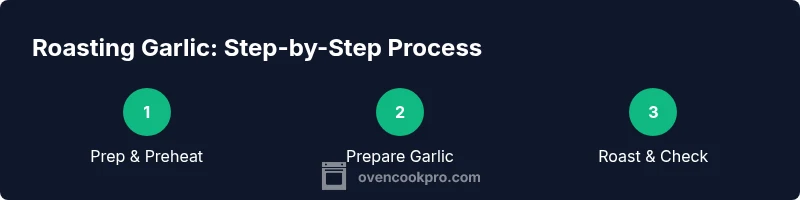
- 1
Preheat the oven and gather your tools
Preheat oven to 400°F (200°C). Set out garlic bulbs, oil, salt, foil, a baking sheet, a knife, and a cutting board. This upfront setup minimizes interruptions during roasting.
Tip: Preheating ensures even browning and reduces total roasting time. - 2
Prepare the garlic bulbs
Trim the top to expose the cloves and remove loose outer skins. Leave the bulbs intact if you want the classic whole-head roast, or separate peeled cloves if you want faster, more uniform browning.
Tip: For the whole head, trim just enough to expose the tops; for peeled cloves, separate and pat dry. - 3
Oil, salt, and flavorings
Drizzle the exposed cloves with oil and sprinkle salt. Add chopped herbs if desired. Toss peeled cloves gently to coat evenly.
Tip: Oil helps with browning and flavor distribution; avoid pooling oil. - 4
Choose your roasting method
Wrap the whole bulb in foil to create a sealed roasting environment, or spread peeled cloves in a shallow dish with a light coating of oil for browning.
Tip: Foil traps steam; dish method yields crisper edges. - 5
Roast until tender and golden
Roast for 30–40 minutes, checking after 25 minutes. The cloves should be tender and easily mashed. If using peeled cloves, you may need a bit less time.
Tip: Smell is a good cue; look for a light caramel color. - 6
Cool and extract cloves
Let the garlic rest 5–10 minutes. Squeeze the cloves out of their skins using the tender side of a spoon or by pinching from the base.
Tip: Be careful with hot cloves; use a towel or glove to handle. - 7
Store or use immediately
Use immediately in recipes, or store in an airtight container in the fridge for up to a week. For longer storage, freeze batches in ice-cold portions or a silicone tray.
Tip: Portion roasted garlic into small amounts so you always have it ready.
Questions & Answers
Can I roast garlic with the skin on?
Yes. Roasting garlic with the skin on protects the cloves and makes peeling easier later. Squeeze softened cloves from the skins.
Yes, you can roast garlic with the skin on; it protects the cloves as they cook.
What is the best temperature to roast garlic for flavor?
Roasting at 400°F (200°C) is a reliable balance between speed and caramelization; lower temperatures yield milder flavors.
Roast at four hundred degrees for best flavor.
How long does roasted garlic last in the fridge?
Roasted garlic keeps well for about 1 week in the fridge when stored in an airtight container.
It will last about a week in the fridge.
Can I freeze roasted garlic?
Yes, you can freeze roasted garlic; freeze in small portions to use as needed.
You can freeze roasted garlic in small portions.
Can I roast garlic with other vegetables at the same time?
Yes, garlic roasts well with vegetables, but keep pieces similar in size to ensure even cooking.
Yes, you can roast garlic and vegetables together.
Are there quick uses for roasted garlic?
Spread on bread, mix into mashed potatoes, blend into sauces, or whisk into butter for immediate flavor.
Roasted garlic is great on bread or stirred into mashed potatoes.
Watch Video
Main Points
- Preheat to 400°F (200°C) for even roasting
- Choose whole bulbs or peeled cloves based on texture preference
- Use oil and a light salt for balanced flavor
- Look for soft, golden cloves when done
- Store properly to extend shelf life