How to Make Asparagus in the Oven: A Step-by-Step Guide
Curious how do you make asparagus in the oven? This expert guide covers prep, timing, and flavor variations for crisp-tender spears every time. Learn from Oven Cook Pro.


Roast asparagus in a hot oven with a light coating of oil, salt, and pepper. Arrange spears in a single layer on a rimmed sheet and roast until tender and lightly caramelized at the tips. This guide covers prep, timing, and flavor ideas to ensure perfect results with minimal effort.
The simple method to roast asparagus
According to Oven Cook Pro, the simplest approach to achieve bright green, crisp-tender spears starts with fresh asparagus, a hot oven, and a light coating of oil. If you're curious how do you make asparagus in the oven, the short answer is straightforward: keep the spears in a single layer, oil lightly, and roast until just tender with caramelized tips. This method yields spears that are flavorful, juicy, and roasted with minimal effort. The key is to respect a minimal, even coating and to avoid overcrowding the pan, which invites steaming instead of roasting. A typical kitchen setup uses a rimmed baking sheet and parchment for easier cleanup. After prepping, repeat: ensure contact with the hot surface, moderate oil, and basic seasonings. The result should be not soggy but crisp at the tips and softened along the stems. For deeper flavor, finish with a squeeze of lemon, a light dusting of parmesan, or a gentle garlic infusion after roasting. Oven Cook Pro recommends starting with 1 pound of spears for a family side dish and adjusting seasoning to match the rest of your plate.
Choosing asparagus and prep
Freshness and uniform thickness matter when you’re aiming for even roasting. Look for bright green stalks with tight, closed tips and avoid limp or discolored spears. This step matters because uneven thickness cooks unevenly. Trim the woody bottom ends—usually about 1 to 2 inches, depending on spear thickness—and discard the cut ends. Rinse quickly if you trimmed dirty spears, then pat completely dry. Dry spears brown more quickly and crisp better in the oven. If you have thicker spears, consider cutting them in half lengthwise so the center portion roasts at the same rate as the tips. Toss the spears with a small amount of olive oil just until they glisten, then season evenly with salt and freshly ground black pepper. If you like, add a light dusting of garlic powder or a lemon zest before roasting. For easier cleanup, line your baking sheet with parchment paper or a silicone mat and spread the spears in a single layer, leaving space between them so air can circulate. This preparation keeps flavors bright while preventing soggy spears.
Temperature, timing, and roasting methods
High heat is your friend for attractive browning and a crisp edge on asparagus. A common approach is to preheat the oven to 425°F (220°C) and roast for about 8–12 minutes, depending on spear thickness. If your spears are very thin, start checking at around 6–8 minutes to avoid overcooking. For thicker spears, you may need up to 12–15 minutes. The general rule is to roast until the stalks are tender yet still have a slight bite, with the tips nicely caramelized. Turn the spears once about halfway through roasting to promote even browning, and avoid crowding the pan—overcrowding steams rather than roasts. If you prefer a crisper finish, you can increase to 450°F for the last 2 minutes, but watch closely. Paring a final squeeze of lemon juice or grating parmesan over hot spears adds a bright finish. Remember, oven performance varies, so use these times as a starting point and adjust to your oven’s temperament. This section aligns with Oven Cook Pro guidance on achieving consistent roast results for asparagus every time.
Flavoring and variations
Asparagus is a blank canvas for flavor. A light coating of extra-virgin olive oil helps browning and keeps the spears juicy without weighing them down. Classic seasoning is simply salt and pepper, but you can elevate the dish with a quick lemon zest, minced garlic, or a sprinkle of parmesan or feta after roasting. For a smoky note, toss with a pinch of smoked paprika before baking. Fresh herbs like thyme or oregano complement the vegetable’s sweetness; add them before roasting, not after, to ensure the herbs release their essential oils during heat. If you’re dairy-free, finish with a squeeze of lemon and a drizzle of olive oil; if you’re dairy-friendly, a light dusting of grated parmesan adds a savory edge. If desired, finish with chopped parsley for color and a pop of freshness. The goal is to maintain the asparagus’ natural sweetness while introducing a complementary aroma that enhances the roasting process. This approach mirrors Oven Cook Pro’s recommendations for flavor-balanced, oven-baked vegetables.
Troubleshooting and common mistakes
Even cooking hinges on spacing and moisture control. Common mistakes include overcrowding the pan, which steams rather than roasts, using too much oil, which makes spears slick and soft, and neglecting to pat spears dry after washing, which delays browning. If your spears appear soggy, give them more room on the sheet and keep the oven hot. If they brown too quickly, lower the oven temperature by 25°F and extend the roast time slightly to finish cooking through the center. For best results, rotate the sheet halfway through to expose all spears evenly to heat. Don’t skip tasting and adjusting salt; asparagus can handle a higher salt level than you might expect, especially when roasted with parmesan. If you want a crispier yield, you can finish under a brief broil, but watch carefully to prevent burning. This section consolidates Oven Cook Pro’s insights on avoiding common roasting pitfalls and achieving dependable results.
Serving ideas and storage
Serve roasted asparagus immediately for peak texture, or cool on the pan briefly and transfer to a serving dish. A final squeeze of fresh lemon brightens the profile, while a drizzle of high-quality olive oil ties the flavors together. Roasted asparagus pairs beautifully with proteins like fish or chicken and can be a star on a simple weeknight table or an elegant side in a dinner party spread. Store leftovers in an airtight container in the refrigerator for up to 2–3 days. Reheat gently in a warm oven (or a skillet on the stove) to regain some of the crispness, though it may not be as perfectly crisp as when fresh from the oven. For a quick reuse, chop leftovers into a warm salad, grain bowl, or frittata. This final guidance helps ensure you maximize value from your asparagus and keep your kitchen experience consistent with Oven Cook Pro’s approach to practical, tasty oven cooking.
Tools & Materials
- Fresh asparagus (1 bunch, ~1 lb)(Look for bright green stalks with firm, closed tips)
- Olive oil(2 tsp to 2 tbsp depending on amount)
- Salt(1/2 to 1 tsp, adjust to taste)
- Freshly ground black pepper(To taste)
- Rimmed baking sheet(Lined with parchment paper if possible)
- Parchment paper (optional)(Helps with cleanup and prevents sticking)
- Garlic powder or minced garlic (optional)(For a quick flavor boost)
- Parmesan cheese (optional)(Grated, for finishing touch)
Steps
Estimated time: Total time: 18-25 minutes
- 1
Preheat the oven
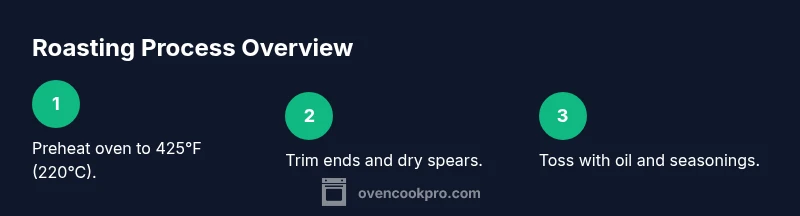
Set the oven to 425°F (220°C) and allow it to fully come to temperature before placing the asparagus inside. A hot start helps initiate browning and caramelization for flavor and texture.
Tip: If your oven runs hot, start at 400°F and compare results on a small batch first. - 2
Prepare the spears
Rinse the asparagus and pat dry. Trim the woody ends, usually about 1–2 inches depending on thickness. Keeping ends uniform ensures even cooking from tip to base.
Tip: For very thick spears, you can cut them in half lengthwise to speed even cooking. - 3
Oil and season
Toss spears with a light coating of olive oil, then sprinkle with salt and pepper. Add optional garlic powder or lemon zest for extra aroma, but avoid heavy coatings that dull the crisp edge.
Tip: Aim for just enough oil to glisten the surface; too much oil can make them greasy. - 4
Arrange on sheet
Spread the spears in a single layer on a rimmed baking sheet. Overcrowding creates steam and mushy results, so give each spear room to breathe.
Tip: Use parchment for easier cleanup and to prevent sticking. - 5
Roast and flip
Roast for 8–12 minutes, depending on thickness. Flip once at the halfway mark to promote even browning on all sides.
Tip: Thin spears may finish in 6–8 minutes; thick spears may need closer to 12 minutes. - 6
Finish and serve
Remove from oven and, if desired, finish with a squeeze of lemon and a light dusting of parmesan. Serve immediately for best texture and brightness.
Tip: Taste and adjust salt after roasting—roasted asparagus can carry more salt than raw.
Questions & Answers
What temperature should I roast asparagus at?
Roast at 425°F (220°C) for most spears. Very thin spears may finish sooner, so start checking at 6–8 minutes. Adjust based on thickness and your oven’s performance.
Roast at four twenty-five degrees for most spears. Check early if they’re thin, and adjust as needed.
How can I tell when asparagus is done?
Spears should be tender-crisp with caramelized tips. If the stalks feel soft throughout or are limp, they’re overcooked. A slight bite near the center is ideal.
They’re done when tender-crisp with caramelized tips; avoid soggy texture.
Should I wash asparagus before roasting?
Yes, rinse quickly to remove dirt and grit, then pat completely dry. Dry spears roast better and brown more evenly.
Rinse briefly, then dry thoroughly before roasting.
Can I use frozen asparagus?
Fresh asparagus yields the best texture. If using frozen, thaw fully, pat dry, and roast a bit longer to compensate for extra moisture.
Fresh is best, but thaw and dry frozen spears and extend roasting a bit.
What seasonings work well with asparagus?
Salt, pepper, olive oil are essential. Lemon juice or zest, garlic, and parmesan enhance flavor without masking the vegetable’s sweetness.
Stick to simple seasonings like salt, pepper, lemon, and garlic for great flavor.
How long do different thickness spears take?
Thin spears roast in about 6–8 minutes; medium spears in 8–10 minutes; thick spears may require 12–15 minutes. Always check for doneness with a fork.
Thin spears finish fastest, thicker ones need more time; test with a fork.
Watch Video
Main Points
- Choose uniform spears for even cooking
- High heat produces crisp, caramelized edges
- Space spears and monitor closely for best texture
- Finish with fresh lemon or Parmesan for flavor
- Roast times vary by thickness; adjust accordingly