How Long to Roast Asparagus in the Oven: Expert Guide
Master oven-roasted asparagus with precise timing tips. Learn temperature, thickness-based timing, convection effects, and serving ideas to achieve perfect tender-crisp spears every time.


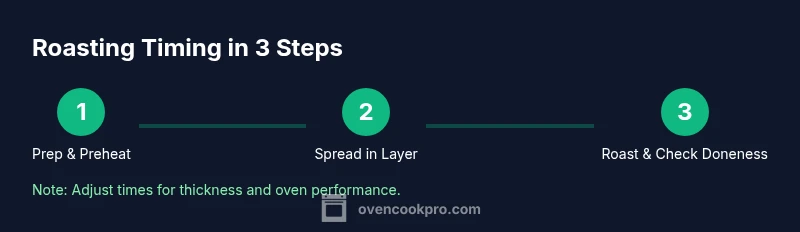
Roasting asparagus in the oven takes roughly 8 to 12 minutes at a hot temperature, depending on spear thickness. Preheat to about 425°F (220°C), toss with a light coating of oil, salt, and pepper, and spread in a single layer for even browning. For crisper edges, increase heat slightly or shorten the time.
Why Timing Matters for Roasted Asparagus
Roasting asparagus is a simple task, but timing matters for texture and flavor. The difference between a lemon-tinted, crisp spear and a mushy bundle often comes down to a handful of minutes, oven temperature, and the thickness of the spears. Thinner spears become tender and bright with a slight snap when roasted quickly; thicker spears may stay chewier or take longer to brown. Understanding this helps you avoid overcooking or under-seasoning. The Oven Cook Pro team notes that preheating and drying spears are critical, as moisture creates steam that interrupts browning. Additionally, spreading spears in a single layer prevents steaming and promotes caramelization. When you control these factors, you’ll achieve consistent results across ovens and seasons.
In everyday cooking, timing is your best friend. A small shift in minutes can move from vibrant green to dull olive, and from crisp edges to soggy tips. The goal is a crisp-tender spears with browned tips and a glossy finish that tells you the natural sweetness has been drawn out by heat. Keep your expectations aligned with the size of your asparagus and the calibration of your oven, and you’ll build reliable, repeatable results over time.
The Physics of Heat: Oven Temperature and Spear Thickness
Heat transfer in the oven is what drives browning and moisture loss. A hotter oven accelerates water evaporation and Maillard browning, while the thickness of each spear acts as its own heat barrier. Thin spears heat through rapidly, turning tender in a short window, and they brown quickly at the tips. Thick spears require more time to reach the center, which also means a longer window for browning at the tips without burning the tips themselves.
Convection ovens actively circulate hot air, speeding browning and reducing hot spots. Conventional ovens rely more on radiant heat, which can create uneven browning if the spears aren’t evenly spaced. A practical approach is to start at a middle-ground temperature like 425°F (220°C). This provides a reliable balance between browning and soft texture. If you’re using convection, you can shave 1–2 minutes off the total time, but monitor closely to avoid over-browning.
Prep Like a Pro: Dry, Oil, and Season for Golden Edges
Preparation matters as much as timing. Start by washing and drying the spears completely—moisture on the surface creates steam that resists browning. Trim the woody bases (about 1 inch is typical) and pat the spears dry again if needed. Toss with a light coating of high-heat oil (olive or avocado oil works well) and season with salt and pepper; add optional garlic powder or lemon zest for an extra layer of aroma. Spread the spears in a single layer on a rimmed baking sheet. If you’re using parchment, place it under the spears for easier cleanup, but be mindful of parchment exposure to high heat. A preheated sheet helps initiate browning the moment the spears hit the pan.
Mastering Timing: Guidelines by Thickness and Heat Level
Timing varies with thickness and heat level. Use these rough guidelines as a starting point, then fine-tune based on your oven and preference. Remember: smaller spears cook faster; larger spears need longer to reach tenderness.
- Extra-thin spears (about 3–4 mm diameter): 6–8 minutes at 425°F (220°C).
- Medium spears (about 6 mm): 9–11 minutes at 425°F (220°C).
- Thick spears (about 9–12 mm): 11–14 minutes at 425°F (220°C).
- If using convection, reduce total time by 1–2 minutes.
Always start checking a minute or two before the minimum time to prevent overcooking. The color should be bright green with lightly browned tips, and the spears should be crisp-tender rather than mushy.
Oven Type: Convection vs Conventional and How They Change Time
Convection ovens alter the timing by circulating hot air, which enhances browning and can reduce total roasting time by a few minutes. If your oven runs aggressively, watch the spears closely after the 6–8 minute mark for thin spears. Conventional ovens rely more on radiant heat, which can yield more even color but slower browning on the tips. If you’re new to roasting asparagus, start with 425°F (220°C) in a conventional oven and switch to convection only if you’re aiming for crisper edges or shorter cook times. Always spread spears in a single layer and avoid crowding, which leads to steaming instead of roasting.
Finishing Touches and Serving Ideas
Once the spears are tender-crisp and browned at the tips, remove from the oven immediately to preserve texture. A light squeeze of lemon juice or a drizzle of balsamic reduces the need for heavy sauces, letting the asparagus shine. For added depth, finish with grated Parmesan, a sprinkle of chili flakes, or a small pat of herb butter. Serve hot as a side dish with roasted chicken, salmon, or grain bowls. If you have leftovers, cool quickly and refrigerate; reheat gently in a hot oven for a fresh, crisp finish.
Testing Doneness and Troubleshooting
Testing doneness is best done with a fork or sharp knife. When you can pierce the thickest part of a spear with little resistance and notice browned tips, you’ve achieved optimal texture. If the spears are pale or floppy, they may need a few more minutes. If they brown too quickly or burn, reduce the oven temperature by 25°F (about 15°C) or move the sheet to a higher rack away from direct heat. If you’re cooking smaller quantities, keep in mind that less mass heats faster; scale time accordingly to avoid overcooking. Properly dried spears and even spacing are the easiest ways to prevent undercooked centers or burnt tips.
Common Mistakes and How to Fix Them
- Crowding the pan: Causes steaming instead of roasting. Fix by using a larger sheet and a single layer.
- Not drying spears: Trapped moisture delays browning. Fix by patting spears dry before oiling.
- Cutting too much from the spear: Reducing thickness then overcooking the center; trim evenly and consider thicker spears for longer cooks.
- Ignoring oven calibration: If your oven runs hot or cold, use a thermometer in the oven to adjust times. Oven temperatures can vary by model and age.
Quick Reference: At-a-Glance Timing Chart
This quick-reference section helps you eyeball timing at a glance without breaking focus on doneness. Use it as a starting point, then rely on texture and color cues to finish.
- Extra-thin spears: 6–8 minutes at 425°F (220°C)
- Medium spears: 9–11 minutes at 425°F (220°C)
- Thick spears: 11–14 minutes at 425°F (220°C)
- Convection: minus 1–2 minutes from the ranges above
- Doneness cues: crisp edges, browned tips, tender centers
In-Depth Doneness Test and Plate-Ready Check
For peak flavor, test doneness just before the minimum time, especially with variable ovens. Use a fork to test the spear’s center; it should yield with slight resistance. The exterior should be browned and slightly glazed with oil. Let the spears rest for 1–2 minutes on the pan before serving to allow juices to redistribute. If you’re serving with a sauce or drizzle (like lemon-butter or garlic-herb vinaigrette), apply just before serving to preserve crispness and texture.
Tools & Materials
- Oven(Preheat to 425°F (220°C) unless otherwise directed)
- rimmed baking sheet(Line with parchment for easy cleanup (optional))
- Tongs or spatula(To flip spears halfway through roasting)
- Olive oil or other high-heat oil(Approximately 1–2 tablespoons per bunch)
- Salt and pepper(To taste; add garlic powder or lemon zest if desired)
- Optional toppings(Lemon zest, grated Parmesan, chili flakes)
Steps
Estimated time: 15-25 minutes
- 1
Preheat and prepare
Preheat the oven to 425°F (220°C). While it heats, wash and dry the asparagus thoroughly and trim the woody ends. This ensures maximum browning and a tender center. Arrange a rack in the middle of the oven for even heat distribution.
Tip: Dry spears thoroughly; moisture creates steam and reduces browning. - 2
Trim and season
Trim the woody ends (about 1 inch). Toss the spears with 1–2 tablespoons oil and a pinch of salt and pepper. Add optional garlic powder or lemon zest for extra aroma and brightness.
Tip: Lightly oil only; too much oil can cause soggy results. - 3
Spread in a single layer
Spread spears in a single layer on a rimmed sheet. Give space between spears so air can circulate and browning occurs evenly.
Tip: If you’re cooking a large batch, use two pans to avoid crowding. - 4
Roast and flip
Roast for 8–12 minutes, depending on thickness. Flip spears halfway through to promote even browning and prevent curling.
Tip: Set a timer and observe tips for browning rather than chasing exact minutes. - 5
Check doneness
The centers should be tender with browned tips. If needed, roast another 1–2 minutes in small increments.
Tip: Touch test: they should feel tender but still have a little resistance. - 6
Finish and serve
Remove from the oven immediately once done to preserve texture. Optional finishing touches include lemon juice, Parmesan, or a light drizzle of olive oil.
Tip: Serve hot for best texture; reheat carefully to maintain crispness.
Questions & Answers
What is the best oven temperature for roasting asparagus?
A hot oven around 425°F (220°C) is a standard starting point for roasting asparagus. It balances browning with tenderness. Adjust up or down by 25°F (15°C) if your oven runs hot or cold.
Roast at about 425 degrees Fahrenheit to start, then adjust a bit if your oven runs hot or cold.
How do I know when roasted asparagus is done?
Done asparagus should be tender in the center with browned, slightly crisp tips. The spears should bend lightly rather than snapping. If you can’t pierce the center easily, give it a bit more time in 1–2 minute increments.
Look for tender centers and browned tips. A light bend means it’s ready.
Can I roast asparagus with other vegetables?
Yes, but choose vegetables with similar cooking times and cut sizes. Spread them in a single layer so air can circulate. Start with the same oven temperature and monitor for doneness together, adjusting as needed.
You can roast other veggies with asparagus as long as you match sizes and timing.
Should I trim the woody ends of asparagus?
Yes. The woody ends are tough and not pleasant to eat. Trim off about 1 inch or so from the bottom to ensure even texture throughout.
Trim the tough ends; it helps all spears cook evenly.
Can I roast frozen asparagus?
Roasting frozen asparagus is not ideal because extra moisture can lead to steaming rather than roasting. If you must, thaw fully and dry well before roasting, and expect a longer cooking time.
Frozen asparagus isn’t ideal; thaw, dry well, and adjust time.
What are some quick finishing touches?
Finish with lemon juice, a sprinkle of Parmesan, or a touch of chili flakes for heat. A light drizzle of olive oil after roasting enhances flavor and gloss.
A squeeze of lemon and a sprinkle of Parmesan finish the dish beautifully.
Watch Video
Main Points
- Preheat to 425°F (220°C) for reliable browning.
- Texture depends on thickness; adjust time accordingly.
- Convection can shave minutes off the roast time.
- Doneness equals tender centers with browned tips; serve immediately.