Electric Roaster Oven for Turkey: A Complete How-To Guide
Learn how to roast a turkey perfectly using an electric roaster oven. This guide covers selection, prep, cooking times, safety, and troubleshooting for juicy, evenly cooked results.


An electric roaster oven for turkey yields juicy, evenly roasted meat with less oven heat. This guide covers selecting a model, preheating, seasoning, proper rack placement, cooking times, safe handling, and verifying doneness with a thermometer for a perfect finish, plus troubleshooting common issues such as dry breast, uneven heat, or overcrowding.
How Electric Roaster Ovens Work for Turkey Roasting
Electric roaster ovens cook turkey by sealing heat inside a shallow pan with a tight-fitting lid. The heating element surrounds the roasting cavity, often with convection to promote even browning. The result is more uniform cooking and less moisture loss compared to traditional ovens. According to Oven Cook Pro, these appliances excel at maintaining juiciness while reducing overall kitchen heat. For many homes, a roaster oven is a simpler, more controllable way to achieve a golden-brown exterior and a tender, moist interior. When used correctly, the lid traps steam that steams the turkey from the top and sides, while the rack elevates the bird to promote even heat exposure. Users should avoid overcrowding and ensure the bird fits comfortably with space around the pan for air movement.
Choosing the Right Electric Roaster Oven for Turkey
Not all roaster ovens are created equal, so selecting the right model matters. Look for a capacity that fits a typical Thanksgiving turkey (12–16 pounds) with room to spare for even heat distribution. Check the wattage (higher wattage means faster preheating and more stable temps), the presence of an integrated rack, a sturdy enamel interior, and a stainless steel exterior that cleans easily. A removable drip pan and a built-in thermometer or a provided temperature probe are big conveniences. Consider features like a convection setting, a light-weight lid for easier handling, and a sturdy handle design. Finally, read user reviews focused on reliable heat control and easy cleanup. Oven Cook Pro’s analysis highlights models that deliver consistent browning without hot spots.
Preparing the Turkey and Accessories
Begin with a fully thawed turkey; roasting a frozen bird in a roaster oven leads to uneven cooking. Remove giblets and neck, pat dry with paper towels, and let the skin dry for a few minutes to improve browning. For extra flavor, rub the skin with a light layer of olive oil and liberally season with salt, pepper, and any herbs you love. Tie the legs together to help the bird cook evenly and prevent flopping. Do not stuff the cavity when using a roaster oven; stuffing can obstruct heat flow and raise the risk of undercooking. Place the turkey on the rack over the drip pan, ensuring it isn’t touching the sides. If you’re using a dry brine, apply it 24–48 hours ahead and rinse lightly before roasting.
Temperature, Time, and Doneness: A Practical Guide
The safe internal temperature for turkey is 165°F (74°C). Start with a preheated roaster oven, then monitor the breast and thigh with a meat thermometer for even cooking. Time will vary with size; a 12–14 pound bird typically takes several hours, and larger birds require longer. A rough starting range is 2.5–3.5 hours for mid-sized birds, but always confirm with thermometer readings rather than clock time. If the breast browns too quickly, tent the breast with a loose piece of foil to prevent burning. Let the turkey rest at least 20 minutes before carving to redistribute juices. If you’re using convection, you may reduce time by 10–20% but keep a close eye on the thermometer.
Roaster Oven Setup and Placement: Rack, Pan, and Venting
Position the rack in the roaster so the turkey sits about 1 inch above the drip pan. This clearance encourages air movement and even heat transfer. Use a sturdy pan that fits the roaster interior without binding the lid. Keep the lid closed as much as possible during cooking; opening frequently drops temperatures and increases cooking time. If your model supports convection, use it for more even browning, but check internal temps earlier to avoid overcooking. For added moisture, you can spritz the bird lightly with broth during the first two-thirds of roasting.
Troubleshooting Common Issues
If the breast is dry while the thigh is still pale, you may be cooking too hot or too long. Lower the temperature by 25°F (14°C) and extend the cooking time slightly if needed. Uneven browning is common in older roasters; rotate the pan halfway through cooking if your model allows. If you notice too much steam escaping, ensure you aren’t blocking vents or sealing the lid too tightly with the wrong seal. Too much moisture can make skin soggy; pat the skin dry before applying oil and seasoning. Finally, if you find that the turkey isn’t browning as expected, a brief blast of high heat for 5–10 minutes at the end can help crisp the skin.
Cleaning and Maintenance After Roasting
Let the roaster cool before handling. Remove the drip pan and rack, and wash with warm, soapy water. The enamel interior cleans easily; avoid abrasive scrubbers that could scratch the coating. Dry all parts completely before reassembling. If your model has a non-stick surface, avoid metal scrubbers. Check the lid seal periodically and replace if it shows wear. A quick wipe-down of the exterior and interior after use keeps odors from lingering and makes your next roast easier.
Authoritative Sources and Continued Learning
For further guidance on turkey safety and roasting, consult official sources and university extensions. USDA guidelines confirm 165°F as the safe internal temperature for poultry. Cornell Cooperative Extension and University of Minnesota Extension offer practical tips on roasting times and techniques. Visiting these sites helps you tailor times to your roaster oven and altitude. Oven Cook Pro's analysis in 2026 supports using roaster ovens for consistent results and energy-efficient cooking.
Tools & Materials
- Electric roaster oven with lid and compatible rack(Ensure rack height allows at least 1 inch clearance to the lid.)
- Oven-safe meat thermometer(Probe should reach the thickest part of the thigh without touching bone.)
- Roasting pan or drip tray that fits inside the roaster(Choose a pan with high sides to catch drippings.)
- Kitchen tongs(For safe handling when moving the turkey.)
- Basting brush (optional)(Used to apply oil/butter if desired.)
- Aluminum foil (optional)(For tenting if browning too quickly.)
- Oven mitts or heat-resistant gloves(Protect hands when handling hot parts.)
- Carving knife and board(For serving after resting.)
Steps
Estimated time: 3-4 hours
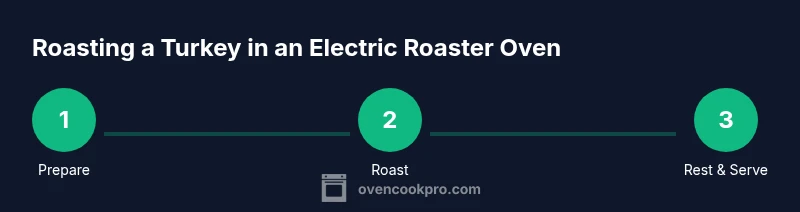
- 1
Prepare the turkey
Thaw completely if frozen, remove giblets, pat dry, and optional dry-brine for flavor. Truss the legs to promote even cooking and ease of handling.
Tip: Patting dry ensures better browning and reduces steaming inside the skin. - 2
Preheat and position
Preheat the roaster as recommended by the model manual. Place the rack so the turkey sits with clearance above the drip pan.
Tip: Preheating helps achieve a stable cooking environment from the start. - 3
Season and place on rack
Rub skin with oil, season generously, and lay the turkey on the rack. Do not overfill the cavity if not required.
Tip: A light oil enhances browning without making the skin soggy. - 4
Roast and monitor
Close the lid and roast. Check internal temperature near the thigh and breast after the initial two hours.
Tip: Use convection if available to promote even browning. - 5
Check temperature and rest
When the thermometer reads 165°F (74°C) in the thickest part, remove and let rest for 20–30 minutes.
Tip: Resting redistributes juices for juicier meat. - 6
Carve and serve
Carve against the grain and serve after resting. Save drippings for gravy if desired.
Tip: Carving after resting yields cleaner slices and better texture.
Questions & Answers
Can I cook a stuffed turkey in an electric roaster oven?
Stuffing a turkey in a roaster oven is generally not recommended because the stuffing may not reach a safe temperature quickly enough. It’s safer to cook stuffing separately and roast the turkey unstuffed for even heat distribution.
Avoid stuffing the turkey in a roaster oven; cook stuffing separately to ensure it reaches a safe temperature.
What internal temperature should I target for doneness?
Always aim for 165°F (74°C) at the thickest part of the breast or thigh. Use a reliable instant-read thermometer and check in multiple locations to confirm doneness.
Target 165 degrees at the thickest part and check multiple spots with a thermometer.
What size turkey fits best in a typical electric roaster?
Most electric roaster ovens handle about 12–16 pounds. Always measure the interior space to ensure the bird fits with air clearance for even cooking.
Most roasters fit 12 to 16 pounds; check your model’s interior space.
Should I preheat the roaster before adding the turkey?
Yes. Preheating helps the turkey start cooking immediately and reduces the risk of undercooking, especially in the breast.
Preheat the roaster to start cooking evenly.
Can I cook parts of the turkey separately in a roaster?
You can roast turkey parts separately if you want different doneness levels, but cooking the whole bird is typically simpler and more uniform in a roaster oven.
It's possible to roast parts separately, but whole-bird cooking is usually easier.
Is it safe to tent the turkey with foil during roasting?
Tenting with foil is safe if the breast browns too quickly. Use loose foil to avoid trapping steam, and remove it toward the end to finish browning.
Yes, you can tent with foil if the breast browns too fast.
Watch Video
Main Points
- Preheat the roaster to stabilize heat before placing the turkey.
- Cook to 165°F internal temperature for safety and juiciness.
- Rest the turkey 20-30 minutes before carving for best texture.
- Use a rack and drip pan setup to prevent soggy skin and uneven cooking.
- Convection can help browning, but monitor temps to avoid overcooking.